

What factors should be considered when selecting an anti-corrosion coating for specific steel applications?
Selecting an anti-corrosion coating for a steel application requires assessing the service environment, including moisture, chemicals, salt, temperature, UV exposure and mechanical wear. Also consider the steel component’s condition and geometry, required service life, surface preparation, coating compatibility, finish, application method and any relevant performance or regulatory requirements.
The most suitable anti-corrosion coating for a steel application is selected by matching the complete coating system to the steel specification, design, exposure classification, required durability and inspection requirements. The decision should not be based on colour or coating thickness alone. A technically appropriate choice considers how the steel has been manufactured, how the finished part will be assembled and handled, and how coating performance will be verified throughout the project.
Start with the steel specification
Steel grade and manufacturing route can affect coating selection. Mild steel, galvanised steel, high-strength steel and cast or fabricated components may have different surface characteristics and coating requirements. Mill scale, embedded contaminants, weld residues and variations in the steel surface can influence adhesion and corrosion protection. The coating specification should therefore identify the substrate clearly rather than treating every steel item as equivalent.
Fabricated assemblies also need particular attention. Welded areas, heat-affected zones, sharp edges, drilled holes and joints can behave differently from broad, flat steel surfaces. If these features are not addressed in the coating specification, they may become vulnerable points even when the main coating film appears sound. Edge treatment, weld finishing and access for coating equipment should be considered during design and before fabrication is completed.
Define the corrosion protection system
For demanding applications, the correct choice may be a multi-layer system rather than a single coating. A primer can provide adhesion or additional barrier protection, while a compatible topcoat supplies the required surface properties. Zinc-containing primers, epoxy-based systems and polyester powder topcoats may each have a role, but their suitability depends on the steel, the exposure category and the intended application process.
System compatibility is important at every interface. A primer and topcoat must be designed to work together, including during curing and subsequent service. A coating that performs well in isolation may be unsuitable if it interferes with adhesion, produces an unsuitable finish or responds poorly to the specified curing conditions. The selected system should be supported by technical documentation and, where appropriate, evidence from testing or previous use in comparable applications.
Consider the component’s design and dimensional limits
Coating selection can affect how parts fit together. Coating build adds material to mating surfaces, threads, sliding faces, holes and locating points. For close-tolerance components, the drawing should identify areas that require masking, plugs, post-coating machining or a controlled coating build. This is particularly relevant to assemblies that include bearings, hinges, fasteners or moving interfaces.
The shape and mass of a component can also influence how consistently a coating cures. Deep recesses, enclosed sections and areas with limited access require careful assessment. Components may need suitable drainage and vent holes so that pretreatment fluids do not become trapped and so that enclosed sections can be processed safely. These design details are part of selecting a workable coating system because they determine whether the specified protection can be achieved across the whole component.
Match the specification to the required durability class
Rather than choosing a coating simply because it is described as anti-corrosion, define the expected durability category and acceptance criteria. These may include adhesion, resistance to underfilm corrosion, impact performance, hardness, flexibility and appearance retention. The relevant standard or project specification should state how these properties are assessed and what result is acceptable.
Durability should be considered in relation to the consequences of coating failure. A decorative enclosure, structural steelwork, safety-critical component and replaceable machine guard may not require the same protection strategy. Where corrosion could affect structural integrity, hygiene, product contamination or the operation of machinery, a more controlled system and more detailed inspection regime may be justified.
Allow for transport, installation and handling
The coating must remain suitable after it leaves the coating line. Steel components can be exposed to abrasion from lifting equipment, packaging, stacking and installation tools before they enter service. Large or heavy items may need defined lifting points, protective packaging and restrictions on contact between finished surfaces. If damage is likely during installation, the specification should include a compatible repair procedure rather than leaving repairs to individual judgement on site.
For assemblies that will be welded, cut or drilled after coating, the sequence of work is also important. Coating may need to be applied after fabrication, or specific areas may need to remain uncoated until site work is complete. Any exposed steel created during later operations should be protected using a repair material that is compatible with the original system.
Set practical inspection and quality requirements
A coating specification should explain how conformity will be checked. Depending on the application, this may include visual inspection, dry-film thickness measurements, adhesion testing, surface cleanliness checks and examination of difficult areas such as edges, welds and recesses. Inspection points should be agreed before production so that defects can be identified and corrected before assembly or delivery.
Records can be useful for repeat work and future maintenance. They may include the steel identification, coating system, preparation method, batch information, curing conditions and inspection results. Clear acceptance criteria reduce the risk of disputes because the required finish and performance have been defined in measurable terms.
Consider lifecycle, repair and future alterations
The initial coating choice should account for how the steel will be maintained, modified or repaired. A system that is straightforward to touch up with compatible materials may be preferable where components are likely to suffer local damage. If the steel will later be cut, welded or extended, the effect on the original coating should be considered at the design stage.
For larger fabricated parts and production batches, discuss the specification with the coating specialist before manufacture is finalised. Providing drawings, steel details, part dimensions, expected tolerances and the intended exposure classification allows the coating system to be assessed as part of the complete application rather than as an isolated finishing decision. This approach helps align corrosion protection with fabrication, quality control, installation and long-term maintenance requirements.
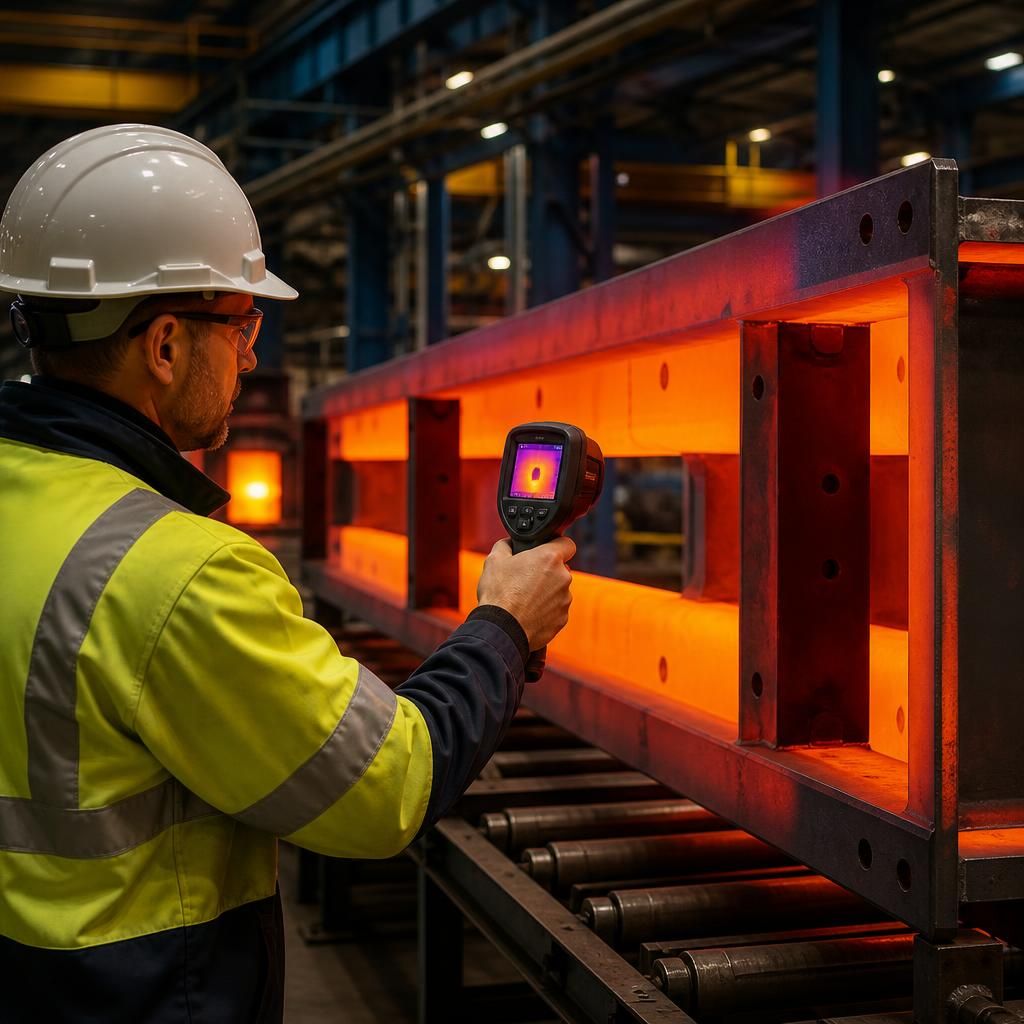
Assess continuous temperature and thermal cycling. Steel components exposed to heat should be assessed for their normal operating temperature, peak temperature and frequency of heating and cooling. Repeated thermal expansion and contraction can place stress on the coating system, particularly where the steel has uneven thickness or different materials are joined. The selected coating must remain suitable across the full temperature range and be compatible with the specified curing process. Where temperatures exceed the range of a standard powder coating, the application should be reviewed with a coating specialist before the system is specified.
Discuss Your Anti-Corrosion Coating Requirements
Discuss your steel components with our powder-coating specialists to assess the most suitable anti-corrosion coating system for the application. Share relevant drawings, dimensions, steel details and exposure conditions so the requirements can be reviewed before coating is specified.