

How does RAL 7035 powder coating contribute to energy efficiency in aluminium applications?
RAL 7035, a light grey powder coating, can support energy efficiency in aluminium applications by reflecting more solar radiation than darker finishes, helping limit surface heat gain and potential cooling demand. Its durable finish can also extend component service life, reducing the energy and resources associated with premature replacement, although the overall effect depends on the building or product design, exposure and insulation.
RAL 7035 powder coating can contribute to energy efficiency in aluminium applications mainly by influencing solar heat absorption and by supporting an efficient coating process. Its effect is indirect: the coating does not provide meaningful thermal insulation, so the final result depends on the complete aluminium assembly, including its geometry, glazing, insulation, ventilation and exposure.
Solar heat management: a light grey finish will generally absorb less solar energy than a dark finish, reducing the temperature rise of exposed aluminium surfaces under comparable conditions. This can be relevant to window frames, façade components, doors, screening, architectural panels and external equipment. Lower surface temperatures may reduce heat transfer into adjacent areas, but the extent of any benefit depends on orientation, shading, airflow, surrounding materials and the design of the building or product.
The colour designation alone does not provide a complete energy-performance specification. Finish level, surface texture, coating formulation and the measured solar reflectance of the selected product can all affect the result. Where solar control is important, the coating should therefore be assessed using the supplier’s technical data rather than relying only on the RAL reference. A designer may also need to consider infrared behaviour, because a surface’s response to solar radiation is not determined by visible colour alone.
The aluminium system remains the main thermal consideration. Aluminium conducts heat readily, and a thin powder-coated layer should not be treated as an insulating barrier. For building components, thermal breaks, frame design, junction detailing, glazing specification and airtightness usually have a much greater effect on heat transfer than the colour finish. RAL 7035 can complement those measures, but it cannot correct a poorly insulated frame or eliminate a thermal bridge.
There can also be an energy consideration during manufacture and finishing. Powder coating is applied as a dry powder and then cured in an oven. The curing stage requires controlled heat, so the coating specification and production method should be matched to the component, batch size and approved cure schedule. Efficient loading, suitable film thickness and recovery of usable overspray can help reduce material and process waste where the finishing facility has the relevant equipment and controls. These factors relate to the application process, not to the RAL colour itself.
For projects seeking a meaningful environmental comparison, assess the whole life cycle rather than attributing a fixed saving to RAL 7035. Useful questions include:
- What solar reflectance or related performance data is available for the exact powder formulation and finish?
- Will the coated aluminium be exposed to strong sunlight, or will it be shaded or installed internally?
- Does the design include thermal breaks and suitable insulation at interfaces?
- What curing conditions are required, and can the component be processed efficiently without unnecessary rework?
- Will the coating specification remain suitable for the intended exposure and cleaning regime?
For manufacturers and fabricators, the practical approach is to specify RAL 7035 as one part of the system design, then verify the complete component’s thermal and solar performance. Building energy modelling, product testing or project-specific technical data may be needed where the finish forms part of a regulated façade or an energy-sensitive installation. In less demanding applications, the principal advantage is often that the selected light finish supports heat management without requiring a separate decorative treatment, while the wider efficiency outcome still depends on design and production controls.
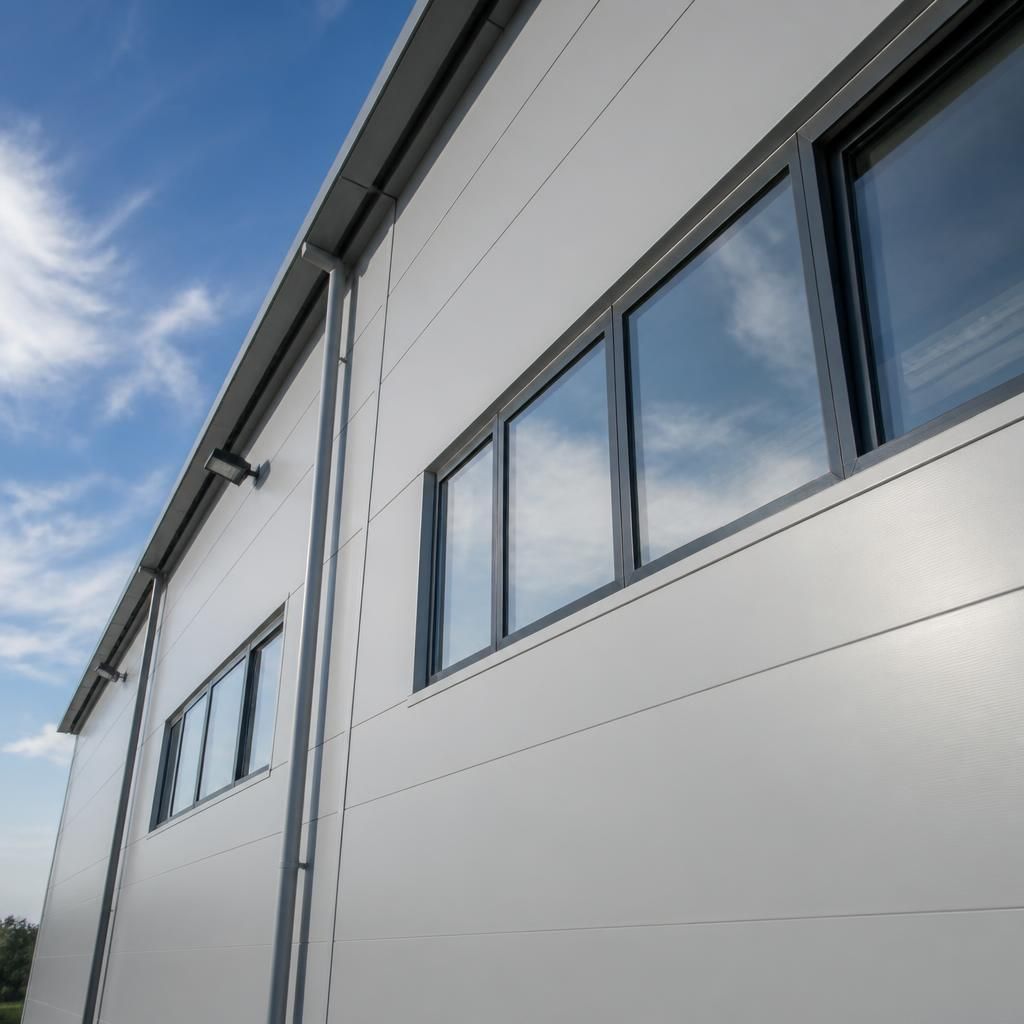
RAL 7035 is not an energy-efficiency rating. Its contribution depends on where the aluminium is installed and which energy effect is being assessed. On an external façade, the finish may be relevant to solar heat management; on an internal bracket, partition frame or enclosed component, its colour will have little or no effect on operational energy use.
For an accurate assessment, separate the coating’s role from the performance of the complete aluminium product. Review the finished system’s thermal calculations or test data, particularly where the component forms part of a building envelope. This prevents a light-coloured decorative finish being treated as a substitute for measures such as thermal breaks, insulation or effective junction detailing.
Discuss your RAL 7035 aluminium efficiency requirements
Discuss your aluminium component requirements with powder-coatings.co.uk, including the installation environment, design and required finish. The team can help assess whether RAL 7035 is appropriate for your project’s energy-efficiency objectives.