

What preparation is needed before applying RAL 9007 powder coating on aluminium?
Before applying RAL 9007 powder coating to aluminium, the surface must be cleaned and degreased to remove oils, dirt and other contaminants, then inspected for damage or defects. Suitable preparation may also include controlled abrasive blasting, masking areas that must remain uncoated, applying an aluminium-compatible conversion coating and ensuring the component is completely dry before powder application.
Preparation for RAL 9007 powder coating on aluminium involves more than selecting the colour. The component, its existing finish, design, alloy, surface condition and coating requirements must all be assessed so the powder can be applied consistently and form a durable bond.
Confirm the coating specification first. RAL 9007 is a colour reference, not a complete performance specification. Before work begins, establish the required finish, such as smooth or textured, gloss level, coating build, appearance standard and intended service conditions. Components exposed to weather, industrial contaminants or frequent handling may require a different powder formulation or pretreatment specification from parts used indoors.
Identify the aluminium substrate. Aluminium alloys and fabricated sections can react differently during pretreatment and curing. The coater should know, where available, the alloy, temper and manufacturing history of the component. Castings, extrusions, sheet, machined parts and welded assemblies may each present different surface characteristics. This information helps determine a suitable preparation route and highlights areas that may need particular attention.
Remove unsuitable existing finishes. Previously painted, anodised or powder-coated aluminium may need the old finish removed before a new coating is applied. Coating over a poorly bonded or incompatible layer can transfer its weaknesses to the new finish. The removal method must be controlled because aggressive chemical stripping or excessive mechanical abrasion can alter dimensions, profiles or the appearance of the aluminium.
Check the design before coating. Drainage and venting holes are important in hollow sections and fabricated assemblies. They allow trapped air, treatment fluids and moisture to escape during processing. Enclosed sections without adequate venting can create defects, retain chemicals or present a safety risk when heated. The position and size of these openings should be considered during fabrication rather than after coating has been requested.
Welds should be continuous where required, free from excessive spatter and finished so that sharp irregularities do not show through the coating. Deep scratches, pits, porosity and sharp edges may remain visible after powder application, so they should be corrected as part of the fabrication process. Aluminium repairs and filler materials must also be compatible with the temperatures used during curing.
Plan masking and contact points. Areas such as threads, bearing seats, electrical contact faces, hinges, machined bores and close-tolerance interfaces may need to remain free of powder. Their dimensions should be identified on a drawing or marked clearly before processing. Masking materials must withstand the curing cycle without leaving residue, while racking points need to provide secure electrical contact without damaging important visible surfaces.
Racking also affects the final appearance. Components should be supported in a way that minimises contact marks, prevents movement and allows the powder to reach the required faces. Long or heavy parts may need additional support to avoid distortion during handling and curing. The hanging method should be agreed before coating if the component has critical presentation faces.
Allow for dimensional changes. Powder coating adds a finite layer to the surface, which can affect tight fits, threaded areas, sliding interfaces and assembled joints. Tolerances should therefore be reviewed before coating, particularly on machined aluminium parts. Masking or temporary plugs may be needed where even a small build-up would interfere with assembly or function.
Control moisture and contamination during handling. After preparation, aluminium should be handled with clean gloves or suitable protective measures to avoid transferring salts, grease or fingerprints back onto the surface. Components should be kept protected from condensation, dust and workshop contamination before coating. Packaging, storage and transport arrangements should prevent prepared parts from rubbing together or being exposed to moisture.
Finally, the preparation plan should be checked against the powder manufacturer’s technical requirements and the component’s end use. A suitable sequence normally covers:
- the aluminium alloy and fabrication condition;
- the condition and removal of any existing finish;
- design features, weld quality, edges and venting;
- areas requiring masking or protection;
- racking and electrical contact arrangements;
- dimensional tolerances and assembly interfaces;
- the compatible pretreatment and powder system; and
- curing requirements appropriate to the component and selected powder.
Providing accurate drawings, masking details and performance requirements before processing reduces avoidable defects and helps ensure that the RAL 9007 finish is applied to a surface and component that are properly suited to powder coating.
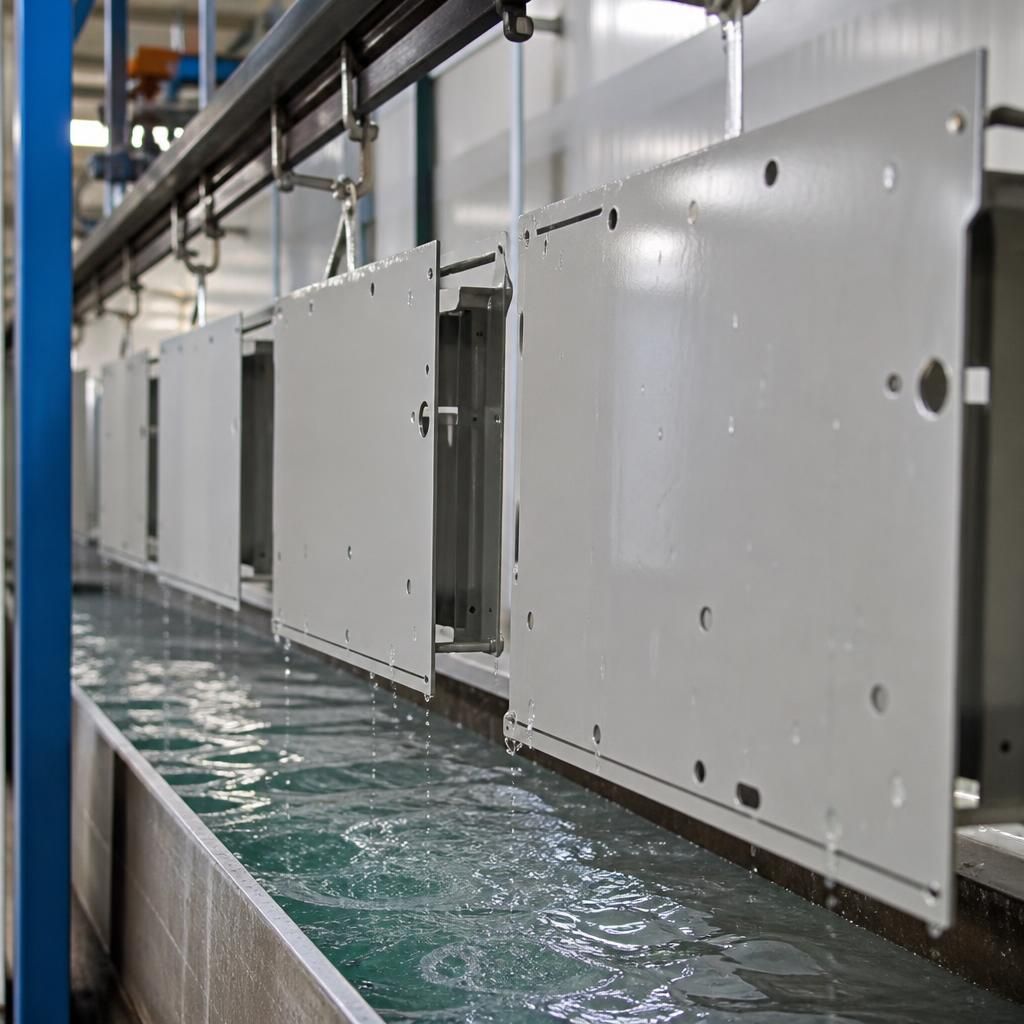
Aluminium benefits from a dedicated pretreatment because its natural oxide layer can interfere with powder adhesion. After surface preparation, an aluminium-compatible conversion coating can chemically condition the surface and provide a more suitable base for the powder system. The treatment must match the alloy, intended service conditions and selected powder, as an unsuitable chemistry may cause adhesion or appearance problems.
Rinsing and drying are also important parts of this stage. Residual treatment chemicals, salts or moisture can contribute to coating defects, so the prepared component should be checked before it reaches the powder application area. The pretreatment specification should be agreed with the coater and powder manufacturer rather than assumed from the RAL colour reference alone.