

What are the key steps involved in applying RAL 9023 powder coating to aluminium?
Applying RAL 9023 powder coating to aluminium involves cleaning and preparing the surface, applying the appropriate pretreatment, spraying the powder electrostatically, and curing it in an oven to form a durable finish. The completed coating is then inspected for coverage, adhesion and visual consistency before the component is handled or delivered.
Applying RAL 9023 powder coating to aluminium is a controlled sequence that begins with confirming the component requirements and ends with releasing parts only after the finish has been checked. The key variables are the aluminium’s condition, the required appearance, masking and racking arrangements, powder application settings, oven curing conditions and the handling method used after coating.
- Review the component and coating specification. Before processing, the coater should confirm the aluminium alloy or component type, required colour, gloss or texture, coating thickness expectations, areas that must remain uncoated and the finished dimensions. RAL 9023 identifies the colour, but the required surface appearance should also be agreed because gloss level, texture and lighting can affect how the finished grey shade is perceived.
- Plan masking and racking. Threads, mating faces, bearing surfaces, electrical contact points and precision apertures may need masking so that coating does not interfere with assembly or function. Parts are positioned on suitable racks or hooks, with contact points selected to provide stable support and an effective electrical path while leaving as little visible marking as practical. The racking plan is particularly important for long, deep or complex aluminium sections, where poor positioning can affect powder coverage.
- Confirm the powder and equipment settings. The correct RAL 9023 powder system must be selected for the intended service conditions and substrate. Powder should be stored and handled in accordance with its technical requirements, since contamination, moisture or unsuitable storage can affect application and appearance. The spray equipment is then set up for the part geometry, including the electrostatic charge, powder flow, air settings, gun distance and movement pattern. These settings need to suit recessed areas and edges as well as broad faces.
- Apply the coating consistently. Operators normally work methodically around the component, keeping the gun movement and distance as consistent as possible. Edges, corners and recesses require particular attention because the electrostatic field can cause uneven deposition or reduced coverage in these areas. Excessive powder build can also affect the final appearance and may contribute to defects such as runs, cratering or an uneven texture after curing. Complex parts may therefore require more than one application angle rather than simply increasing powder output.
- Control the curing cycle. After application, the coated aluminium is transferred to the oven under conditions suited to the powder manufacturer’s technical data. The important reference is the temperature reached by the metal itself, not merely the oven’s displayed air temperature. Part thickness, shape, load arrangement and aluminium’s heat-transfer characteristics can all influence how quickly the required cure is achieved. The cycle must be sufficient to develop the coating’s intended hardness, adhesion and appearance without overheating the finish.
- Allow the finish to stabilise before handling. Once the curing stage is complete, parts should be handled in a way that avoids marking, abrasion or contact damage. Racks, supports and packaging materials must not rub against visible faces while the components are being removed, moved or stacked. Large sections may also need carefully planned support to prevent bending or damage to delicate edges.
- Carry out final quality checks. Release checks normally consider colour consistency, gloss or texture, visible coverage, runs, pinholes, inclusions, impact damage and masking accuracy. Where the specification requires it, coating thickness, adhesion or cure performance can also be assessed using an appropriate test method. The inspection should take account of the component’s intended use and viewing conditions rather than relying only on a brief visual check.
For batch work, consistency depends on keeping the same relationship between part orientation, racking, powder application and oven loading from one run to the next. Any change in aluminium thickness, component shape, masking arrangement or batch size can alter the process, so it should be reviewed before production continues. Clear drawings, defined masking points and agreed acceptance criteria help prevent avoidable rework.
Aluminium components intended for assembly should also be checked for coating build around interfaces, holes and moving or mating parts. Parts that require collection or delivery need protective separation during transport so that completed RAL 9023 surfaces are not scuffed before installation. A specialist powder coater serving manufacturers, fabricators, construction firms and automotive businesses can discuss these process requirements alongside batch handling and collection or delivery arrangements across the Midlands.
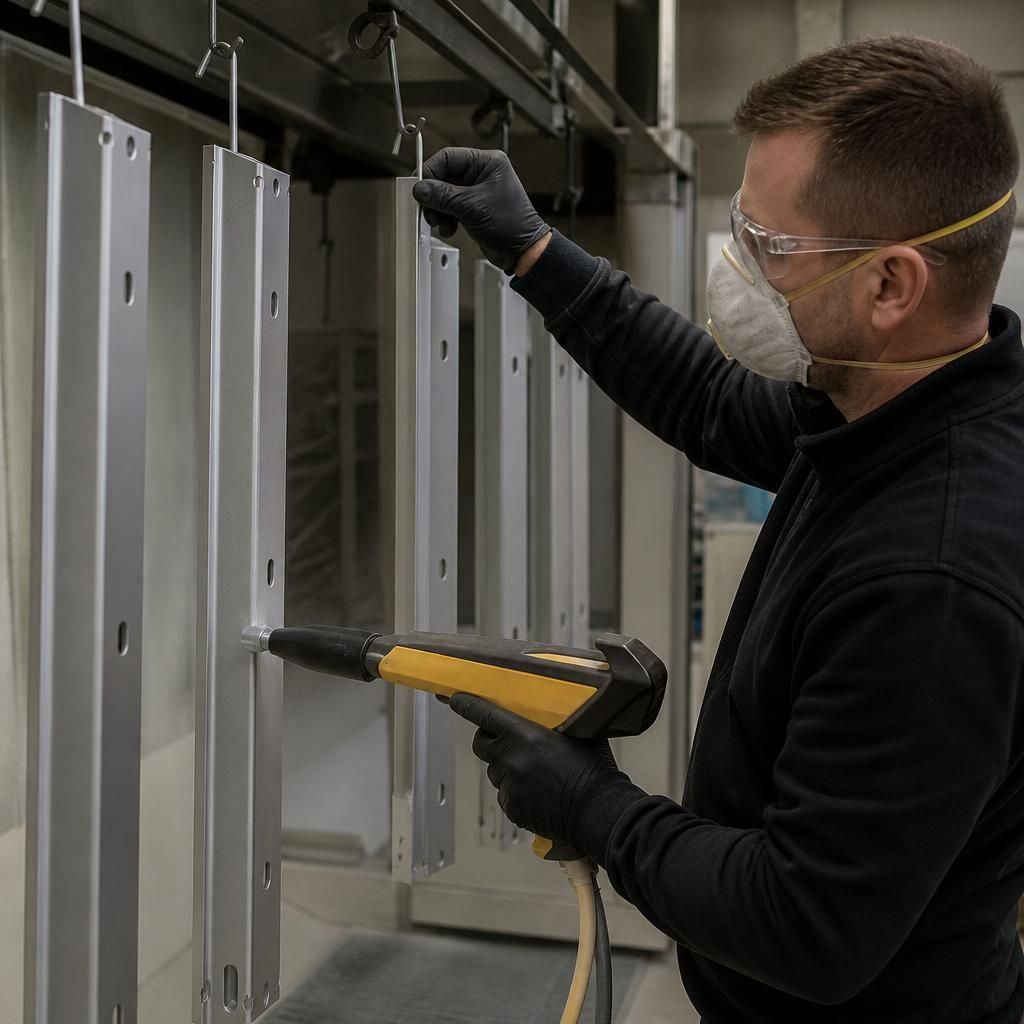
Effective grounding is a critical part of applying RAL 9023 powder coating to aluminium. The component and its rack must provide a reliable electrical path so the charged powder is attracted to the metal surface and deposits evenly. Paint, oxide residue or previous coating at the hanging point can interrupt this path, causing weak attraction, uneven coverage or powder accumulation in unexpected areas.
For this reason, contact points are selected on areas where a small uncoated mark will not affect assembly or appearance, then kept clean throughout processing. Complex components may require more than one hanging position to maintain stable support and allow the spray gun to reach all faces. Good grounding does not replace correct spray technique, but it provides the electrical conditions needed for consistent powder deposition before the curing stage.