

How can I ensure the best adhesion and longevity for black powder coated aluminium?
The best adhesion and longevity for black powder coated aluminium depend on thorough surface preparation, suitable pre-treatment, correct powder application and a complete, controlled cure. Protect the finish afterwards with appropriate cleaning and inspection, while specifying the coating system for the component’s environment and intended use.
The best adhesion and longevity for black powder coated aluminium come from treating the component, coating system and service conditions as one specification. The alloy and its condition, the design of the part, the intended exposure and the powder manufacturer’s technical requirements should all be confirmed before production rather than relying on colour selection alone.
Start with the aluminium specification. Different aluminium alloys, castings, extrusions and fabricated parts can present different surfaces for coating. Extrusion lubricants, machining fluids, marking inks, oxide, heat-affected areas and residues from fabrication may affect the bond between the metal and the coating. Welds, repairs and filler materials should be assessed separately because they may react differently during pre-treatment and curing. A representative sample or trial piece is useful where the alloy, fabrication method or previous finish is unfamiliar.
Define the exposure before choosing the system. A black finish used indoors has different requirements from one exposed to rain, condensation, road contaminants, industrial pollution or coastal air. The specification should identify whether the component is architectural, industrial, automotive or part of an external assembly, and should account for abrasion, impact, cleaning chemicals and operating temperature. This information helps determine the appropriate pre-treatment, powder chemistry, film specification and cure schedule. A general-purpose powder should not automatically be assumed suitable for demanding external or chemical exposure.
Control the part’s design as well as its surface. Coating performance can be reduced by sharp edges, narrow gaps, trapped moisture and inaccessible recesses. Radiused edges provide a more consistent coating than knife edges, where coverage can be thinner. Drainage and venting should be incorporated into hollow sections so that cleaning solutions, rinse water or condensation cannot remain trapped. Components should also be designed to avoid rubbing points and areas where the coating will be damaged during assembly.
Threaded holes, bearing seats, electrical earth points and close-tolerance faces may need defined masking or plugging. Masking should be suitable for the cure temperature and should not leave silicone, adhesive or other residues on adjacent surfaces. Contact points for hanging or racking should be planned in low-visibility areas where possible, while still allowing the part to be supported without distortion or coating damage.
Use measurable process controls. The coating specification should record the selected powder, substrate, pre-treatment, application method, target film build and curing requirements. Film thickness should be checked at representative locations rather than inferred from appearance. Excessively thin areas may provide insufficient protection, while excessive build can affect dimensions, edge coverage, appearance and curing behaviour. The cure should be confirmed against the powder manufacturer’s requirements, taking account of the metal temperature rather than only the oven air temperature.
Where repeatability matters, retain process records for the batch, including powder identification, part material, oven conditions, application settings and inspection results. This makes it easier to investigate variations between runs and to distinguish a coating problem from a substrate, fabrication or handling issue.
Verify adhesion and cure before release. Visual inspection should look for pinholes, blisters, craters, inclusions, runs, missed areas and inconsistent gloss. Adhesion testing, such as a cross-hatch assessment where appropriate, can indicate whether the coating has bonded adequately to the prepared aluminium. A solvent-rub or other cure check may help identify under-cured material, but the chosen test should be suitable for the powder system and should not replace the manufacturer’s curing requirements.
Testing should be carried out on a representative area or test panel and interpreted against the agreed coating specification. If an adhesion failure occurs, simply applying another coat over the affected surface is unlikely to resolve the cause. The investigation should consider contamination, pre-treatment condition, drying, powder compatibility, film thickness, metal temperature and any delay or damage between preparation and coating.
Protect the finish during assembly and transport. Fully cured powder coating can still be damaged by impact, sharp packaging, metal swarf and sliding contact. Use clean separators and suitable protective materials, and prevent coated faces from rubbing together. Avoid storing parts where water or condensation can remain trapped against the finish. During assembly, use tools and fixtures that do not scrape the coating, and repair any exposed aluminium in accordance with the project specification rather than concealing it with an unsuitable touch-up product.
For ongoing service, inspection should focus on edges, fixings, joints, recesses and areas exposed to repeated contact. Remove deposits using a compatible, non-abrasive cleaning method and avoid aggressive solvents or strongly alkaline products unless their suitability has been confirmed. Early attention to chips, corrosion at exposed edges and failed seals helps prevent a small defect from becoming a route for moisture beneath the coating.
For complex or high-value aluminium components, provide the coater with drawings, alloy information, fabrication details, masking requirements, service environment and acceptance criteria. This allows adhesion, appearance and durability to be judged against the actual application, giving the black powder coated finish a more reliable basis for long-term performance.
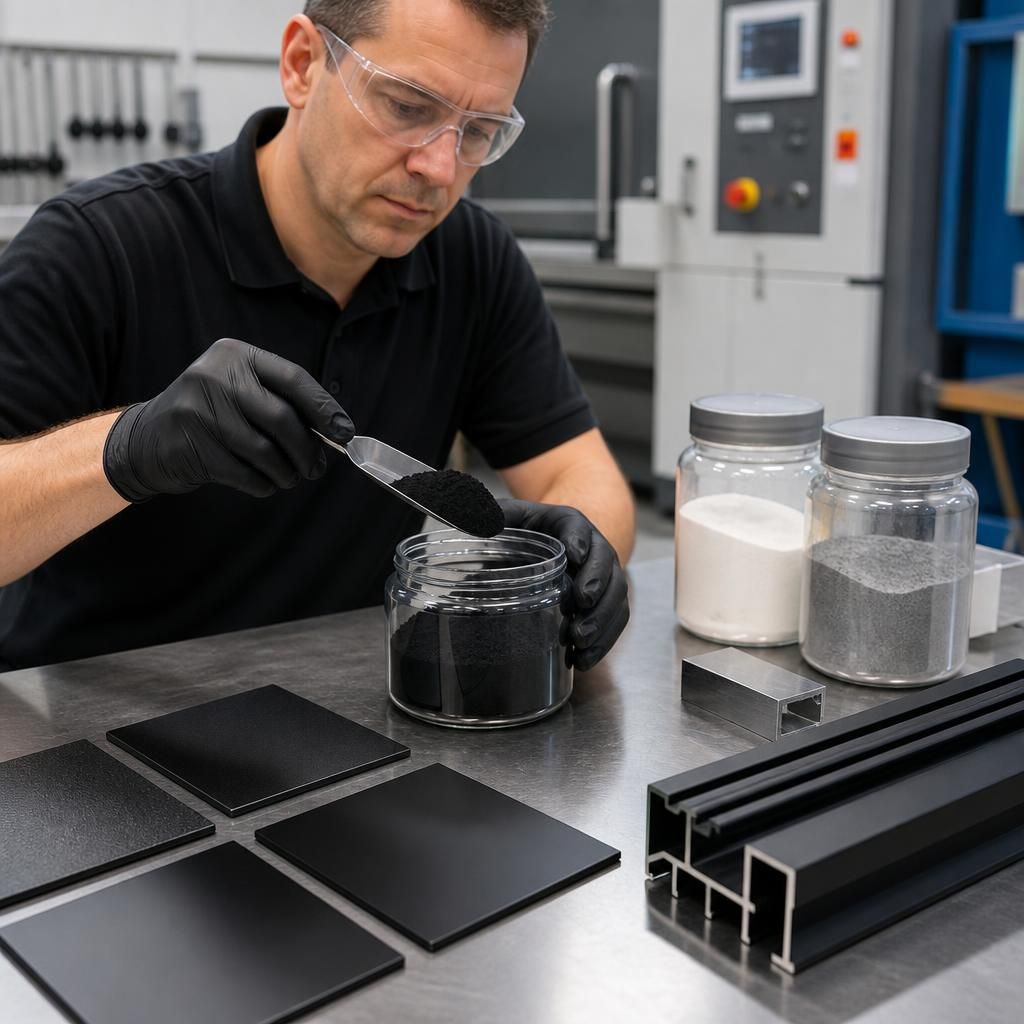
Powder selection is as important as application quality when black powder coated aluminium will be exposed outdoors. Black is a colour choice, not a durability classification: the resin and pigment system determine resistance to ultraviolet exposure, weathering, chalking and loss of gloss. Specify a powder formulated and tested for the intended environment rather than selecting a general-purpose product solely because it matches the required colour.
For external components, confirm the powder’s suitability for aluminium and the required level of weathering performance with the coating supplier. Epoxy-based powders can provide useful chemical resistance but are generally unsuitable as an exposed finish where long-term ultraviolet stability is required. An exterior-grade polyester or another appropriately rated system is normally considered according to the application, while internal components may have different requirements. The specification should also distinguish between acceptable colour retention, gloss retention and resistance to local damage, as these are separate aspects of finish performance.