

What is the impact of pre-treatment on the performance of high gloss powder coatings?
Pre-treatment significantly improves the performance of high gloss powder coatings by removing contaminants and preparing the metal surface for consistent adhesion. It helps reduce defects such as peeling, blistering and uneven gloss, while supporting the coating’s resistance to corrosion, moisture and wear.
Pre-treatment determines the surface condition and chemistry immediately before powder application, so it has a direct effect on the uniformity, appearance and long-term stability of a high gloss finish. The process controls surface texture, residual salts, chemical reactivity and the potential for trapped gases beneath the coating; each of these can influence how evenly the cured film reflects light.
High gloss coatings are particularly sensitive to surface preparation because their smooth, reflective appearance makes minor variations easier to see. A shallow scratch, weld mark, blast inconsistency or localised change in surface texture can appear as a visible difference in reflection after curing. A matt or heavily textured finish may disguise some of these variations, whereas a high gloss finish tends to highlight them.
The substrate determines the appropriate treatment. Mild steel, galvanised steel, aluminium and stainless steel have different surface chemistry and corrosion behaviour, so they should not automatically be processed through the same preparation cycle.
- Steel: Abrasive preparation may be used to create a suitable, consistent surface profile and remove mill scale or oxidation. The time between preparation and coating is important because untreated steel can begin to oxidise, particularly in humid conditions.
- Galvanised steel: The zinc surface may require specific cleaning and conditioning to deal with passivation layers, storage residues or white corrosion products. Heating during curing can also release gases from the zinc coating, making suitable preparation and controlled processing important for avoiding pinholes or surface bubbles.
- Aluminium: Aluminium forms a tenacious oxide layer naturally. Its preparation must provide a chemically suitable surface without creating excessive or uneven attack, especially on visible panels or components with fine profiles.
- Stainless steel: Although it has strong inherent corrosion resistance, its passive surface still needs to be correctly conditioned for powder application. Oils, fabrication residues and embedded contaminants can create localised finish variation if they are not addressed.
For many components, the preparation sequence can include cleaning, rinsing, chemical conversion and drying. These stages are not interchangeable. Cleaning removes processing residues, while conversion treatment changes the surface chemistry and can provide a more stable foundation for the powder film. Thorough rinsing is also important because residual chemicals or salts may produce staining, colour variation or localised coating deterioration later in the component’s service life.
Mechanical preparation has its own effect on a high gloss result. Blasting can remove oxidation and establish a consistent profile, but excessive pressure, unsuitable abrasive or uneven coverage can leave a rough or visually irregular base. On thin sections, aggressive preparation may affect the shape or edges. On fabricated parts, welds, corners, recesses and overlapping joints often need particular attention because they are more difficult to clean and may retain moisture or gases.
Fabrication details can influence the finish even when the main faces have been prepared correctly. Weld spatter, sharp edges, grinding marks, porous welds and enclosed sections may produce visible defects or release gas during curing. Drainage and vent holes may be needed in hollow assemblies to allow cleaning fluids to leave the part and to reduce the risk of trapped moisture or air. Where these design features are absent, pre-treatment cannot fully compensate for the underlying construction.
Process control is as important as the choice of treatment. Relevant controls include chemical concentration, treatment temperature, contact time, rinse quality, drying conditions and the condition of the prepared surface before powder is applied. Variations between batches can lead to changes in colour depth, gloss level or surface appearance, even when the same powder is used. Handling also matters: fingerprints, workshop dust and contact with unsuitable supports can compromise a prepared surface before coating.
Over-treatment can be as problematic as insufficient treatment. Excessive etching may create an uneven surface, while poorly controlled conversion chemistry can leave residues. Inadequate drying may trap moisture in seams or recesses. These issues can affect the visual consistency of a high gloss finish and may only become apparent after curing or during service.
Inspection should therefore take place before powder application as well as after curing. The pre-treated part should be checked for visible oxidation, remaining fabrication residues, uneven surface texture, damp areas and contamination from handling. After curing, the finish can be assessed for consistent gloss, colour uniformity, pinholes, bubbles, craters and other surface irregularities. If a defect is traced back to preparation, simply applying another coat may conceal it temporarily without correcting the cause.
For a commercial project, the specification should identify the substrate, fabrication method, expected exposure, required appearance and any areas that will remain visible or be assembled against other parts. Samples or approved reference panels can help establish an acceptable gloss and surface standard, particularly where components are produced in batches. A coating specialist can then match the preparation route to the metal and the required finish rather than treating every component identically.
In practical terms, good pre-treatment does more than prepare metal for powder. It establishes the visual foundation of the coating, controls how consistently high gloss surfaces reflect light and reduces risks created by substrate chemistry, fabrication and handling. The powder’s formulation and curing schedule remain important, but they cannot reliably correct an unsuitable or inconsistent surface underneath.
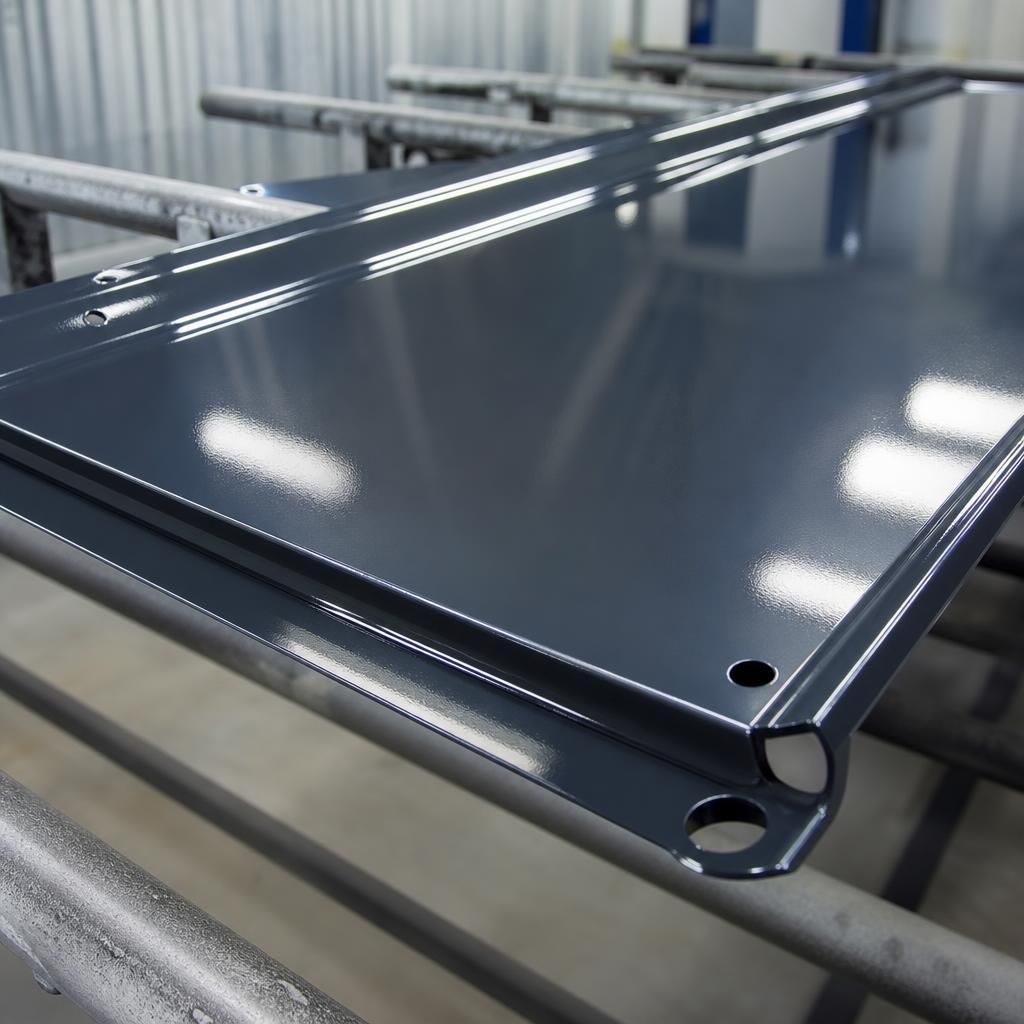
Pre-treatment also serves as the corrosion-control interface beneath a high gloss powder coating. A suitable conversion layer can help stabilise the metal surface and limit the spread of corrosion from scratches, cut edges, fastener points or other areas where the coating is less protected.
This is particularly important where components face moisture, salts or changing temperatures. If residues remain on the metal, corrosion can develop beneath the film and cause lifting, blistering or localised loss of gloss. These defects may not be visible immediately after curing, so assessing the pre-treatment route against the component’s exposure and substrate is an important part of specifying a durable high gloss finish.
Discuss your pre-treatment requirements with a coating specialist
Discuss your substrate, component design, exposure conditions and required gloss level with a coating specialist before specifying the pre-treatment route. This helps establish a preparation process suited to your high gloss powder coating requirements.