

What are the benefits of using epoxy primer coats for metal protection in industrial applications?
Epoxy primer coats protect industrial metal by forming a strongly bonded barrier that helps resist corrosion, moisture and chemical exposure. They also provide a durable, stable surface for subsequent powder coating, improving adhesion and helping the finished coating withstand demanding service conditions.
Epoxy primer coats provide a chemically resistant, crosslinked foundation for protecting industrial metal before the final coating system is applied. Their main benefits include consistent substrate coverage, improved resistance to wear and contaminants, better control of the overall coating build and suitability for a wide range of fabricated metal components.
More consistent protection of complex components
Industrial parts often contain corners, joints, welds, recesses and changes in profile where a single finishing layer may be less uniform. An epoxy primer helps establish a continuous base across these areas, provided the component has been correctly cleaned and prepared. This can reduce variations in the finished coating and help protect areas that are more vulnerable to coating thinness.
Resistance to industrial contamination
Once cured, epoxy films can withstand contact with many oils, greases, solvents and process contaminants more effectively than less chemically resistant primer types. The exact result depends on the epoxy formulation, film thickness, curing conditions and the chemicals involved. The expected exposure should therefore be checked against the primer’s technical information rather than treating all epoxy products as interchangeable.
Improved wear performance within a coating system
Epoxy primers can help the complete coating system tolerate handling, abrasion and mechanical contact. This is particularly relevant for fabricated parts that are moved between manufacturing stages, installed on site or exposed to repeated contact during service. The primer is not a substitute for a suitably specified topcoat, but it can contribute to a more robust multi-layer system.
Control of porosity and surface irregularities
On suitably prepared steel and other compatible substrates, an epoxy primer can help seal small surface imperfections and reduce the effect of minor porosity. This creates a more even foundation for later coating stages. It cannot correct deep pitting, contamination, sharp edges or poorly prepared welds; those defects must be dealt with during preparation.
Useful compatibility with different finishing systems
Epoxy primers are available in formulations designed for use beneath powder coatings, liquid coatings and other specified finishes. This gives manufacturers and fabricators more scope to select a protection system around the component’s operating environment, appearance requirements and production process. Compatibility must be confirmed before application, including recoat intervals, curing requirements and any restrictions imposed by the finishing layer.
Reduced risk of premature coating failure
A correctly selected and applied primer can reduce the likelihood of problems such as underfilm deterioration, localised breakdown and early loss of the finish. These benefits depend on the entire process: substrate preparation, application thickness, environmental control, curing and handling all affect the result. An epoxy primer applied over oil, dust, mill scale or residual moisture will not provide the same protection as one applied to a properly prepared surface.
Important limitations
- Epoxy coatings can lose colour or gloss when exposed to prolonged ultraviolet radiation, so an appropriate UV-resistant topcoat may be required for external applications.
- Excessive film thickness, incomplete curing or incorrect mixing can produce brittleness, softness, solvent sensitivity or intercoat problems.
- The primer should be selected for the specific metal substrate and service exposure, with attention to temperature, chemicals, abrasion and immersion conditions.
- Edges, welds, fixings and recessed areas require particular attention because local preparation or application weaknesses can compromise the whole system.
In industrial applications, the value of an epoxy primer is therefore not simply that it adds another layer. It provides a controlled, chemically resistant foundation that can make the full metal protection system more uniform and dependable when the product, preparation and curing process are correctly matched to the component’s use.
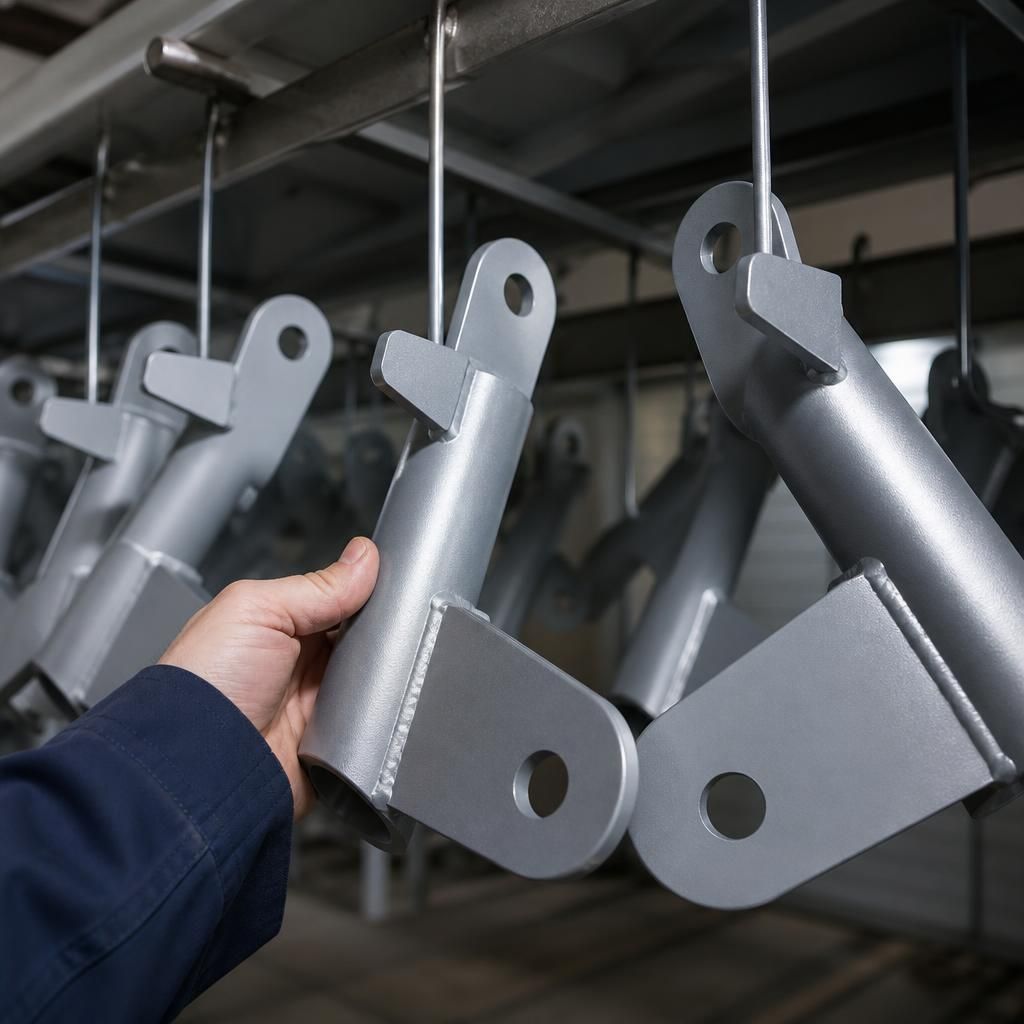
Epoxy primer coats can help reduce galvanic corrosion where different metals are joined. By creating an electrically insulating barrier between the substrates and moisture, the primer can limit the electrochemical contact that accelerates deterioration at joints, fixings and interfaces.
This benefit depends on forming a continuous, fully cured film across the relevant areas. Exposed edges, damaged coating, trapped moisture or unsuitable preparation can interrupt the barrier, so joints and mixed-metal assemblies need particular attention during specification and application.
Discuss epoxy primer coats for industrial metal protection
If you are assessing epoxy primer coats for a specific metal component, discuss the substrate, service environment and proposed topcoat with the powder-coating team before selecting a system. This helps ensure the primer is suitable for the intended application and finishing process.