

What factors should be considered when choosing a primer system for a specific powder coating application?
Choosing a primer system for a specific powder coating application depends on the metal substrate, expected corrosion and environmental exposure, compatibility with the powder topcoat, required performance, component design and the available preparation and curing process. The primer should be selected as part of the complete coating system so that it bonds effectively, cures correctly and supports the required finish and service life.
Choosing a primer system means defining the coating specification around the part’s complete service requirements, production method and acceptance criteria. The most suitable option is not necessarily the primer with the highest individual performance rating; it is the one that delivers the required protection without creating problems with application, appearance, dimensional tolerances, curing or future maintenance.
Start with the actual service conditions. Identify the stresses the finished component will experience throughout its intended use. These may include abrasion from contact or movement, impact during handling, exposure to oils and fuels, cleaning chemicals, solvents, de-icing products, heat, ultraviolet light or repeated temperature changes. Consider whether the component will be indoors, outdoors, in a covered location, near traffic or machinery, or exposed to standing water. The frequency and severity of each exposure matter more than a general description such as ‘industrial use’.
It is also important to distinguish between occasional contact and continuous exposure. A primer that is suitable for intermittent chemical splashes may not be appropriate for immersion or frequent chemical cleaning. Similarly, a component that is protected from direct weathering may need a different specification from one installed in an exposed position. Recording these conditions in a written coating specification helps prevent an unsuitable general-purpose system being selected.
Assess the complete coating build. A primer is one layer within a multilayer finish, so its role should be defined clearly. It may be required to provide additional barrier protection, improve adhesion, seal a porous surface, support edge coverage or create a suitable base for the decorative topcoat. The chosen primer should have technical data confirming its intended use and recommended film build, rather than being selected solely by colour or price.
Primer chemistry can affect the behaviour of the finished system. Epoxy-based primers are commonly considered where barrier properties and adhesion are important, while other formulations may be selected for particular chemical, thermal or processing requirements. In some specifications, a zinc-containing primer may be considered for additional protective action at damaged areas, but its use must be assessed alongside application controls, topcoat requirements and the manufacturer’s system recommendations. The technical data sheet should identify the primer’s intended topcoats, recoat conditions and limitations.
Consider the required appearance as well as protection. The primer can influence the final result even when it is hidden beneath a topcoat. Its colour and opacity may affect the coverage of light or bright topcoat colours. Uneven film build, pinholing, cratering or poor edge coverage can remain visible through a smooth or high-gloss finish. If the specification calls for a particular gloss level, texture or colour consistency, trial panels should be used to check the complete system rather than assessing the primer in isolation.
Appearance requirements should be agreed for areas that are not normally visible as well as the main presentation surfaces. Internal faces, undersides, brackets and recesses can show differences in powder deposition and finish. Establishing acceptable limits for minor visual variation is particularly useful for fabricated assemblies and batch production, where component geometry may vary.
Review component geometry and dimensional limits. Primer adds to the total coating thickness. This can affect close-fitting joints, sliding interfaces, threaded holes, bearing seats, electrical contact points and components assembled with a press fit. Masking, plugs or post-coating machining may be needed where coating is not permitted. These requirements should be identified before production so that the primer specification does not create an avoidable assembly problem.
Edges, corners, welds, recesses and enclosed sections also deserve specific attention. Sharp edges can receive less consistent coverage, while recesses may collect powder or experience uneven curing. Hollow components require suitable drainage and venting during preparation and curing. If a part is prone to trapped air or moisture release, the primer system and production method should be tested on representative samples before the full batch is processed.
Match the primer to the application equipment and production route. The selected product must be suitable for the way it will be applied, whether by electrostatic spray, another powder application method or a specialist process. Consider the size and shape of the components, line speed, batch size, colour changes, powder recovery and the ability to control film thickness. A primer that performs well in laboratory testing may be unsuitable if the production equipment cannot apply it evenly to the actual parts.
Manufacturing throughput should not be considered only in terms of speed. The specification should account for racking, loading, masking, handling between coats and the risk of contamination. If the primer and topcoat require separate stages, the additional handling may influence the chance of damage or dirt inclusion. These practical factors can be as important as the primer’s laboratory performance when selecting a repeatable industrial process.
Check the curing window and the component’s thermal behaviour. Powder primers have defined curing requirements, including temperature, time and the way the part reaches the required metal temperature. Large, thick or densely loaded components may heat differently from small, light parts. The oven setting alone does not confirm that the coating has cured correctly. A production trial should consider the coldest and hottest areas of the load and verify the specified cure across the component.
Over-curing can affect the primer’s appearance or its ability to form the intended bond with the subsequent layer, while under-curing can leave inadequate film properties. Where the component contains heat-sensitive inserts, seals or assembled parts, the permissible process temperature may restrict the available primer systems. Any such limitation should be discussed before the coating schedule is fixed.
Use objective testing and documented acceptance criteria. Selection should be supported by evidence relevant to the application. Depending on the specification, this may include dry-film thickness checks, visual inspection, adhesion testing, impact or flexibility testing, abrasion assessment and exposure testing. A single test result should not be treated as proof that a system is suitable for every service condition; test methods need to reflect the likely failure modes and installation environment.
Define in advance how the coating will be accepted. Useful criteria can include permitted thickness ranges, adhesion requirements, areas that must remain uncoated, acceptable visual limits and the treatment of repairs. This gives the coater, fabricator and end user the same reference point and makes comparison between trial systems more meaningful.
Allow for maintenance and repair. The selected system should be considered over the component’s whole life, including possible damage during transport, installation or use. Establish whether local repairs can be made, which preparation method is required and whether a compatible touch-up product is available. If future recoating is likely, check whether the existing finish can be overcoated or must be removed. A primer that performs well initially may be less practical if damage cannot be repaired without extensive stripping.
Before approving a primer, obtain the current technical data sheet and safety information, confirm the recommended coating build, and ask for evidence from a representative trial. The trial should use the same or closely comparable component geometry, application equipment and curing conditions as planned production. This process identifies practical issues early and provides a more reliable basis for selecting a primer system than relying on a product description alone.
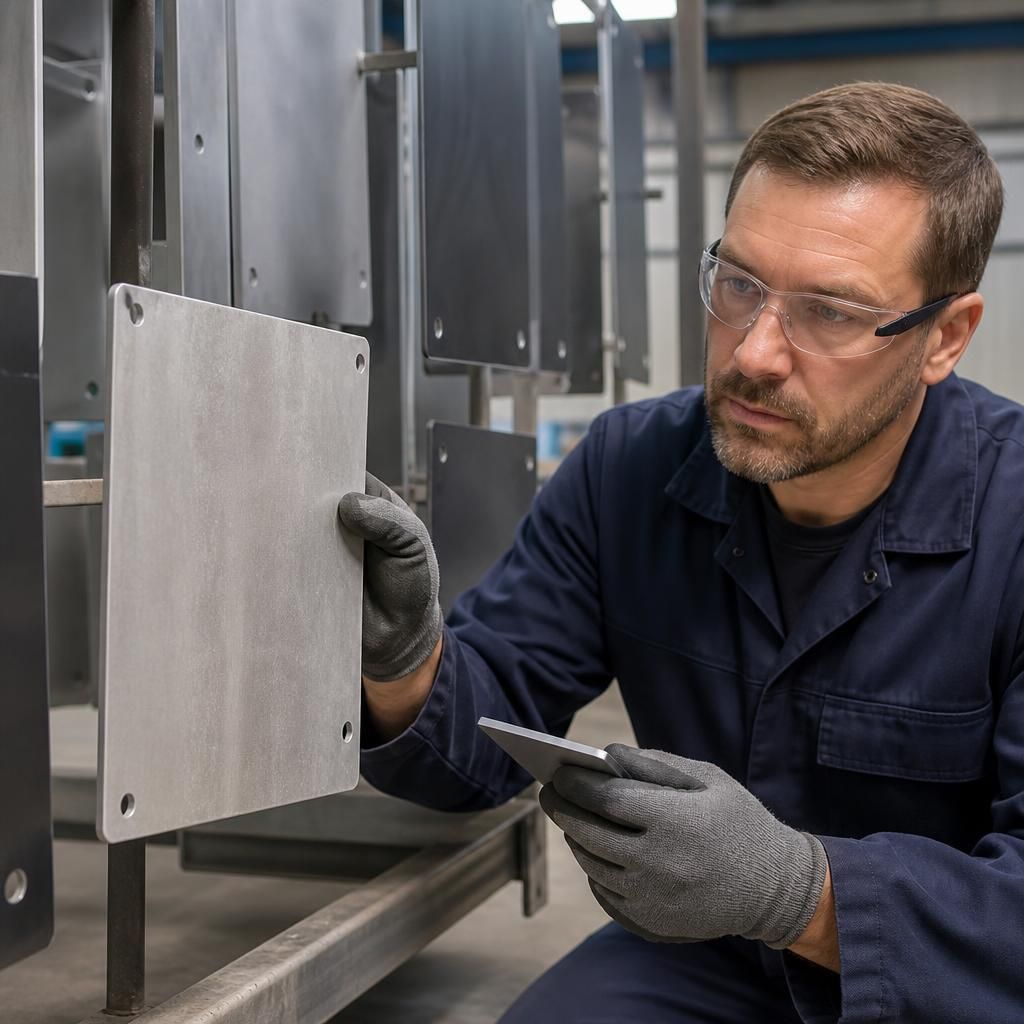
A primer system should be matched to the substrate because different metals present different adhesion, corrosion and surface-chemistry challenges. Bare carbon steel may require a system focused on corrosion protection, while aluminium, galvanised steel, castings and zinc-coated components may need a primer formulated to bond with their specific surface. Porosity, residual casting materials, oxide layers and zinc salts can also affect the result if they are not considered during specification.
Record the substrate, its condition and any previous coating before choosing the primer. A system suitable for clean steel should not automatically be applied to aluminium or galvanised parts, and an existing finish may require compatibility checks before overcoating. The primer manufacturer’s technical information should confirm the approved substrates, surface requirements and limitations. Where the material or surface history is uncertain, a representative sample should be assessed before production approval.
Discuss Your Powder Coating Primer Requirements
Discuss your powder coating primer requirements with the team and provide details of the substrate, service environment, component design and proposed coating process. This information can support a more suitable primer specification and identify whether representative trial work is needed.