

How does the powder coating process ensure quality and consistency on aluminium sections?
Powder coating ensures quality and consistency on aluminium sections through controlled surface preparation, uniform powder application and carefully managed curing. Inspection at each stage helps identify variations in coverage, finish and adhesion before the sections are dispatched.
Quality and consistency on aluminium sections come from converting the required finish into measurable process controls. The coating specification, aluminium condition, preparation method, powder characteristics, film build and cure requirements must all be agreed and recorded so that sections produced in the same batch follow the same technical criteria.
Aluminium requires particular attention because its surface forms an oxide layer naturally and may carry oil, handling residue, extrusion lubricant or other contamination. Different alloys, profiles and levels of surface complexity can also respond differently during preparation. A suitable pre-treatment is therefore selected for the substrate and intended environment, with attention paid to recesses, corners, joints and other areas where residue or moisture could remain. Sections must be properly dried before coating; trapped moisture or contamination can affect adhesion and appearance.
Consistency also depends on controlling the items entering the process. Aluminium sections are checked against the job requirements, including profile, dimensions, surface condition, colour reference and any areas that must remain uncoated. Masking and hanging arrangements are planned to protect fixing points and minimise contact marks. This is particularly important for long sections, where poor support or unsuitable racking can contribute to handling damage or uneven access for the coating equipment.
During application, operators control the relationship between the powder, the equipment and the component. Gun settings, part positioning, earthing, movement speed and access to difficult geometry all affect how powder is deposited. Profiles with channels, sharp transitions or enclosed areas may require a different application approach from a simple flat section. The aim is not merely to make the surface look covered, but to achieve an even, specified film build without excessive accumulation, thin areas, runs, inclusions or visible application marks.
Curing is assessed against the powder manufacturer’s requirements for the metal temperature and time needed to develop the coating’s properties. Aluminium transfers heat differently from heavier steel components, so oven conditions and section temperature must be considered rather than relying only on the oven’s displayed air temperature. Profiles should be arranged so that heat can circulate consistently, while the cure record provides a reference for investigating any variation between loads.
Inspection uses both visual checks and practical measurements. Depending on the specification, checks may include:
- colour and gloss comparison under suitable lighting;
- film thickness measurements at representative points across the profile;
- inspection for pinholes, craters, inclusions, bare areas, orange peel or contact marks;
- adhesion assessment where the job specification requires it;
- verification that masked features, edges and fixing points remain usable; and
- confirmation that the finish, quantity and identification of the completed sections match the order.
Sampling needs to reflect the shape and size of the work. Checking only an easily accessible face may miss thin coverage inside a channel or excess build-up near an edge. Representative inspection points across different sections and positions in a load provide more useful evidence of uniformity. Any discrepancy can then be isolated before the parts proceed to packing or dispatch.
Traceability supports repeatability when the same aluminium sections are coated again. Recording the job specification, preparation route, powder identification, application settings, curing information and inspection findings creates a technical record rather than relying on visual memory. If a later batch shows a difference in colour, gloss or adhesion, these records help identify whether the cause relates to the substrate, materials, equipment or process conditions.
For B2B work, this structured approach is especially relevant where coated sections form part of a wider manufactured or construction assembly. Clear requirements at quotation and production stages reduce ambiguity over colour, finish, masking, acceptable appearance and testing. A powder coater serving manufacturers, fabricators, construction firms and automotive businesses can use the agreed specification to align production and inspection with the section’s intended application, whether the work involves a repeat batch or a more specialised finish.
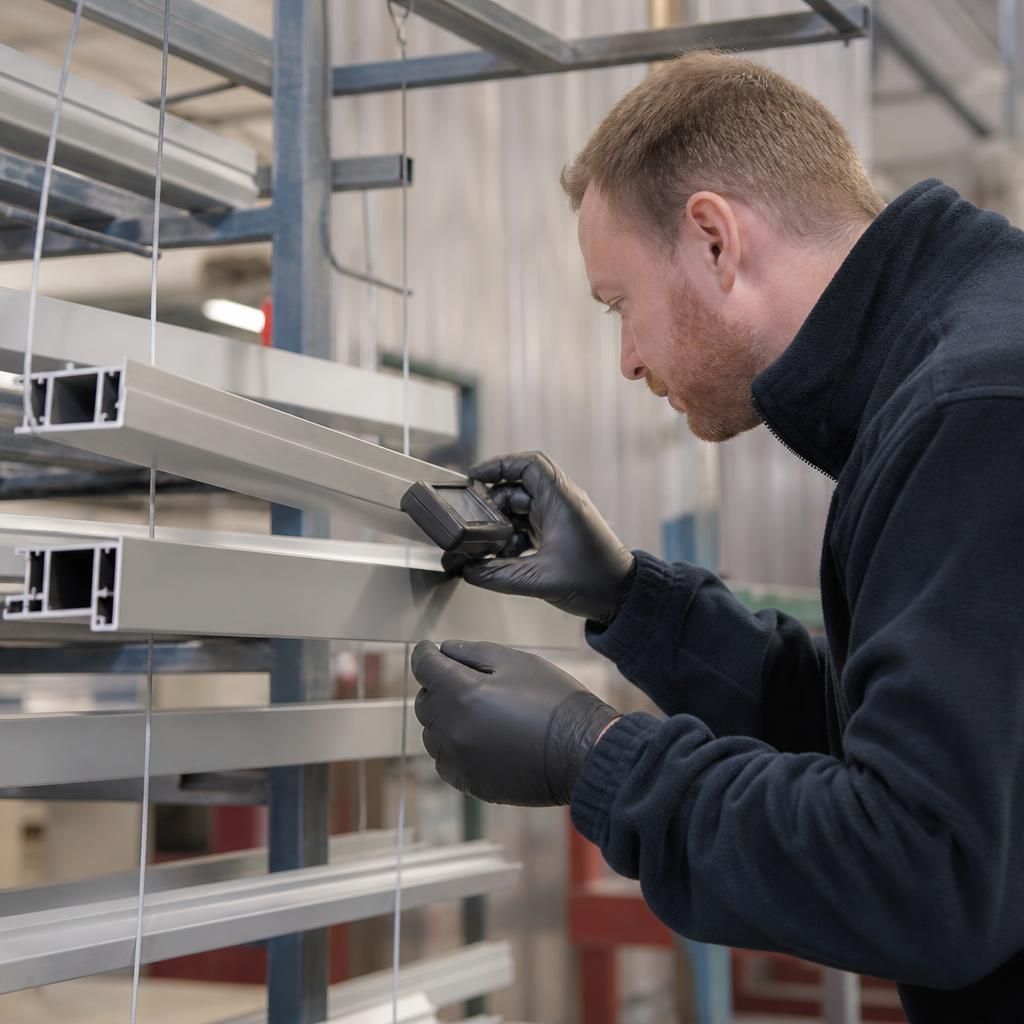
A first-off check can establish the reference for a production batch of powder coated aluminium sections. Before the full quantity is processed, an initial section is assessed against the agreed colour, gloss, texture, coverage and masking requirements. Once accepted, it provides a physical benchmark for subsequent sections and helps distinguish an actual process variation from an intended feature of the finish. This is particularly useful for repeat orders, where comparing later production with the approved first-off section supports consistent results without relying solely on visual memory.