

What types of finishes can be achieved with electrostatic epoxy powder coating?
Electrostatic epoxy powder coating can produce smooth gloss, satin and matt finishes, as well as textured effects that alter the surface appearance and feel. The chosen powder formulation and application specification determine the final colour, sheen and texture for the metal component.
Electrostatic epoxy powder coating can be specified in a wide range of colours, opacity levels and visual effects, including solid-colour, metallic, clear, hammered, wrinkle and fine-textured appearances. The final result depends on the powder system, substrate condition, film build, curing schedule and the surface preparation carried out before application.
Solid-colour finishes provide an even, opaque appearance and are commonly selected where components need to match an existing colour scheme, identify equipment or maintain a consistent appearance across a production batch. Colour selection may be based on a recognised colour reference, an approved sample or a project-specific requirement. The same powder and application settings should be retained across a batch where close consistency is important.
Metallic and special-effect finishes can introduce visual variation through reflective particles, mottling, veining or other movement in the coating. These finishes can be more sensitive to spray direction, film thickness and handling than plain colours. Components requiring a consistent appearance should therefore be positioned and coated using a repeatable process, with representative samples checked before full production.
Clear and translucent systems can be used where the appearance of the prepared metal is intended to remain visible, or where a transparent layer is required as part of a specified coating system. These finishes place greater emphasis on substrate preparation because scratches, weld marks, contamination and uneven surface profiles remain visible through the coating.
Powder can also be formulated to create distinctive tactile surfaces, such as:
- Hammered effects, which break up reflections and can help disguise minor visual variation in the underlying metal.
- Wrinkle effects, which create a pronounced folded surface and are often selected for equipment housings, enclosures and components where a less reflective appearance is required.
- Fine-grain or sand-textured surfaces, which alter the feel of the part and can provide a more practical finish for items that are handled or where a plain coating would show marks readily.
- Multi-stage or contrast finishes, where masking, selective coating or separate components are used to produce different colours or effects within one assembly.
The choice is not purely cosmetic. Surface texture affects how easily dirt can be removed, how prominently handling marks show and how mating parts fit together. A heavier texture may be unsuitable on close-tolerance interfaces, threaded areas, sliding faces or locations where seals must seat accurately. Those areas may need masking, alternative preparation or a different coating specification.
Epoxy powder is generally selected for its adhesion, chemical resistance and protective performance rather than for prolonged exposure to direct sunlight. Where coated components are intended for exterior use or sustained ultraviolet exposure, the finish specification should consider whether an epoxy system is appropriate or whether a different powder chemistry is needed for colour and appearance retention.
A suitable specification should therefore record the required colour, effect, texture, gloss category, areas to be masked, acceptable visual variation and any dimensional limits. It should also identify whether the component is for internal or external use and whether the finish must match an existing coated part. Sample panels or an approved first-off component can provide a practical reference for production, particularly where metallic or strongly textured effects are involved.
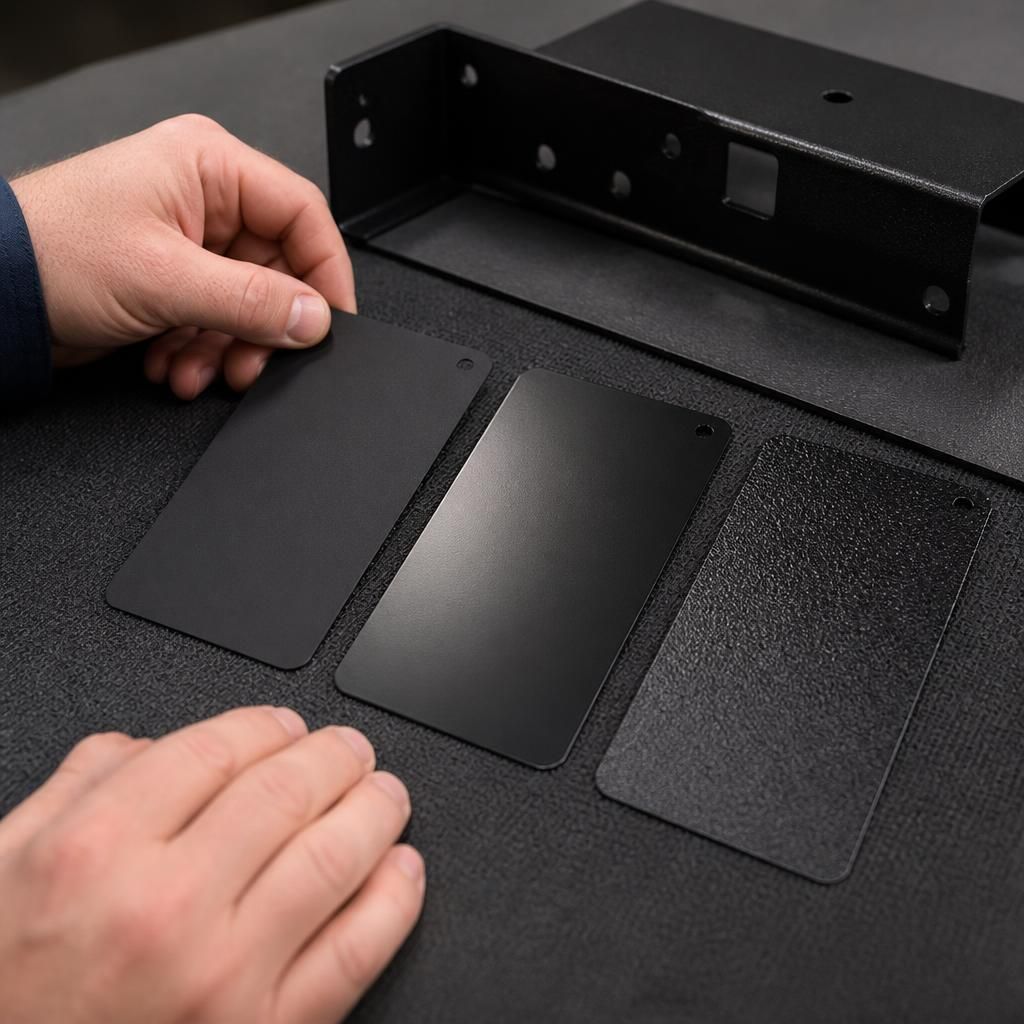
Finish descriptions should separate colour, gloss and texture because each describes a different property of the coating. Colour identifies the hue and opacity; gloss describes how much light the surface reflects; texture refers to the physical profile that can be felt on the coated part. A black component, for example, may be specified as black matt, black satin or black with a fine textured surface, and these options will not have the same visual or tactile result.
This distinction is particularly important when an existing component or assembly must be matched. A colour reference alone does not define the required appearance, while a gloss level alone does not identify the coating colour. An approved sample or finish panel can show the combined result and give the applicator a practical reference for checking the completed component.
Discuss your required electrostatic epoxy powder coating finish
Discuss your required electrostatic epoxy powder coating finish, including the colour, gloss level, texture and intended use of the component. Providing an approved sample or clear finish specification can help establish the required appearance before coating begins.