

What type of pretreatment is necessary for aluminium powder coating?
Aluminium should be thoroughly cleaned and degreased, then etched or deoxidised to remove surface contamination and provide a suitable key for the powder coating. A compatible conversion coating, followed by controlled rinsing and drying, is typically required to improve adhesion and corrosion resistance before the powder is applied.
The necessary pretreatment for aluminium powder coating is a controlled surface-preparation system matched to the aluminium alloy, the condition of the component and the service environment. Its purpose is to produce a chemically stable, uncontaminated surface that allows the powder film to bond consistently and provides a sound foundation for long-term corrosion protection.
The required treatment can vary between extruded, sheet and cast aluminium. Castings may contain porosity, mould-release residues or embedded contaminants, while extrusions can have lubricant residues from manufacturing and handling. Welded assemblies may also contain heat-affected areas, weld spatter or residues from fabrication. These differences should be assessed before the treatment route is selected, because one process is not automatically suitable for every aluminium component.
Where aluminium has an existing coating, adhesive, sealant or heavy oxide deposit, it may need additional preparation before the standard pretreatment cycle. The old material must not be left where it could separate beneath the new powder film. Mechanical preparation or a suitable stripping process may be used, depending on the substrate and the material being removed. Stripping methods must be controlled carefully: aggressive chemicals or unsuitable abrasive media can attack aluminium, alter dimensions or leave residues that interfere with adhesion.
Abrasive preparation is sometimes useful for castings, welds and localised defects, but aluminium requires a different approach from steel. Non-ferrous or otherwise suitable media should be used to avoid embedding iron particles in the surface. Excessive blasting can create an unnecessarily rough profile, distort thin sections or make the final appearance harder to control. The prepared surface should therefore be even and appropriate for the intended finish rather than simply as rough as possible.
The conversion stage is particularly important because aluminium naturally reforms an oxide layer after preparation. A conversion coating helps stabilise the surface between preparation and powder application and can improve the interface between the metal and the coating system. Available chemistries include traditional chromate-based treatments, trivalent-chrome systems and chrome-free alternatives based on technologies such as zirconium, titanium or silane. The correct choice depends on the required specification, environmental exposure, regulatory requirements and compatibility with the powder system.
Some parts also need deliberate masking before treatment and coating. Areas such as threaded holes, bearing seats, close-tolerance faces, earth points and sliding interfaces may need to remain free of conversion coating or powder. Drainage and ventilation holes should not be obstructed, particularly on hollow or fabricated sections. Masking is part of the pretreatment plan because trapped chemicals, blocked cavities or unwanted coating build-up can affect both the component’s function and its appearance.
Good pretreatment also depends on how parts are designed and presented for processing. Components should be arranged so that treatment reaches all required faces and so that liquids can drain from recesses, channels and hollow sections. Crevices, overlapping joints and unsealed tube ends can retain process liquids, creating defects later if they are not considered during preparation. Fabricated assemblies may therefore need suitable drainage, venting or sealing decisions before they are sent for coating.
Process control is normally verified through a combination of checks rather than by appearance alone. Relevant checks may include:
- visual examination for stains, smut, residue, corrosion products and areas that have not been treated consistently;
- inspection for water-break behaviour or other evidence that the surface is free from incompatible contamination;
- confirmation that the selected conversion treatment is compatible with the powder coating specification;
- review of masking, drainage and contact arrangements before coating;
- adhesion and corrosion-performance testing where the project specification or end use requires it.
For architectural, external or higher-exposure applications, the pretreatment specification should be agreed before production begins. The required system may be more demanding than that used for an indoor component, and the aluminium alloy, joint design, coating class and expected exposure all influence the decision. A coating supplier or coater may also request details of the alloy, fabrication method, previous surface treatments and intended use before confirming the process.
In practical terms, the best pretreatment is not necessarily the longest or most aggressive process. It is the one that removes the relevant contaminants, controls the aluminium surface without damaging it, provides the appropriate conversion layer and accounts for the component’s geometry and service conditions. These requirements can affect preparation time, processing cost and whether additional stripping, blasting, masking or testing is needed.
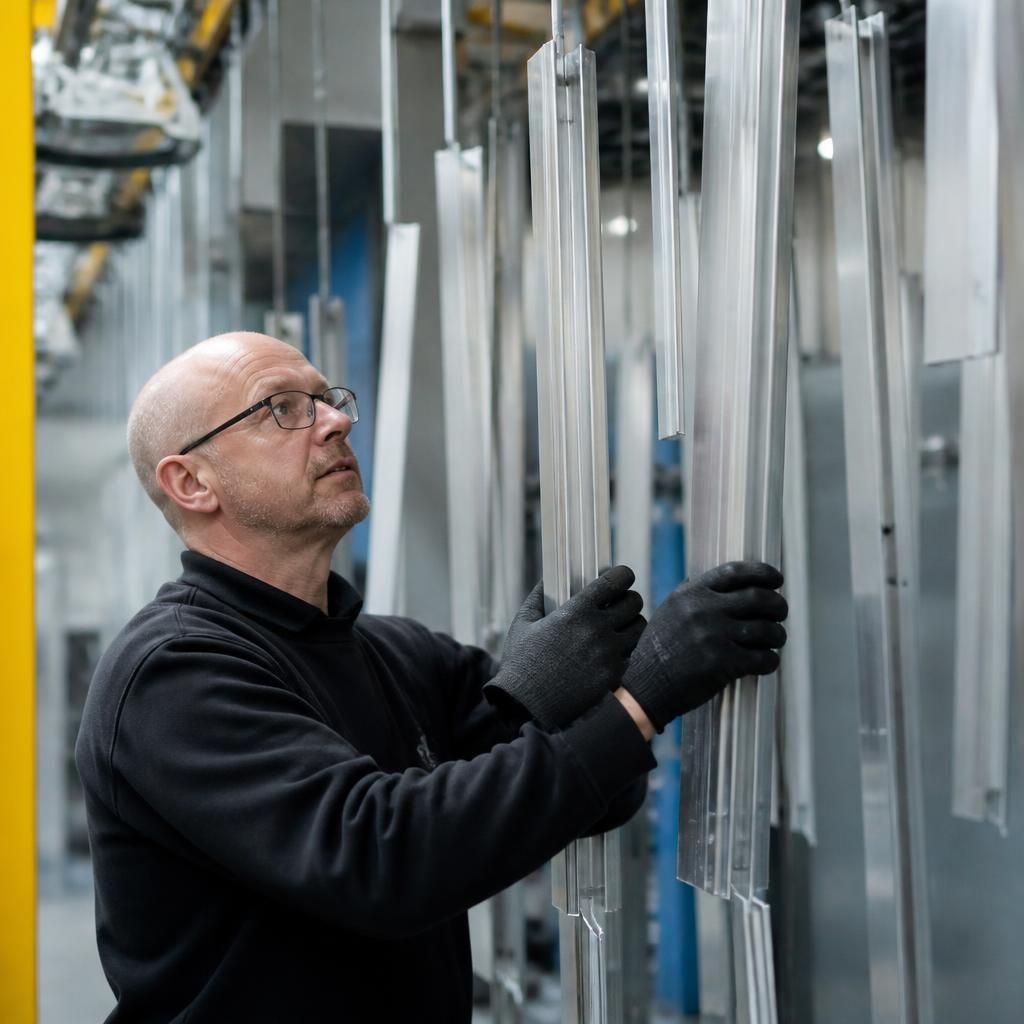
Pretreatment does not end when the aluminium leaves the chemical stage. The treated surface must be protected from fingerprints, dust, moisture and workshop contamination before powder application. Components should be handled using clean methods and kept in a suitable area while they are transferred to the coating stage.
The surface must also be fully dry, including joints, recesses and internal sections that can retain rinse water. Any remaining moisture or residue may interfere with powder adhesion or create defects beneath the finish. For this reason, the interval between final preparation and coating should be controlled as part of the overall pretreatment procedure, rather than treated as an informal handling step.
Discuss Your Aluminium Powder Coating Pretreatment Requirements
Discuss your aluminium component’s alloy, geometry, intended service environment and required finish with the powder-coating team to establish a suitable pretreatment route. This assessment can also identify whether stripping, masking, blasting or additional testing is needed before coating.