

What maintenance is required to ensure the longevity of polyester powder coated aluminium?
To extend the service life of polyester powder coated aluminium, clean it regularly with mild soapy water and a soft cloth, then rinse and dry it thoroughly. Inspect the finish for chips, scratches, staining or corrosion, avoid abrasive cleaners and harsh chemicals, and repair any damage promptly to prevent deterioration of the coating and exposed aluminium.
The longevity of polyester powder coated aluminium depends on more than the condition of the visible finish. Effective maintenance also requires control of moisture, mechanical contact, installation details and the environment in which the coated component is used. The coating should be treated as part of a wider protection system rather than as a substitute for sound design and suitable handling.
Prevent water from remaining against the aluminium for prolonged periods. Components should be positioned so that rainwater can drain away, with drainage paths kept clear and joints designed to avoid water traps. Pay particular attention to horizontal ledges, folded sections, fixings and interfaces between coated parts. Persistent dampness can encourage staining, undermine vulnerable edges and contribute to corrosion where the coating has been breached.
Check adjacent seals, gaskets and jointing materials as part of planned maintenance. Deteriorated seals can allow water or contaminants behind the coating, while incompatible materials may discolour the surface or affect the aluminium. Replacement sealants and cleaning products should be confirmed as suitable for use with polyester powder coated finishes before application.
Protect the coating from avoidable mechanical stress throughout the component’s service life. Do not drag coated aluminium across hard surfaces, rest heavy items against it or use it as an unintended support point. During maintenance work on nearby equipment, shield the finish from sparks, cement residue, plaster, cutting debris and other substances that can become bonded to the surface or cause local damage.
Where coated aluminium is fixed to other metals, review the interfaces for signs of dissimilar-metal corrosion. Suitable separators, washers or jointing materials can reduce direct contact and help prevent moisture from creating a corrosion cell. Fasteners should also be appropriate for the environment, particularly on external, coastal, industrial or frequently exposed installations.
Environmental conditions should influence the maintenance plan. Coastal salt, industrial pollutants, road spray, high humidity and sheltered areas with limited rainfall can all increase the need for closer observation. Internal components may experience less weathering but can still be affected by condensation, process chemicals or abrasive dust. A component exposed to chemicals should be assessed against the specific substance, its concentration, contact time and temperature rather than relying on a general assumption that powder coating is chemically resistant.
Keep a maintenance record for important installations. The record can identify the component, coating specification, installation date, operating environment and any changes observed during inspections. Photographs and notes about recurring staining, moisture entry or contact damage help distinguish an isolated defect from a design or environmental issue. This information is useful when deciding whether the original coating remains suitable or whether a specialist assessment is needed.
When the finish has deteriorated beyond localised remedial work, the correct treatment depends on the extent and cause of the problem. A coating specialist may need to assess adhesion, corrosion beneath the finish, contamination and the condition of the aluminium before recommending preparation and recoating. Applying a new finish over an unstable or contaminated surface can conceal the underlying issue rather than restore long-term protection.
For business-critical components, maintenance should therefore combine:
- control of water traps, drainage and joint condition;
- checking of seals, fixings and interfaces with other materials;
- protection against impact, abrasion and contamination during nearby work;
- review of exposure to salt, pollutants, chemicals, condensation and process dust; and
- documented assessment when the coating or substrate shows continuing deterioration.
This approach helps preserve both the protective function and the appearance of polyester powder coated aluminium while ensuring that emerging problems are addressed at the level of the coating, the installation or the surrounding environment.
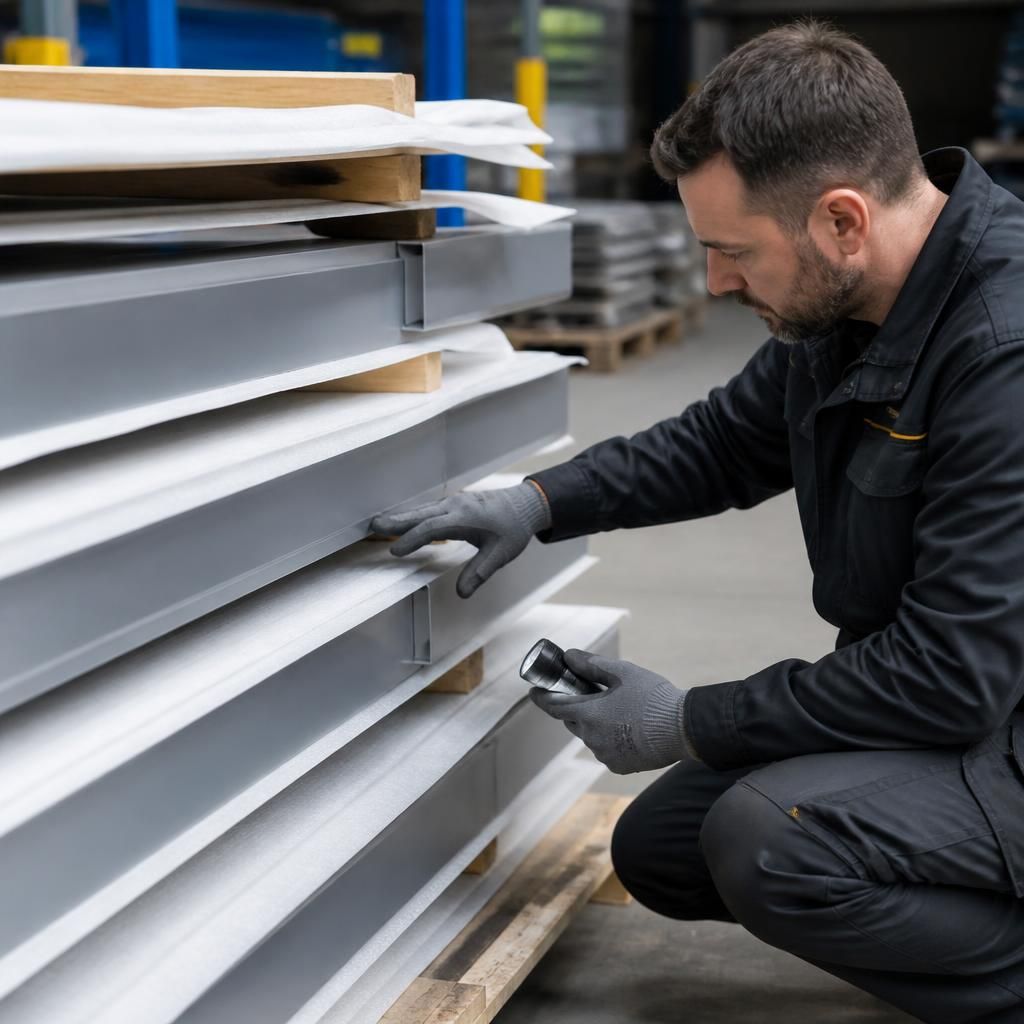
For polyester powder coated aluminium components that are stored or transported before installation, correct handling is part of maintaining the coating. Keep items separated so coated faces do not rub together, and use clean, non-abrasive supports that will not mark or contaminate the finish. Avoid trapping moisture between stacked components or beneath protective wrapping, as prolonged damp contact can leave staining and affect the coating surface.
Before installation, examine each component for scuffs, pressure marks or contamination acquired during handling. Any defect should be assessed and dealt with using a repair method compatible with the original coating specification rather than concealed during assembly. Careful storage and pre-installation inspection reduce the risk of installing damaged parts and help preserve the intended appearance and protective performance of the finished aluminium.
Discuss your polyester powder coating requirements
Discuss your polyester powder coating requirements with our specialists to identify a suitable finish and maintenance approach for your aluminium components. Share the application details and operating conditions so the coating specification can be assessed appropriately.