

How do I ensure the longevity of powder coated aluminium frames and tubes?
Ensure the longevity of powder coated aluminium frames and tubes by specifying a coating suited to their environment, using thorough surface preparation and avoiding damage during handling and installation. Regular cleaning with a mild detergent, prompt attention to scratches or corrosion, and protection from prolonged exposure to harsh chemicals will help preserve the coating’s appearance and performance.
The longevity of powder coated aluminium frames and tubes depends on maintaining the coating as a continuous barrier, preventing water traps and avoiding damage at interfaces, fixings and contact points. A durable result is therefore determined not only by the powder coating itself, but also by the component design, installation method, surrounding materials and ongoing inspection.
Design the component to shed water
Aluminium sections should be designed so that rainwater can drain away rather than collect in enclosed corners, laps or horizontal recesses. Persistent moisture can find its way into joints and damaged areas, allowing corrosion staining or loss of adhesion to develop beneath the finish. Where hollow tubes are used, sealed ends, drainage provisions and suitable venting should be considered according to the component’s position and function.
Sharp edges, deep recesses and inaccessible cavities can also make it difficult to achieve a consistent coating and to inspect the finished part. Radiused edges and accessible surfaces generally provide better coating coverage and make future condition checks more effective. Welds, cut ends and fabricated joints should be finished cleanly, as irregularities at these points can become vulnerable areas during service.
Protect the coating during assembly
Use suitable packing, lifting equipment and non-abrasive supports when moving coated frames and tubes. Metal-to-metal contact, dragging across benches and clamping directly onto visible faces can mark the surface even when the damage is not immediately obvious. Protective films or temporary coverings may be useful during fabrication and installation, but they should be compatible with the coating and removed without leaving adhesive residue.
Fasteners, brackets and seals should be selected to avoid cutting into the finish. Where a fixing penetrates the coating, the exposed interface should be properly protected so that moisture cannot travel beneath the surrounding film. Avoid trapping swarf, abrasive dust or construction debris against the coated surface, particularly at joints and beneath brackets.
Prevent contact corrosion
Powder coated aluminium can be affected by contact with incompatible metals or materials that retain moisture. Isolating washers, sleeves, gaskets or sealants may be needed where aluminium meets steel, copper or other dissimilar materials. The correct approach depends on the environment and the construction detail, but the principle is to prevent a conductive, wet path forming between the materials.
Care is also needed with wet cement, mortar, plaster, timber treatments and other building residues. These substances can be alkaline, acidic or chemically active while wet, and may stain or attack the finish if left in contact with it. Temporary protection during adjacent construction is preferable to relying on later removal.
Control the surrounding environment
Frames and tubes last longer when they are not continually exposed to avoidable sources of contamination. Locate drainage outlets so that dirty or chemically contaminated water does not run over coated aluminium. In industrial settings, assess airborne oils, process dust, salts, solvents and cleaning agents as part of the maintenance plan, rather than treating all deposits as ordinary dirt.
Ventilation around the component can also reduce prolonged dampness. Where a frame is installed against another surface, leave appropriate access for inspection and avoid arrangements that create permanently enclosed, wet interfaces. Internal areas, tube ends and concealed brackets deserve attention because deterioration can remain hidden until it has progressed.
Inspect systematically
Condition checks should cover more than the most visible faces. Examine corners, edges, welds, tube ends, fixings, joints, bracket locations and areas beneath seals. Look for blistering, lifting, chalking, colour change, cracking, staining or localised corrosion. A small change should be recorded and investigated so that the underlying cause—such as trapped moisture, movement, incompatible contact or mechanical impact—can be addressed.
Inspection intervals should reflect the environment and the consequences of failure. Components exposed to industrial contamination, coastal air, frequent washing or heavy handling require closer observation than those in a clean, sheltered setting. Keeping records of inspection findings and any remedial work helps identify recurring problems and informs future design or coating decisions.
Use compatible repairs and replacement parts
When a component is drilled, cut, modified or fitted with replacement hardware after coating, the altered area should be treated as a new protection detail. Do not assume that a general-purpose paint, sealant or adhesive will provide compatible adhesion or weathering performance. The repair specification should match the existing finish as closely as practical and should include proper preparation of the affected area.
If deterioration is widespread, repeated local repairs may not address the cause. The component may need assessment for stripping and recoating, or replacement where corrosion or loss of coating has affected its structural or functional role. A coating specialist can assess the existing condition and advise whether local repair or full reprocessing is the more appropriate route.
In practice, the best long-term results come from treating the coating as part of the complete aluminium assembly. Sound detailing, isolated dissimilar materials, careful installation, environmental control and documented inspections reduce the stresses placed on the finish and help preserve both the appearance and protective function of powder coated frames and tubes.
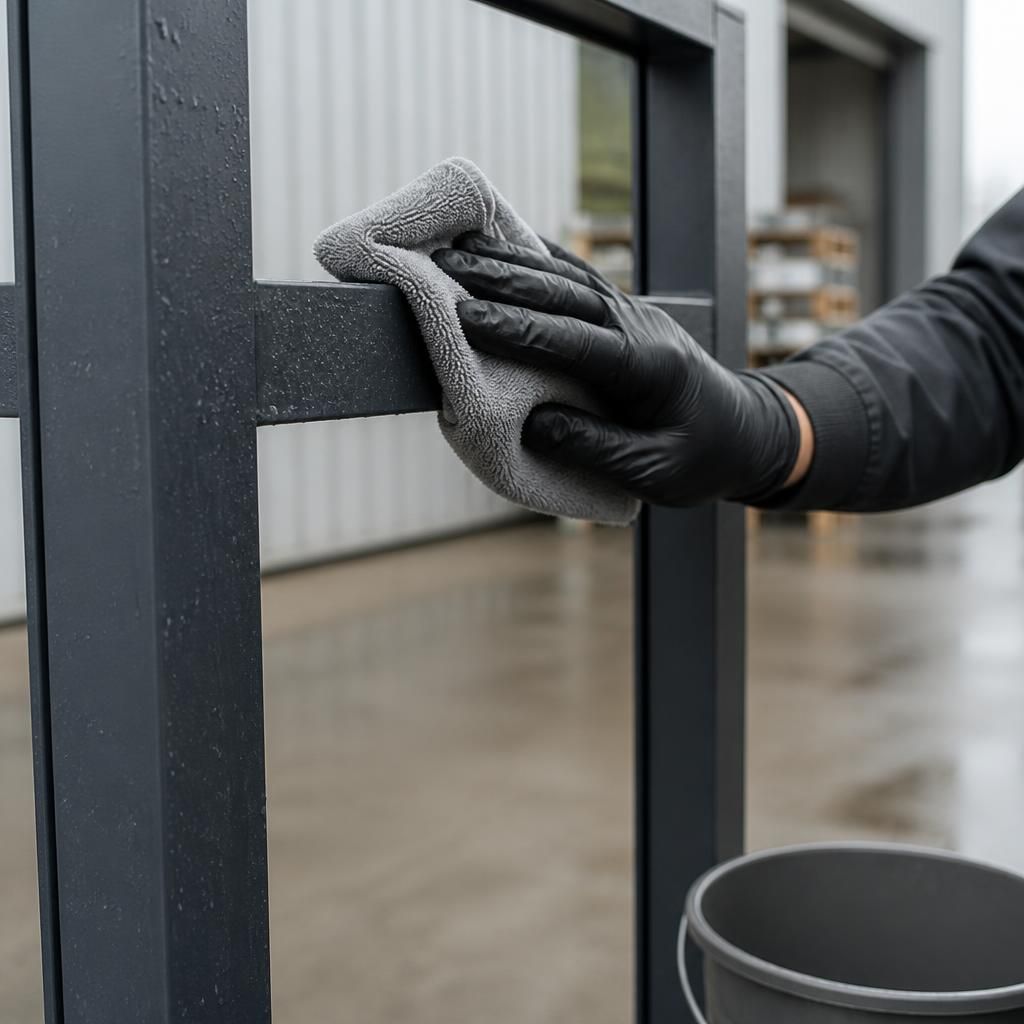
Cleaning technique affects the service life of powder coated aluminium because abrasive tools and unsuitable chemicals can gradually dull or weaken the finish. Remove loose dust with clean water, then use a soft cloth or sponge with a mild, pH-neutral detergent. Rinse away detergent and dissolved residue thoroughly, and dry the surface with a clean, non-abrasive cloth to prevent deposits being left behind.
- Do not use scouring pads, wire brushes, abrasive powders or blades on the coating.
- Test any specialist cleaner on a concealed area before applying it to visible surfaces.
- Remove oil, adhesive residue and other deposits using only a product confirmed as compatible with the coating.
- Avoid allowing cleaning products to dry on the aluminium, particularly in warm or sun-exposed conditions.
A consistent, gentle cleaning method preserves the finish without introducing the scratches or chemical damage that can shorten the effective life of the coating.
Discuss Powder Coating for Your Aluminium Frames and Tubes
Discuss your aluminium frames or tubes with a powder coating specialist to review the existing finish, service environment and any areas requiring attention. Provide component details and photographs where available so the appropriate maintenance, repair or recoating route can be considered.