

What is the impact of improper surface preparation on powder coating durability?
Improper surface preparation leaves contaminants, oxidation or an unsuitable surface profile beneath the powder coating, preventing a strong bond with the metal. This can cause poor adhesion, peeling, blistering and corrosion beneath the coating, significantly reducing its durability.
Improper surface preparation reduces powder coating durability by weakening the conditions needed for a stable, continuous finish. Even when the powder is applied and cured correctly, preparation defects can leave the coating unable to withstand handling, moisture, chemicals, abrasion and outdoor exposure for its intended service life.
The preparation stage determines how well the coating can key to the substrate. Oil, grease, machining residue, dust, mill scale, weld residue and handling marks can act as a barrier between the metal and the powder film. A part may look clean to the eye while still carrying a thin residue that interferes with bonding. Once the component is put into service, movement, impact or moisture can exploit these weak areas and cause local breakdown.
Surface condition also affects protection at vulnerable areas such as welds, joints, recesses, drilled holes and sharp edges. Weld spatter and residues can create uneven coverage, while poorly treated recesses may retain moisture or cleaning chemicals. Excessively sharp edges can leave a thinner film than adjacent flat surfaces, making them more susceptible to early wear. Rounded edges, suitable finishing of welds and thorough access to difficult geometry help produce a more consistent protective layer.
Preparation normally involves a controlled sequence rather than a single cleaning operation:
- Inspection: identify the substrate, existing scale or coatings, weld condition, sharp edges, damage and areas that may require masking or additional treatment.
- Cleaning and degreasing: remove oils, grease, marking materials and process residues using a method compatible with the metal and the subsequent pretreatment.
- Mechanical or chemical preparation: remove adherent scale and other surface irregularities, while creating a suitable, consistent surface for the powder film.
- Rinsing: eliminate loosened material and chemical residues so they are not trapped beneath the finish.
- Drying and controlled handling: ensure the part is fully dry and avoid recontamination before powder application.
Rinsing and drying are particularly important. Residual salts or treatment chemicals can remain active beneath the film, drawing in moisture and contributing to corrosion at the metal interface. Water trapped in joints, cavities or threaded sections may also affect the finish during curing or service. Components should therefore be drained effectively, dried thoroughly and handled with clean equipment after preparation.
The required preparation depends on the base material and the conditions the finished component will face. Mild steel, galvanised steel, aluminium and previously coated parts do not respond identically to cleaning or abrasion. A process suitable for one substrate may damage another, leave an unsuitable profile or fail to deal with existing surface films. Service conditions such as outdoor exposure, chemical contact, immersion, road salt and heavy abrasion should be considered when selecting the preparation method and pretreatment system.
Quality control should verify preparation before powder is applied. Useful checks include visual inspection under suitable lighting, confirmation that surfaces are free from residue, checks for dryness, assessment of welds and edges, and, where appropriate, tests for surface cleanliness or treatment performance. Process records can also help identify whether a recurring failure relates to a particular material, fabrication process, cleaning stage or component design.
Preventing durability problems is usually more effective than attempting to correct them after coating. Parts should arrive free from avoidable contamination, fabrication defects should be addressed before coating, and the preparation sequence should be agreed for the substrate and intended environment. When a component has complex geometry, mixed materials or demanding service conditions, discussing these factors with the powder coating specialist before processing helps ensure that preparation is designed around the part rather than applied as a generic step.
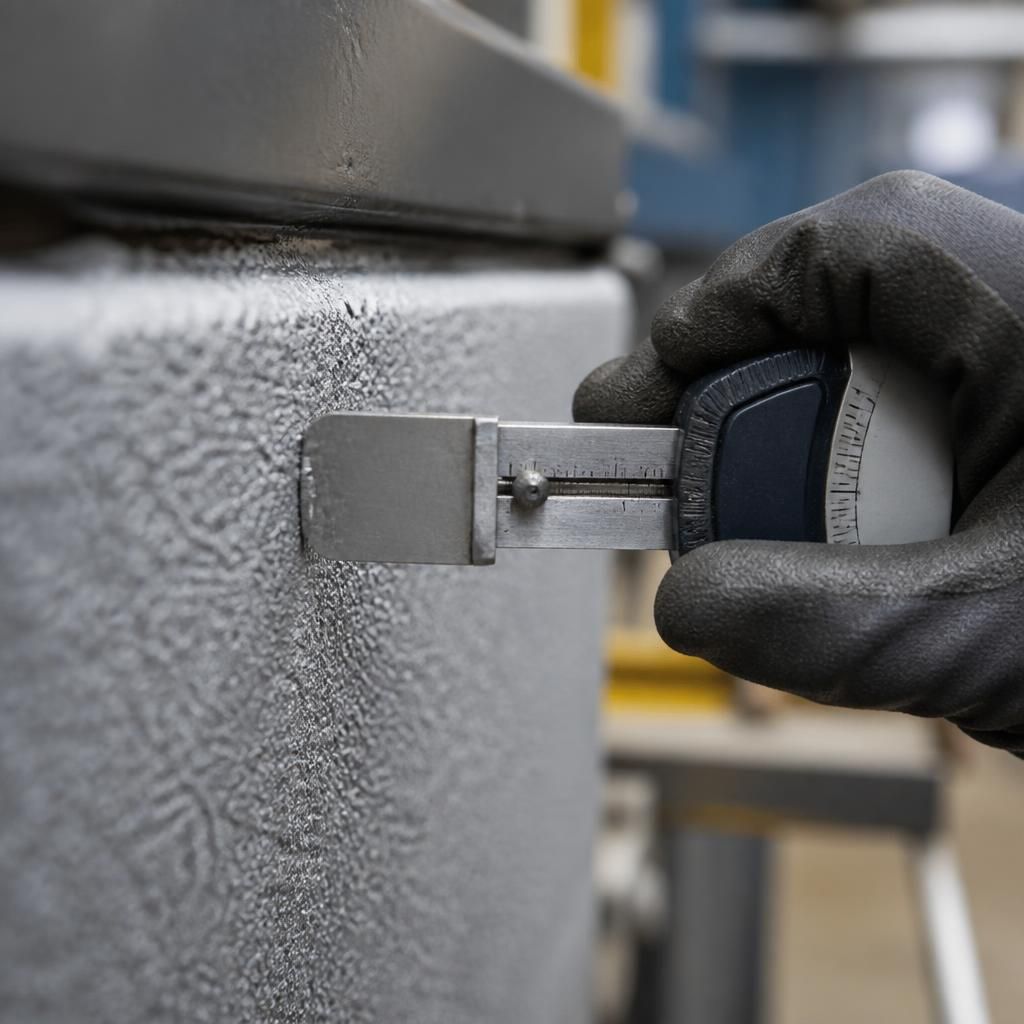
Surface profile is a critical part of preparation because it controls how the powder coating mechanically keys to the metal. A profile that is too shallow may provide insufficient grip, while an excessively rough or uneven profile can leave high points with reduced film coverage and create stress concentrations in the coating. Aggressive preparation may also embed abrasive particles or distort softer substrates, introducing defects that remain hidden until the component is exposed to impact, moisture or abrasion. The preparation method should therefore produce a controlled, even profile suited to the substrate and the coating system, rather than simply removing visible dirt or scale.