

What sectors and industries benefit most from nylon powder coating?
Nylon powder coating is particularly beneficial for manufacturing, metal fabrication, construction and automotive businesses that need durable protection for components exposed to wear, impact, moisture or chemicals. It is well suited to items such as industrial parts, fabricated assemblies, vehicle components and equipment where a tough, resilient finish is required.
The sectors that benefit most from nylon powder coating are those using metal components exposed to repeated contact, friction, impact, moisture or chemical contamination. It is particularly relevant to engineering and manufacturing, material-handling, construction, automotive and industrial equipment applications where a resilient polymer layer can protect the substrate while providing a smoother, less abrasive surface than bare metal.
Engineering and general manufacturing
Manufacturers use nylon-coated components where metal parts are repeatedly handled, moved or brought into contact with other materials. Suitable examples can include guides, rollers, bushes, chutes, brackets, guards, fixtures and machine components. The coating can help reduce surface damage caused by rubbing and can prevent metal-to-metal contact in assemblies where excessive noise, marking or wear would be undesirable.
Nylon is also useful for parts that need a degree of electrical insulation or a non-metallic contact surface. The suitability of the coating depends on the component design, operating temperature, loading and the required coating thickness, so the intended use should be defined before treatment.
Material-handling and conveying
Conveyors, transfer equipment and storage systems often contain parts that experience continuous movement or contact with packaged goods and other components. Nylon powder coating can be considered for rollers, guides, trays, chutes, rails and handling fixtures because its relatively smooth surface can help limit friction and reduce marking of items passing over it.
This makes the finish relevant to manufacturing lines, distribution equipment and industrial storage systems. The correct specification still depends on the load, speed, contact material and cleaning regime. Components exposed to sharp edges, extreme heat or highly aggressive substances may require a different coating system or a more detailed technical assessment.
Construction and infrastructure
Construction-related metalwork can benefit where components are exposed to outdoor conditions, handling damage or contact with other materials during installation and use. Applications may include protective guards, access equipment, fabricated supports, brackets, frames and other items requiring a robust surface with resistance to routine abrasion and environmental exposure.
Nylon can be appropriate where the coating needs to provide more than visual coverage. It may help protect edges and contact surfaces during transportation, assembly and service. For external applications, the specification should take account of sunlight, moisture, temperature changes, cement or construction chemicals, and the likelihood of impact. The coating system should be selected for the actual environment rather than for sector alone.
Automotive and vehicle-related manufacturing
Automotive businesses and component manufacturers may use nylon-coated metalwork for fixtures, brackets, guides, protective parts and handling equipment used around production and assembly operations. A resilient, relatively low-friction surface can be valuable where components are positioned, supported or moved repeatedly and where bare metal could cause scratching or accelerated wear.
Nylon coating can also be considered for selected vehicle-related parts that need protection from moisture, road contamination or repeated handling. However, automotive applications vary substantially. Parts exposed to high heat, fuels, oils, concentrated chemicals or demanding mechanical loads need a coating specification based on those conditions, including confirmation that nylon is compatible with the service environment.
Industrial machinery and equipment
Equipment manufacturers can benefit from nylon coating on guards, covers, housings, contact plates and fabricated machine parts that require a protective, non-abrasive surface. It is especially relevant when the component must withstand routine handling or sliding contact without relying solely on the underlying metal for protection.
The finish may also support the design of quieter or less damaging contact points within machinery, although it should not be treated as a substitute for a separately engineered bearing, seal or wear component. Engineers should consider tolerances because the added coating thickness can affect clearances, fits, threads and moving interfaces.
How to decide whether a sector is a good fit
- Identify the main exposure: abrasion, impact, friction, moisture, chemicals, dirt or repeated handling.
- Check the operating temperature and whether the part will face rapid temperature changes.
- Consider the substrate, component geometry, required thickness and areas that must remain uncoated.
- Assess whether the coated surface will contact products, packaging, tools or other metal parts.
- Define cleaning methods and substances, particularly where detergents, solvents or process chemicals are used.
- Confirm dimensional tolerances and masking requirements before production coating.
In practice, nylon powder coating is most valuable where a metal component needs a tough, wear-conscious and protective interface rather than a purely decorative finish. A coating supplier can assess the component drawings, expected service conditions and batch requirements to determine whether nylon is suitable or whether another specialist powder coating would be more appropriate.
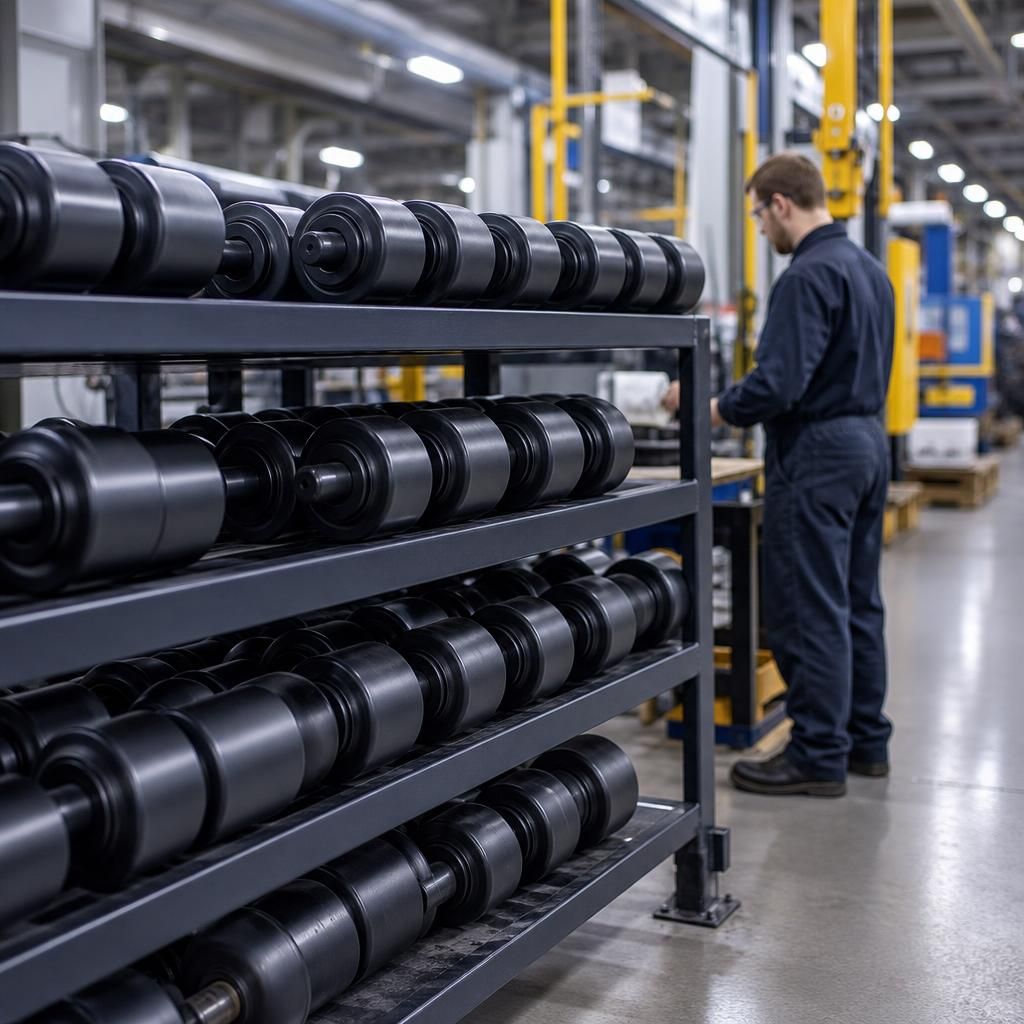
Nylon powder coating is most valuable where a business needs to retain the strength and form of a metal component while adding a resilient polymer contact surface. This can help manufacturers, handling-equipment producers and automotive assembly operations protect metal parts without redesigning them as entirely polymer components.
The benefit is therefore often concentrated in specific component interfaces rather than across every item produced by a sector. Guides, supports, contact plates and handling fixtures may gain more from nylon than enclosed parts with little physical interaction. This makes the coating particularly relevant to businesses whose equipment repeatedly positions, supports or transfers materials.