

How does the nylon coating application process work to ensure a uniform finish on metal surfaces?
The nylon coating application process achieves a uniform finish by preparing the metal surface thoroughly, applying the coating consistently, and controlling the curing stage so the nylon bonds evenly across the component. Application method, coating thickness and curing conditions are selected to suit the part’s material, shape and intended use.
A uniform nylon coating depends on controlling the complete application sequence, from how the component is positioned through to the way excess material is removed and the finished surface is inspected. The applicator must account for the part’s geometry, coating method, edges, recesses and areas that must remain uncoated, because these factors affect how evenly nylon powder or nylon coating material reaches the metal.
Before coating, the component is assessed for its material, dimensions, profile and intended service conditions. This identifies features that may need masking, such as threads, bores, mating faces, electrical contact points or precision-machined areas. Suitable plugs, caps or high-temperature masking materials can be used to prevent unwanted build-up. Components are also arranged so that lifting points, hooks and contact marks are kept to areas where they will have the least practical effect.
Part positioning is particularly important when coating complex fabrications. Sharp projections, deep recesses, narrow channels and internal corners can receive material differently from broad, exposed faces. Racking should therefore provide stable support without shielding surfaces from the coating stream. Where the design allows, parts may be rotated or presented in more than one orientation so that difficult areas are not reliant on a single application angle.
The application method is selected according to the component and the required finish. Nylon can be applied using techniques such as electrostatic powder application or fluidised-bed coating. Electrostatic application uses charged powder attracted to the grounded metal surface, while fluidised-bed processing involves bringing a heated component into contact with suspended nylon particles. These methods do not produce identical results on every shape, so component size, wall thickness, access to all faces and the required coating build must be considered before processing.
During powder application, the operator controls the distance and movement of the spray equipment rather than holding it in one position. A consistent overlap between passes helps avoid light bands, heavy edges and visible variations in texture. Corners and edges require particular attention: powder can accumulate at some profiles and be less readily deposited in recessed areas. Adjustments to application angle, gun movement and the number of passes help balance these differences.
For fluidised-bed work, the temperature of the metal and the immersion or contact time influence how much nylon melts and flows over the surface. A component that is too cool may not achieve adequate coverage, whereas excessive heat can create an unnecessarily heavy film, soften detail or alter the appearance. Parts are therefore handled consistently and monitored against the coating specification rather than relying solely on visual judgement.
Uniformity also depends on controlling the powder and equipment. The material must be suitable for the specified nylon finish and kept free from contamination or moisture. Application equipment should be clean and correctly set up, with attention to powder delivery, air movement, electrical grounding where relevant and the condition of spray components. Inconsistent feed or poor grounding can contribute to patchy deposition, back-ionisation effects or uneven film build.
After deposition, the coating is heated according to the requirements of the nylon system. The relevant condition is the temperature reached by the metal and coating, not simply the displayed oven temperature. Component thickness, mass and shape affect heat transfer, so heavier sections and sheltered areas may require different handling from thin, exposed sections. Correct heating allows the deposited nylon to melt and flow into a continuous layer without unnecessarily affecting the substrate or the component’s dimensions.
Cooling should also be controlled. The coated part needs to remain supported while the nylon solidifies, particularly where the component is long, thin or susceptible to distortion. Contact with racks, other parts or contaminated surfaces before the coating has stabilised can mark the finish. Once cool, masking is removed carefully so that edges remain clean and the coating is not torn away from the surrounding metal.
Inspection confirms whether the finish is consistent across the complete component. Typical checks include:
- Visual examination for bare areas, pinholes, blisters, runs, inclusions, excessive texture and colour variation.
- Checks around edges, corners, recesses, welds and other features that commonly receive a different coating build.
- Verification that masked faces, threads and apertures remain usable and free from unwanted nylon.
- Measurement of coating thickness where the specification requires controlled film build.
- Assessment of adhesion or other performance characteristics where testing is appropriate for the component’s duty.
If an inconsistency is identified, its cause should be traced before the part is accepted. The issue may relate to part orientation, insufficient access, powder delivery, surface contamination, heating behaviour or the design of the component itself. Rework is not simply a matter of adding more material: unsuitable areas may need to be stripped, prepared again and recoated so that the final layer bonds properly and remains even.
For manufacturers and fabricators, supplying clear drawings, masking requirements, dimensional tolerances and service information helps the coating process achieve a repeatable result. Batch parts should be presented consistently where possible, since changes in orientation, loading or component temperature can create avoidable differences between items. This process-based approach is suitable for industrial metal components requiring a durable nylon finish, including parts with demanding handling, wear or environmental requirements.
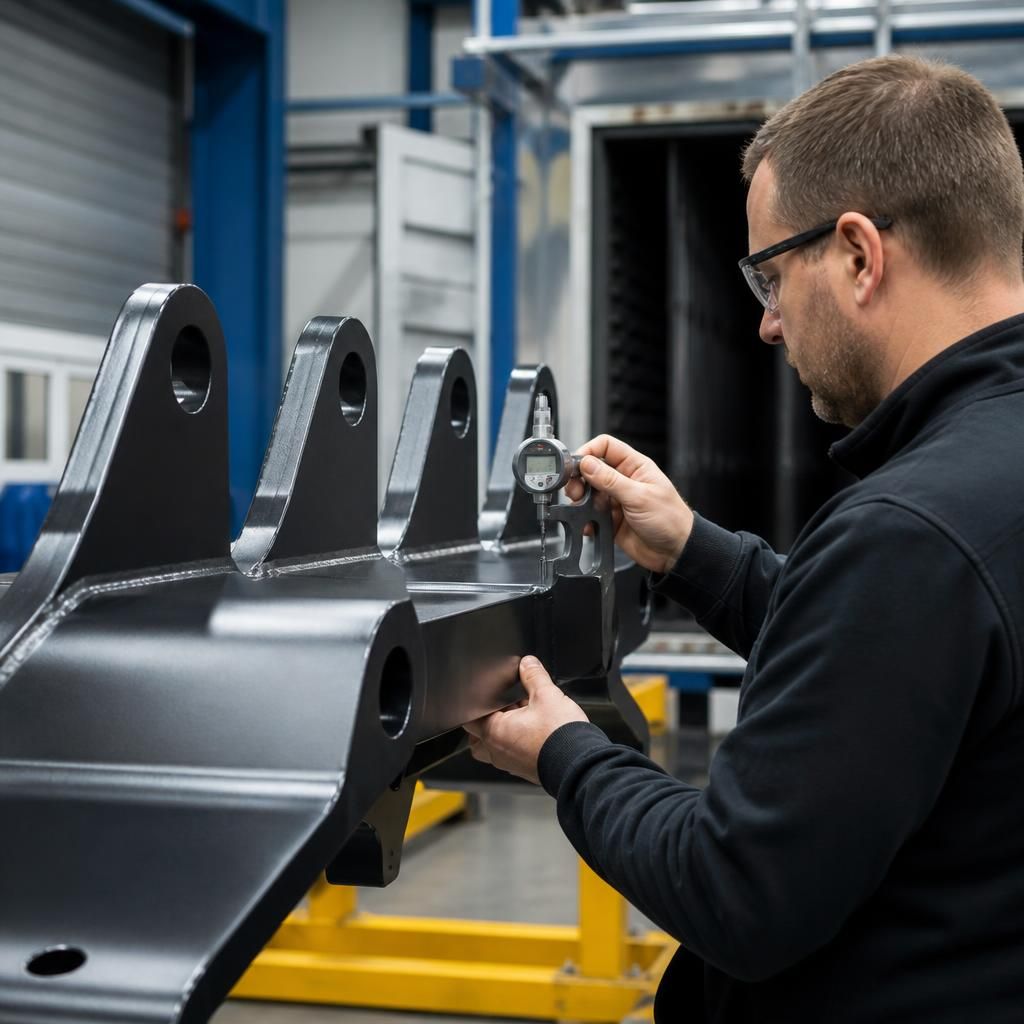
A uniform nylon finish is established by defining the required coating specification before production begins. This should cover the acceptable appearance, coating build, masked areas, edge coverage and any dimensional limits that affect assembly or function.
For unfamiliar components or repeat production, a representative trial part can be used to confirm the proposed settings and identify features that may need adjustment. Once the result meets the agreed criteria, the relevant process conditions can be recorded and applied consistently to the remaining batch. This gives inspection a clear reference point and helps distinguish acceptable variation from a genuine coating fault.