

What are the key considerations when selecting a zinc powder coat primer for application over mill scale?
When selecting a zinc powder coat primer for application over mill scale, assess its compatibility with the chosen topcoat, tolerance of the prepared surface, adhesion performance and suitability for the required level of corrosion protection. Also consider the component’s operating environment, coating thickness, curing requirements and whether the primer can be applied consistently across the part’s size, shape and production volume.
A suitable zinc powder coat primer for mill scale is one that forms a stable, well-bonded corrosion-control layer on the actual steel condition, while functioning as part of a tested coating system. Selection should therefore begin with the type and condition of the mill scale, then consider the primer’s zinc chemistry, film behaviour, application limitations, inspection requirements and compatibility with any planned repair process.
Confirm what “zinc primer” means. Some products described as zinc primers contain metallic zinc powder intended to provide sacrificial, or cathodic, protection. Others use zinc phosphate or another zinc compound mainly as an inhibitive pigment. These products do not offer identical protection and should not be assessed by the word “zinc” alone. The technical data sheet should state the primer’s formulation, intended use and position within the coating system.
Assess the mill scale condition rather than treating it as a uniform surface. Mill scale can range from tightly adherent blue-black oxide to cracked, layered or partially detached material. It may also be affected by forming, cutting, welding, storage or handling. A primer designed for sound, prepared steel may not be appropriate where unstable scale remains. Ask the coating supplier or applicator to assess representative components, including areas with different scale characteristics, rather than relying on a small clean test panel.
Review the zinc-rich film design. The amount and distribution of metallic zinc influence how the primer behaves, but higher zinc content alone does not automatically make a product the best choice. The binder must hold the pigment together, allow the film to be applied evenly and support the intended overcoating arrangement. Excessive pigment loading can affect powder flow, film formation and surface appearance. Product literature should also identify recommended film characteristics, storage requirements and any restrictions on the finishing system.
Consider the steel and component’s fabrication history. Mill scale may be disturbed by bending, drilling, cutting or welding after it has formed. Heat-affected zones and weld areas can have different oxide layers from the surrounding steel. Where a component combines rolled sections, fabricated joints and machined areas, the selected primer should be assessed across all these substrate conditions. This is particularly important for assemblies in which concealed faces, laps, sharp edges or narrow recesses are difficult to coat and inspect.
Check the application method and equipment requirements. Zinc-rich powders can behave differently from standard decorative powders because of their pigment loading and electrical properties. The product information should be checked for suitable spray equipment, recovery arrangements, grounding requirements and acceptable application conditions. Part geometry also matters: recesses, internal corners and Faraday-cage areas may receive less powder than exposed faces. A selection is more credible when the proposed process can deliver the required coverage on the real component, not only on flat test coupons.
Look for evidence from representative system testing. A practical qualification programme may include:
- visual assessment of the primer over the relevant mill-scaled steel;
- checks for pinholes, craters, blistering, uncovered edges and other film defects;
- dry-film measurements at accessible and vulnerable areas;
- adhesion testing where appropriate to the specification;
- assessment of the complete primer and topcoat system after exposure relevant to the intended service; and
- inspection of repaired or damaged areas using the proposed repair method.
Testing should use the actual steel type, representative scale condition and intended production process. Results from a smooth, freshly prepared laboratory panel may not predict performance on fabricated steel retaining variable mill scale.
Allow for edge and defect treatment. The selection should include a defined approach for cut edges, weld spatter, sharp corners, handling damage and areas where mill scale has broken away. If the primer relies on a continuous zinc-rich film, gaps or poorly covered edges can become weak points. The specification should state how these locations are to be treated before the final finish is applied and how damage will be identified during inspection.
Check repair and maintenance compatibility. Industrial components may require local repair after transport, installation or service. Identify whether the original powder primer and topcoat can be repaired with a compatible powder process, a liquid coating or a zinc-rich repair material. The repair product should not undermine the surrounding coating or create an unsuitable interface. This information is especially useful for large fabrications that cannot be returned to the original coating line.
Finally, obtain the current technical data sheet, safety data sheet and application instructions before approving the product. Confirm the intended substrate, zinc designation, system sequence, inspection method, repair provisions and limitations in writing. For a B2B coating specification, a small trial on representative mill-scaled components is often more informative than selecting a primer from its name or a general corrosion-resistance claim.
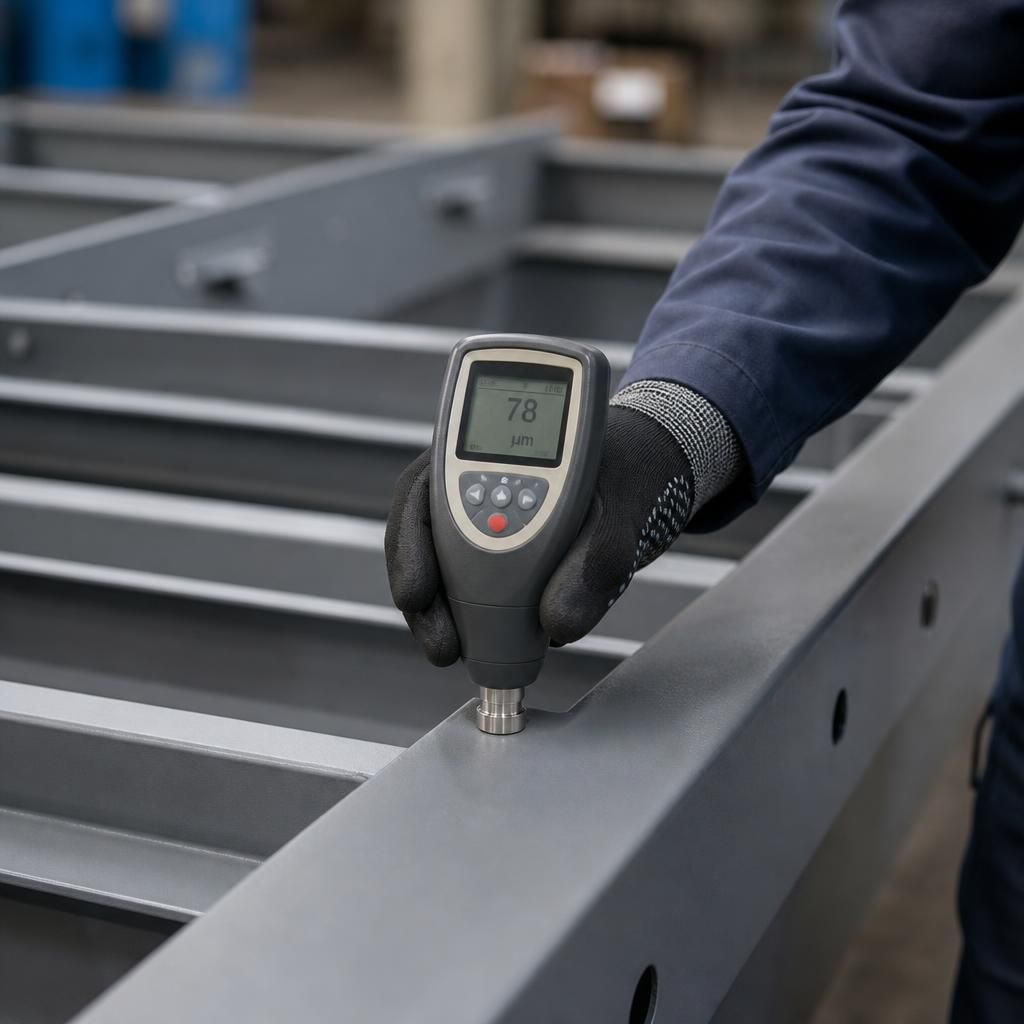
Film thickness is a practical selection criterion for a zinc powder coat primer because the usable application range must suit the component, not just the product specification. A film that is too thin may leave discontinuities in the protective layer, while excessive thickness can affect curing, surface profile and the appearance of the subsequent finish.
Ask for the manufacturer’s recommended dry-film range and confirm that it can be achieved consistently on the actual component. The specification should account for edges, corners, recesses and areas where powder deposition is less predictable, with measurements taken before the topcoat is applied. This helps distinguish a primer that performs well under controlled conditions from one that is suitable for the geometry and production process involved.
Discuss Your Zinc Powder Coat Primer Requirements
Discuss your zinc powder coat primer requirements with our Midlands coating team, providing details of the steel condition, component geometry, intended service environment and proposed topcoat. We can help identify the information needed to assess a suitable coating system for your application.