

Are there specific industries that benefit most from high temp powder coating?
High temperature powder coating is most beneficial to industries producing or using metal components exposed to elevated operating temperatures, including automotive, manufacturing, industrial equipment and construction. It provides a durable finish where heat resistance, corrosion protection and consistent appearance are important considerations.
High temperature powder coating is most suitable for industrial sectors whose metal components experience sustained heat, repeated heating and cooling, or contact with hot air, gases, oils and other process materials. The best applications are determined by the component’s actual operating temperature and exposure conditions, rather than by the industry name alone.
Automotive and transport components can benefit where parts are positioned close to engines, exhaust systems, braking assemblies or other heat-producing equipment. Typical considerations include heat cycling, vibration, road contaminants and corrosion. The coating specification must match the highest temperature reached in service, not simply the normal running temperature, because short periods of overheating can affect colour, adhesion and film performance.
Industrial machinery and process equipment are common applications. Manufacturers may require a heat-resistant finish for guards, frames, housings, brackets, ductwork and other fabricated metal parts used around furnaces, dryers, ovens, burners or heated production lines. In these settings, the coating can form part of a wider protection strategy, alongside suitable metal preparation and design that avoids areas where moisture or contaminants can become trapped.
Heating, ventilation and thermal-processing equipment may also require specialist powder finishes. Components such as heater casings, enclosures, ventilation parts and equipment panels can be exposed to elevated temperatures during operation. The appropriate powder depends on whether the part experiences dry heat, humidity, condensation or contact with cleaning chemicals. A coating that performs well in dry heat may not be suitable for a regularly washed or chemically exposed component.
Fabricated metalwork used in construction can be a suitable candidate where metalwork is installed near heat sources or forms part of plant and building services. Examples may include equipment supports, protective guards, enclosures and specialist fabricated parts. The design, location and surrounding materials need to be assessed, particularly where the coating is expected to retain its appearance as well as protect the metal.
Electrical and industrial enclosures may benefit when cabinets, covers or mounting parts are installed near hot machinery. Here, the coating choice must be considered alongside dimensional tolerances, electrical requirements, masking areas and the effect of curing on seals, threads or fitted components. Powder coating is applied and cured as a complete finish, so parts containing heat-sensitive items may need to be disassembled before treatment.
Other relevant applications include specialist metal components for engineering, agricultural machinery and production facilities. These are not automatically high-temperature applications: a part should be assessed according to its full service environment. Important questions include:
- What is the continuous operating temperature?
- What peak temperature and duration might the component experience?
- Will the part undergo frequent thermal cycling?
- Is it exposed to oil, fuel, solvents, moisture, salt, cleaning agents or process chemicals?
- Does it need to retain a particular colour, gloss level or surface appearance after heating?
- Are there threaded sections, mating faces, moving parts or close tolerances that require masking?
The powder type and curing schedule should be selected from the coating manufacturer’s technical information and matched to the metal substrate and intended use. High-temperature performance can vary considerably between formulations; a general-purpose powder should not be assumed to provide specialist heat resistance. Surface preparation is equally important, because contamination, oxidation or poor adhesion can cause failure even when the powder itself is suitable.
For B2B projects, the most useful information to provide at the specification stage is the component material, dimensions, expected service temperature, heating pattern, chemical exposure, appearance requirements and whether the parts are supplied as individual components or batches. This allows the coating process to be judged against the demands of the industry and the specific application, rather than selecting a powder based only on a broad sector label.
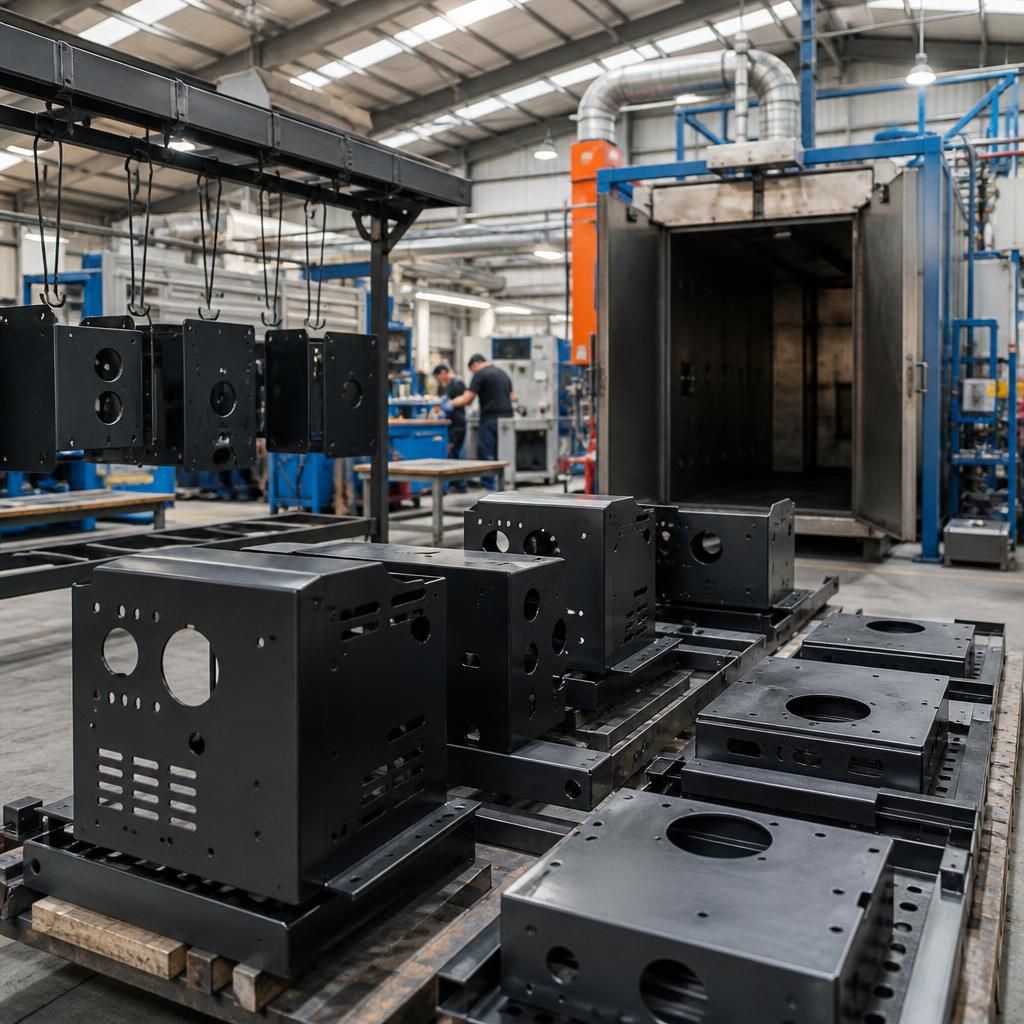
Industries should also consider the balance between heat resistance and appearance when selecting a powder. Some high-temperature formulations may involve compromises in colour range, gloss retention or long-term decorative consistency. Process equipment manufacturers may prioritise functional protection, while automotive and construction projects may place greater emphasis on maintaining a specified finish. The most suitable coating is therefore the one that meets the component’s thermal duty without overlooking its visual and operational requirements.
Discuss Your Industry’s High Temp Powder Coating Requirements
Discuss your component’s operating temperature, substrate and exposure conditions with Powder-coatings.co.uk to assess whether a high temperature powder coating is suitable for your industry. Provide your part dimensions, batch details and finish requirements for an informed project discussion.