

What are the environmental advantages of using powder coating on metal frames compared to traditional painting methods?
Powder coating can reduce the environmental impact of finishing metal frames compared with traditional liquid painting because it uses little or no solvent and produces far fewer volatile organic compound (VOC) emissions during application. Its dry overspray can often be collected and reused, while the durable finish can reduce the need for frequent recoating and the associated use of materials.
Powder coating can offer a lower environmental burden than traditional liquid painting for metal frames, particularly by reducing solvent-related emissions, liquid coating waste and the need for repeated finishing work. The overall benefit depends on the powder chemistry, pretreatment, curing energy, application efficiency and the way the finished frame is used and disposed of.
Less hazardous liquid waste
Traditional painting commonly involves liquid paint, thinners, cleaning solvents and contaminated containers or cloths. These materials may require controlled storage and disposal because they can contain hazardous substances. Powder coating is supplied as a dry material, so it avoids the routine handling of liquid paint and reduces the volume of solvent-contaminated waste generated during application.
Application equipment also does not require the same type of liquid paint management. Where suitable cleaning methods are used, there may be less reliance on solvent-based cleaning products between coating runs. This can simplify waste segregation and reduce the risk of liquid residues entering drainage systems or being released through accidental spills. Appropriate controls are still needed for powder, pretreatment chemicals and contaminated filters.
More efficient use of coating material
Powder coating is applied as a dry, electrically charged material that is attracted to the earthed metal frame. This can provide consistent coverage across correctly prepared components and helps limit unnecessary application. Controlled application is particularly valuable for batch production, where repeatable settings can reduce rejects, rework and the environmental impact associated with processing the same component more than once.
The result depends on part design, operator control, coating geometry and the recovery equipment in use. Deep recesses, enclosed sections and complex assemblies may require specific process adjustments to achieve the required finish without excess coating or defects.
Reduced packaging and handling of liquid products
Moving and storing dry powder avoids some of the packaging, spill-control and handling requirements associated with liquid paints and their associated thinners. This does not mean that powder coating is packaging-free: powder still arrives in containers, and used packaging must be managed responsibly. The environmental advantage is that the process can avoid the additional products needed to dilute, stabilise and clean up liquid coatings.
Potentially lower risk of soil and water contamination
Liquid paint spills can spread quickly and may carry solvents or coating compounds into soil, surface water or drainage systems if they are not contained. A dry powder process removes much of that liquid-spill risk during coating application. Good housekeeping remains essential, as spilled powder, pretreatment residues and dust must be collected and handled in accordance with site procedures rather than washed away.
Consideration of the full life cycle
An environmental comparison should cover more than the application stage. The frame material, powder formulation, pretreatment system, curing requirements, expected service conditions, maintenance regime and end-of-life route all affect the result. Steel and aluminium frames can generally enter established metal recycling streams when the product is no longer required, although attached materials and local recycling arrangements may influence the process.
Powder coating is not automatically the best option for every frame. Curing requires heat, and that energy use should be considered alongside the energy required to dry or cure a liquid coating. A coating specification should also avoid unnecessary over-performance: selecting a system suited to the frame’s environment prevents the use of unsuitable materials and reduces the likelihood of premature failure or reprocessing.
For an industrial project, the most useful comparison is therefore process-specific. It should consider the coating material, pretreatment chemicals, oven energy, extraction and filtration, rejected components, waste routes and expected service life. Powder coating can provide a strong environmental advantage where the process is properly controlled and the finish is matched to the metal frame and its operating conditions.
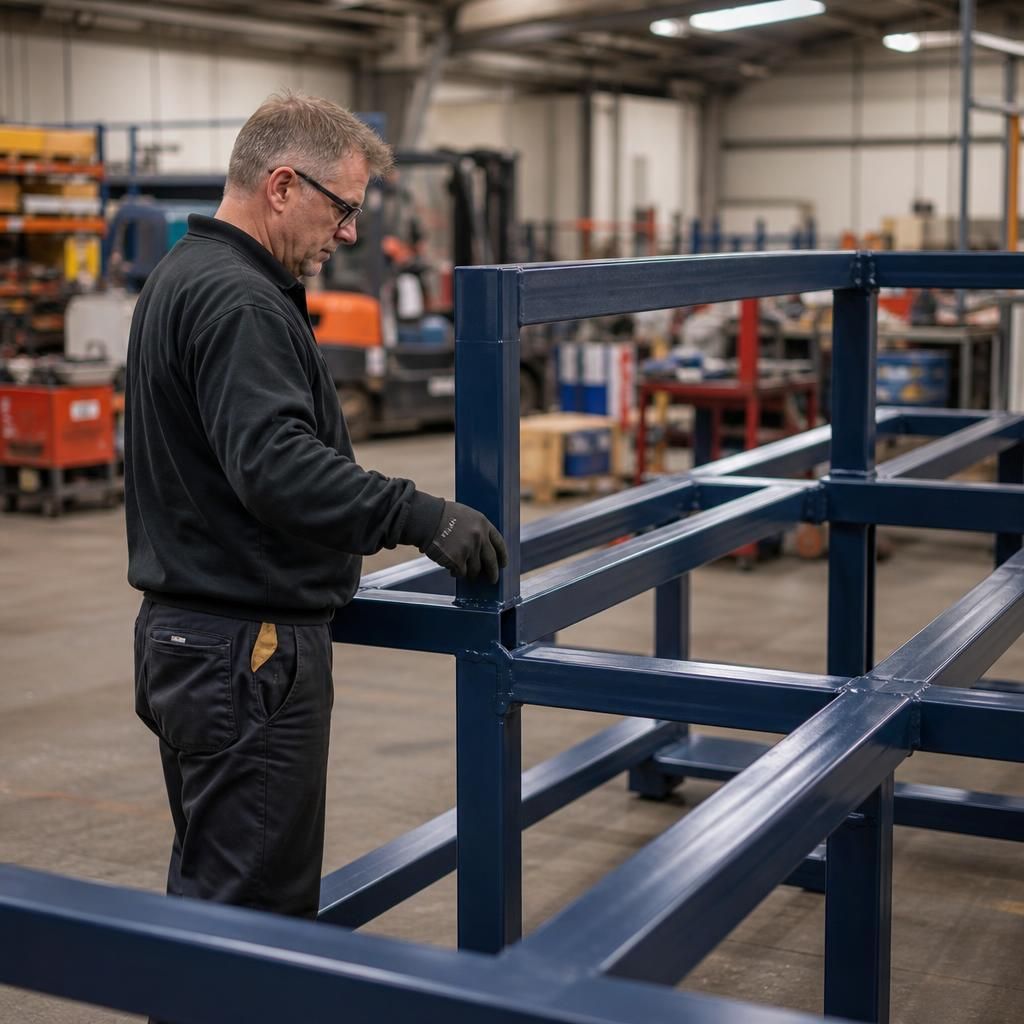
One further environmental advantage is the potential to retain existing metal frames rather than replace them. Where a frame remains structurally suitable, removing the previous finish and applying a correctly specified powder coating can support refurbishment and continued use. This avoids the raw materials and manufacturing processes associated with producing a replacement frame.
That benefit depends on the condition of the substrate. Frames with serious corrosion, distortion or damage may not be suitable for recoating, and stripping or pretreatment can create additional residues that require controlled handling. An environmental assessment should therefore compare refurbishment with replacement on a case-by-case basis, considering the frame’s remaining serviceability, the preparation required and the performance expected from the new finish.
Discuss the Environmental Impact of Your Metal Frame Coating
For a project-specific environmental comparison, discuss your metal frames, operating conditions and existing coating system with the powder-coating team. They can help identify a suitable coating specification and preparation approach for your application.