

What factors determine the optimal temperature settings for different high temp powder coating applications?
Optimal temperature settings for high temp powder coating applications depend on the powder formulation’s cure requirements, the substrate material and thickness, the component’s thermal mass, and the time available at the required metal temperature. Oven airflow, load configuration and verified temperature control must also be considered so the coating reaches its specified cure without overheating the substrate or finish.
The most important reference when setting a high temperature powder coating oven is the coating supplier’s specified metal-temperature cure schedule, rather than the oven’s displayed air temperature alone. The correct setting is established by considering how the coating is applied, the performance required from the finished part, the temperature limits of the complete assembly and the way the oven transfers heat to the workpiece.
Metal temperature versus oven temperature
Powder coating technical data normally states a required substrate temperature and a corresponding dwell period. The dwell period generally begins once the coated metal has reached the specified temperature, not when the oven first reaches its setpoint. An oven set to a particular air temperature may therefore require a different programme for different components.
This distinction is particularly important for high temperature work. Increasing the oven setting does not necessarily compensate correctly for a short cycle. It can expose the surface to excessive heat while the interior of the component is still below the required curing temperature. The more reliable approach is to establish the actual metal-temperature profile and adjust the oven programme around that evidence.
Required finish and service performance
The target properties of the coating influence how closely the cure schedule must be controlled. A finish intended to withstand repeated heat exposure, thermal cycling, chemicals or mechanical handling must develop the appropriate degree of cross-linking. Insufficient curing can leave poor adhesion, reduced hardness or inadequate resistance to the intended service conditions. Excessive heat or an unnecessarily long cycle can affect colour, gloss, surface texture and coating stability.
Consequently, the optimal setting is not simply the highest temperature the powder can tolerate. It is the lowest controlled process that achieves the required properties consistently, while remaining within the coating manufacturer’s stated cure window.
Application method and film build
The thickness and distribution of the applied powder affect how the finish develops during heating. Heavy deposits, overlapping spray areas and powder collected in recesses may require closer process control than a uniform light coating. If the film build is outside the recommended range, changing the oven temperature may not solve the resulting defects. Application settings, gun technique, grounding and powder deposition should be reviewed alongside the cure programme.
High temperature coatings can also behave differently during flow-out and cure from standard decorative powders. The selected product’s instructions should therefore take priority over a general oven recipe, particularly where the finish includes a specialist texture or protective function.
Temperature limits of the complete assembly
The coating may tolerate the intended cure temperature while another part of the assembly does not. Seals, adhesives, bearings, plastic inserts, electrical components, lubricants and temporary protective materials can impose a lower limit. These items may need to be removed, masked with suitable materials or replaced with components rated for the process.
Threaded sections and close-fitting interfaces also require attention. Coating build and heat exposure can affect fit, while trapped residues or moisture can cause blistering and contamination when heated. The process temperature must therefore be selected for the finished assembly, not just for the exposed metal surface.
Surface preparation and pre-treatment condition
Residual oil, moisture, cleaning chemicals or inadequate pre-treatment can produce defects during the heating cycle. These problems are sometimes mistaken for incorrect oven temperature. Before changing the cure schedule, confirm that parts are clean, dry and suitably prepared for the selected powder.
Pre-treatment chemistry may also have its own drying requirements. If water or processing residue remains in seams, folds or cavities, the part may need an appropriate drying stage before powder application. This is a process-control issue rather than a reason to raise the final cure temperature indiscriminately.
Oven programme and process restrictions
The best setting must fit the oven’s controllable operating range and the production method. Relevant considerations include:
- whether the oven can hold the required profile without repeated overshoot;
- whether the chosen cycle allows the coating to flow before it fully cures;
- whether different parts in the same batch have compatible cure requirements;
- whether doors, loading practices or changes between products disturb the established profile; and
- whether the programme can be repeated without relying on manual timing assumptions.
Where products with different cure schedules share an oven, the common programme should not automatically be based on the most severe condition. It may be more appropriate to separate the work, use a compatible powder system or obtain technical guidance on a validated shared cycle.
Validation of the selected setting
Temperature settings should be confirmed on representative parts rather than accepted solely from the oven controller. A temperature profiling exercise can show when the relevant areas of the workpiece enter and leave the required cure range. Measurements should include locations that are likely to heat differently, such as enclosed sections, joints and areas close to fixtures.
After the profile has been confirmed, inspect the finish for flow, colour, gloss, texture, adhesion and signs of overheating. Record the powder specification, application conditions, oven programme and profiling results. These records provide a reference when the part design, coating product or loading arrangement changes.
In practice, optimal high temperature powder coating settings come from matching the coating’s validated cure window to the actual component, assembly restrictions and repeatable oven process. The oven air setpoint is only one part of that decision; the final choice should be supported by the coating data sheet, controlled trials and evidence that the finished coating meets its intended performance requirements.
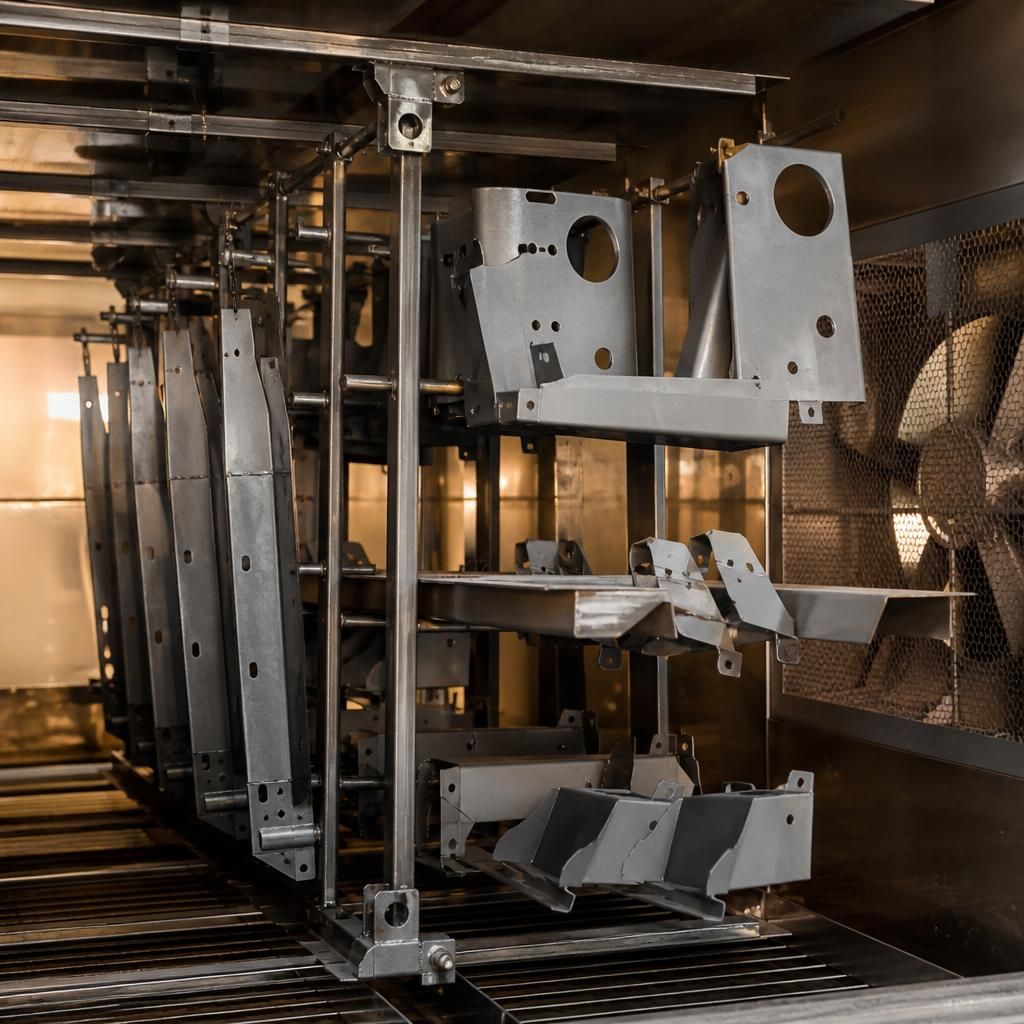
Oven airflow helps determine how evenly heat reaches coated components. Poor circulation can leave parts in sheltered areas below the required metal temperature while exposed surfaces receive excessive heat, creating uneven curing across the same batch.
Load spacing, component orientation and fixture design all affect circulation. Large panels, deep recesses and tightly packed items can obstruct hot-air movement, while heavy fixtures may also draw heat away from the workpiece. The oven programme should therefore be assessed with a representative load rather than an empty chamber. Repositioning parts, reducing obstruction and separating incompatible component sizes can produce a more consistent thermal profile without simply increasing the air-temperature setting.