

What preparation steps are necessary before applying epoxy primer and zinc preps for optimal anti-corrosion results?
Optimal anti-corrosion results depend on removing oil, grease, rust, mill scale and existing coatings before application, usually through suitable cleaning and abrasive blasting to create a clean, keyed surface. The metal should then be free from dust and moisture, inspected for defects, and correctly masked so the epoxy primer or zinc preparation can be applied evenly to the specified film thickness.
Preparing metal for epoxy primer and zinc preparations involves more than making the surface visibly clean. The substrate, component design, treatment system, application conditions and coating specification must all be checked so the primer can form a continuous, well-bonded barrier against corrosion.
1. Confirm the coating system and substrate
Begin by identifying the metal type and the intended role of the zinc preparation. Zinc phosphate primers are formulated to promote adhesion and inhibit corrosion, while zinc-rich systems rely on a high level of metallic zinc for galvanic protection. These are not interchangeable, so the preparation method, recommended film build and curing requirements should follow the selected product system.
Different substrates can require different controls. Steel may present weld scale, heat-affected areas or tightly adherent mill residues. Galvanised steel and zinc-coated parts need a suitable approach that avoids damaging the existing zinc layer. Aluminium and other non-ferrous metals may need a compatible pre-treatment or primer rather than the same process used for mild steel. Confirm compatibility before work begins, particularly where dissimilar metals are joined.
2. Review the component design
Coating performance can be limited by the shape of the part rather than by the powder or primer itself. Identify narrow gaps, enclosed sections, sharp internal corners, overlaps, threaded holes and areas where water or treatment chemicals could collect. Where the design allows, provide drainage and ventilation holes, avoid unsealed crevices and ensure that coating equipment can reach the required faces.
Sharp edges should be addressed because coating tends to pull away from an acute edge, leaving reduced protection at a point that is vulnerable to mechanical damage and corrosion. Welds should be continuous where specified, with spatter, sharp projections and porous areas removed or repaired. Any fabrication defects should be resolved before coating rather than concealed beneath the primer.
3. Complete fabrication and repairs first
Drilling, cutting, welding, grinding and other fabrication work should be finished before final preparation. If repairs are made afterwards, they can expose untreated metal or damage the coating system. Welds and ground areas should be blended smoothly into the surrounding surface, while laminations, pits and deep scratches should be assessed to determine whether repair is necessary.
Temporary labels, adhesives, protective films and handling aids must also be removed where they could interfere with adhesion. If a component has previously been coated, the remaining coating should be assessed for bond strength and chemical compatibility; an apparently sound layer is not automatically a suitable base for epoxy or zinc products.
4. Control contamination after preparation
Once the metal has been prepared, it must be protected from recontamination during handling and transfer to the coating area. Use clean gloves, lifting equipment and supports that will not deposit oil, silicone, fibres or other residues. Avoid touching critical surfaces unnecessarily, and keep prepared parts separate from unprepared work.
Particular care is needed with silicone-based products, cutting fluids, marking compounds and corrosion inhibitors. These can cause craters, fisheyes, poor wetting or localised adhesion failure even when the surface appears satisfactory. Any release agent or chemical residue should be dealt with using a method approved for the substrate and coating system.
5. Check environmental and metal conditions
The metal temperature, surrounding air temperature, relative humidity and dew point should be considered before application. The substrate should remain sufficiently above the dew point to prevent invisible condensation forming during preparation or coating. Condensation can introduce moisture beneath the primer and encourage early corrosion or loss of adhesion.
Environmental controls also matter after application. Dust, airborne moisture and incompatible vapours can settle on the part or interfere with curing. Enclosed components may retain moisture or solvents, so they should be allowed to drain and condition appropriately before entering the coating process.
6. Plan masking and contact points
Masking should be designed around the component’s function, not added as an afterthought. Identify earthing points, machined faces, bearing seats, threaded areas, electrical contact surfaces and close-tolerance locations that must remain free of coating. Masking materials need to withstand the chosen curing process and should not leave adhesive residue.
Also decide how the component will be supported and rotated. Contact points can create uncoated marks or require a later touch-up, while poor positioning can lead to runs, uneven coverage or restricted access. The support plan should permit the specified surfaces to be treated without repeatedly handling vulnerable areas.
7. Establish inspection and application controls
Before priming, agree the required surface condition, primer type, target film thickness, cure schedule and acceptance criteria. The specification should state whether the system requires a particular blast profile, chemical pre-treatment or intermediate stage. Surface-profile checks, visual inspection and environmental readings provide evidence that the prepared part is suitable for coating.
After the epoxy or zinc preparation has been applied, inspect for missed areas, pinholes, inclusions, runs, poor edge coverage and contamination. Film-thickness checks should be made using suitable equipment and interpreted against the coating specification. The primer must also be allowed to cure as required before subsequent powder coating or handling; applying the next layer too early can trap solvents or weaken intercoat adhesion.
8. Treat zinc-prepared surfaces carefully
Zinc-containing primers and zinc phosphate preparations can be sensitive to excessive film build, contamination and incorrect overcoating intervals. Follow the product data for mixing, application and curing rather than assuming that a thicker layer provides better protection. Where the system is intended to receive a powder topcoat, confirm that the primer is designed for that use and that the recoat window has been respected.
For consistently reliable results, preparation should be recorded as part of the coating process: note the substrate, repairs, preparation method, environmental readings, primer specification, film thickness and curing conditions. This creates a traceable basis for investigating any later defect and helps ensure that every batch receives the same controlled treatment.
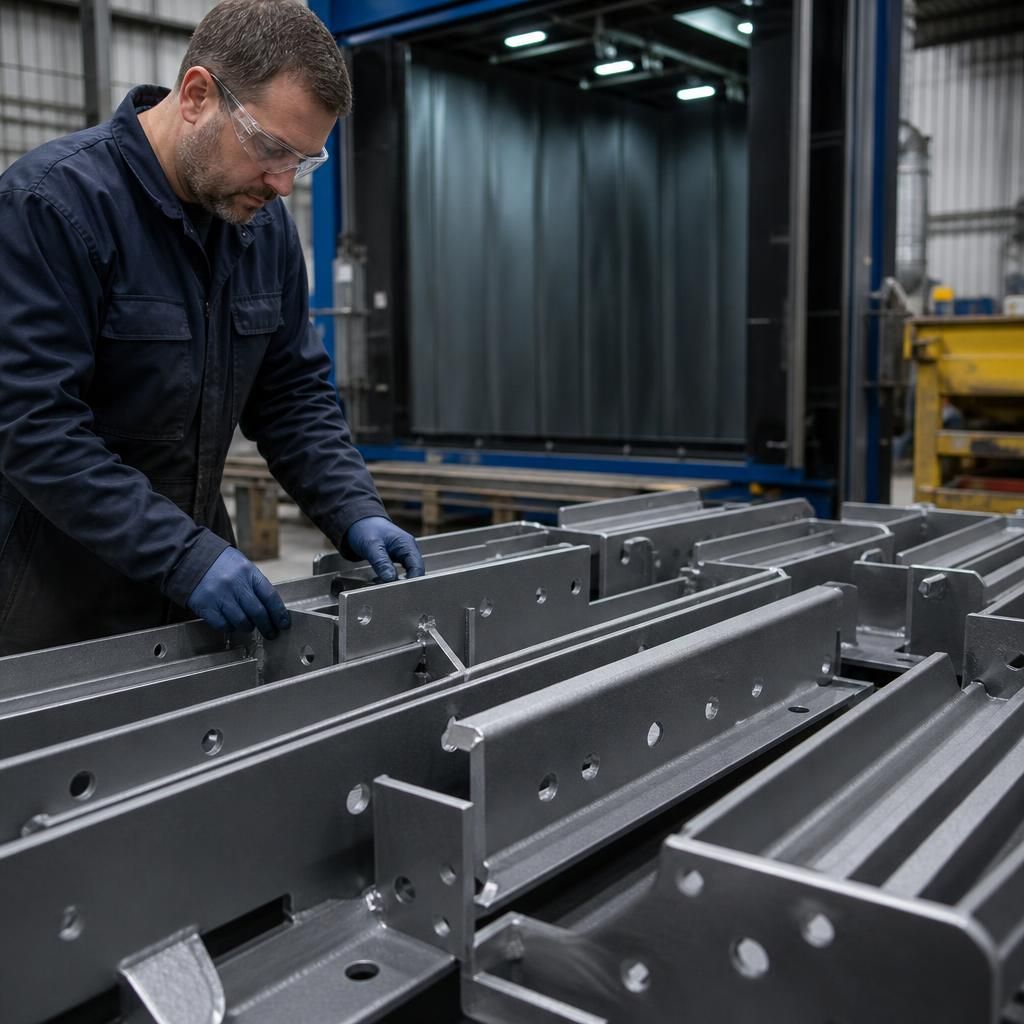
The interval between final surface preparation and primer application is a critical control point. Bare steel can begin to oxidise after blasting, particularly where humidity is high, so prepared components should move into the coating process without unnecessary delay.
If visible flash rust, dust or other contamination develops, do not apply epoxy primer or zinc preparation over it. Reassess the surface and repeat the approved preparation method where necessary. The coating specification should define the acceptable condition and any maximum interval between preparation and priming.
Discuss your epoxy primer and zinc preparation requirements
Discuss your component details, substrate and specified coating system with Powder-coatings.co.uk to establish the appropriate preparation requirements for epoxy primer or zinc preps. This helps ensure the proposed process reflects the part’s design, surface condition and intended anti-corrosion performance.