

What types of metal components are best suited for electrostatic powder painting?
Electrostatic powder painting is best suited to clean, electrically conductive metal components that can withstand curing heat, including steel, aluminium and iron parts. Typical applications include frames, brackets, panels, enclosures, railings, machinery components and automotive parts, provided the component’s size, shape and surface condition are suitable for preparation and coating.
The most suitable components are those whose design, material condition and intended use allow consistent preparation, powder application and oven curing. In practice, suitability depends less on the component’s name than on its conductivity, geometry, dimensions, surface condition and ability to tolerate the coating process without distortion or damage.
Fabricated assemblies are often well suited when they have been designed with coating access in mind. Welded frames, support structures, guards and formed sections can produce a consistent finish provided that weld spatter, sharp edges, oil, mill scale and fabrication residues are removed before coating. Closed sections need particular attention: trapped moisture, cleaning chemicals or air can cause defects during curing, so suitable drain and vent holes may be necessary.
Flat and folded sheet-metal parts are suitable where broad faces, returns and edges can be reached by the spray equipment. Enclosures, covers and folded panels may require masking around apertures, contact points and mating surfaces. The design should allow the powder to reach recesses without creating excessive build-up that could affect assembly or interfere with doors, seals and fasteners.
Small precision components can also be coated effectively, particularly where they are supplied in repeatable batches. Examples include brackets, fittings, covers and machine guards. The important considerations are handling, racking and the required coating thickness. Components with close tolerances may need defined uncoated areas or post-coating inspection so that the finish does not prevent parts from fitting together.
Parts with complex profiles require a more detailed assessment. Deep recesses, narrow channels, sharp internal corners and closely spaced features can create Faraday-cage effects, where the electrostatic field makes it harder for powder to reach certain areas. These components are not automatically unsuitable, but their orientation, gun settings, racking method and powder application may need to be planned around the geometry.
- Perforated or mesh parts: suitable when the openings can be cleaned thoroughly and the component can be positioned to minimise shadowing.
- Cast components: potentially suitable when porous areas, moulding residues and outgassing risks have been identified and addressed during preparation.
- Machined parts: suitable where coating is compatible with dimensional tolerances, threads, bearing seats and other precision surfaces.
- Long or bulky fabrications: suitable when the item can be safely handled, racked and accommodated throughout preparation, spraying and curing.
The condition of the surface is a major factor. New components may carry drawing oils, grease, oxidation or fabrication debris, while previously coated or corroded parts may need stripping, abrasive preparation or other additional treatment. Coating over contamination does not resolve the underlying problem; it can lead to poor adhesion, blistering, pinholing or an inconsistent appearance.
Components that combine different materials, insulation, rubber, plastic or heat-sensitive attachments need special consideration. Powder finishes are cured using heat, so non-metallic elements may need to be removed before treatment and refitted afterwards. Mixed-metal assemblies can also require a defined preparation method to avoid uneven appearance or a difference in corrosion performance between exposed materials.
The intended service conditions should guide the powder specification. Indoor machinery, external structural parts, vehicle components and items exposed to moisture or chemicals may require different levels of protection, gloss, texture or colour stability. The coating is therefore selected alongside the component’s operating environment, not as a purely decorative decision.
Before production, a coating provider should review drawings or sample parts, required masking, hanging points, tolerances, assembly interfaces and any areas that must remain free from powder. This assessment is especially important for parts with concealed faces, welded cavities, tight fits or demanding visual requirements. A component is a strong candidate when its construction supports thorough cleaning, reliable electrical contact during application, even powder coverage and safe curing without compromising its dimensions or function.
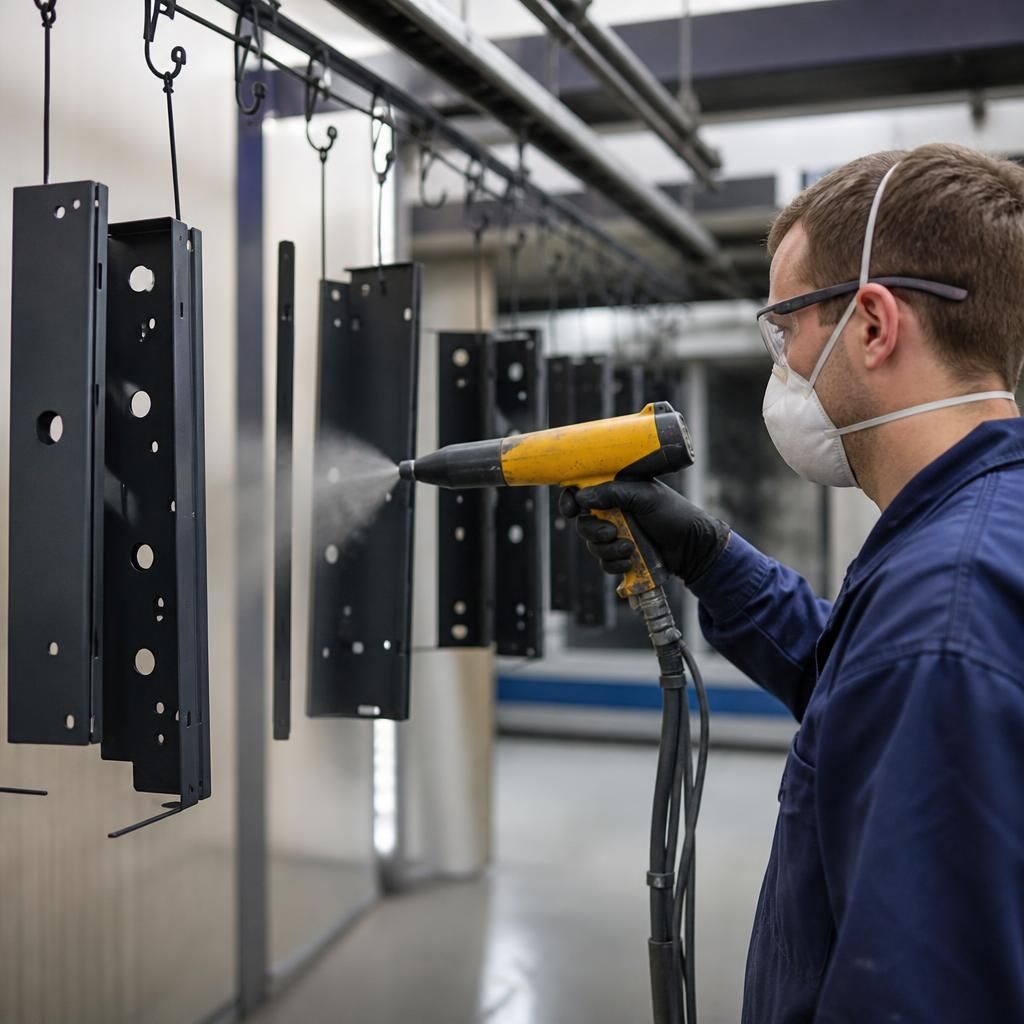
Electrostatic powder painting is particularly well suited to metal components that require a consistent finish across repeated production batches. Standardised parts such as brackets, panels, guards and fabricated supports can be processed using the same preparation, racking and application approach, helping maintain a uniform appearance from one batch to the next.
This makes the process practical for manufacturers supplying repeat orders, provided the components remain consistent in material, dimensions and surface condition. Changes to the design, fabrication method or supplied finish should be reviewed before production, as they can affect preparation requirements and the final coating result.