

What is the role of automation in modern powder coating systems?
Automation in modern powder coating systems coordinates processes such as part handling, powder application, curing and quality monitoring to produce repeatable finishes. It improves process control and production efficiency by reducing variation between components while allowing settings to be adjusted for different materials, geometries and coating requirements.
Automation gives a modern powder coating system the ability to control, record and adjust each stage of production according to a defined process recipe. Its role is not simply to move components or operate spray equipment; it is to keep key variables within the limits needed for an even, properly cured finish while making the process repeatable across different production runs.
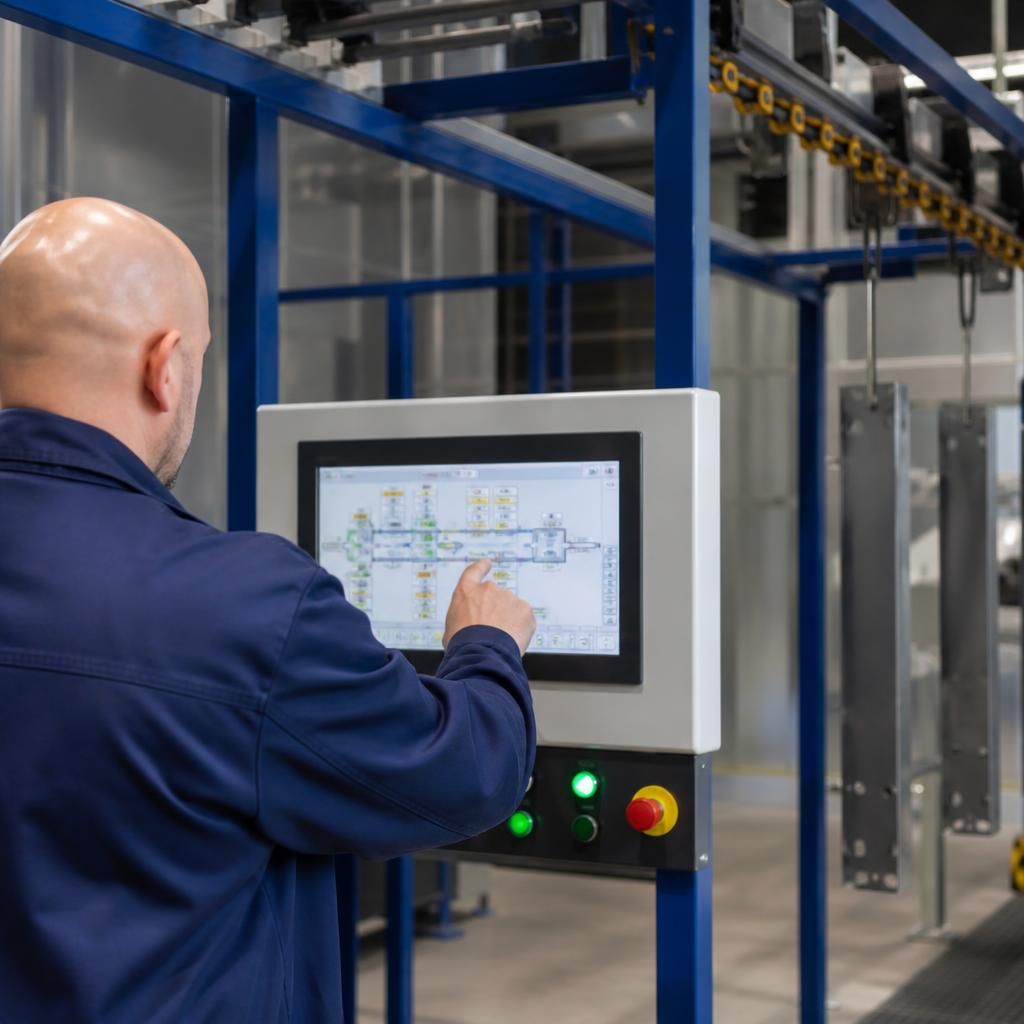
A central control system, often using a programmable logic controller (PLC), links the booth, application equipment, curing oven, conveyor and safety devices. Operators can select a recipe for a particular component or coating specification, with relevant settings transferred to the equipment. Depending on the system, these settings may include conveyor speed, spray parameters, gun movement, powder output, oven temperature and curing time.
This recipe-based approach is particularly useful where a business processes several component types. A changeover can be managed through recorded settings rather than relying entirely on manual adjustments. The operator still needs to confirm that the selected programme is appropriate, but automation reduces the risk of an incorrect setting being carried from one job to the next.
Automated handling also affects coating quality. Conveyors, fixtures and programmed movement can present components to the spray guns in a controlled position and at a consistent distance. This helps manage coverage on repeat parts and reduces the effect of variations in manual movement. Complex components still require suitable racking, masking and application planning, because automation cannot compensate for poor access, unsuitable hanging points or an incorrectly prepared surface.
Application equipment can use sensors and feedback to monitor conditions such as powder flow, electrostatic performance, booth status and component presence. If a monitored value moves outside its permitted range, the system can raise an alarm, pause a process or require an operator check. These safeguards help identify problems before a large number of parts are processed, although inspection and technical judgement remain necessary.
Oven automation is used to regulate the conditions required for the powder to flow, level and cure. Temperature sensors placed at suitable points monitor the oven environment, while the conveyor determines how long components remain inside it. More advanced arrangements can use a product temperature probe or data logger during process validation, since the temperature of the air is not necessarily the same as the temperature reached by the metal component. This distinction is important for heavy sections, assemblies with different mass, and parts with restricted heat transfer.
Automation also supports process traceability. A system may record the selected recipe, line speed, oven readings, alarms, batch information and operator interventions. Such records help a quality team investigate a non-conformance and compare the conditions used for accepted and rejected work. They can also support internal checks where a customer specification requires evidence that the coating process was controlled.
In a well-designed system, automation assists people rather than removing the need for skilled oversight. Operators and production staff are still responsible for tasks such as:
- checking component identity, material and dimensions before processing;
- confirming that cleaning, preparation, masking and racking are suitable;
- verifying powder condition and the correct coating specification;
- checking film thickness, appearance, adhesion and cure when required;
- responding to alarms and investigating the cause rather than simply resetting the system; and
- cleaning equipment and carrying out planned maintenance.
The degree of automation should match the work being processed. A repeat production line may justify automatic gun movement, conveyor control, recipe management and data collection. A facility handling varied, low-volume or unusually shaped components may gain more from controlled manual application supported by automated oven and line monitoring. Excessive automation can make changeovers more complicated if the equipment is not configured for the range of parts, colours and coating materials involved.
When assessing an automated powder coating system, manufacturers and fabricators should examine more than the advertised level of automation. Important questions include whether recipes can be locked or revised with appropriate permissions, whether alarms identify the underlying fault, whether data can be exported, and whether the system can be maintained without excessive disruption. The layout should also allow access for booth cleaning, gun inspection, filter replacement and oven servicing.
Automation is therefore most effective when it is combined with validated settings, suitable component preparation, routine inspection and trained operators. It provides a controlled framework for applying and curing powder, highlights deviations and creates useful production records. It does not replace process design or quality checks, but it makes those activities more consistent, measurable and easier to manage in an industrial coating environment.
Automation also helps control powder recovery and colour changeovers, two areas that can affect both finish quality and operating efficiency. Recovery equipment can collect suitable overspray, separate it from contaminants and return it to the process where the coating specification permits. Automated valves, sieving and transfer controls help keep powder moving through the correct route, reducing the risk of unsuitable material entering a new batch.
Colour change routines can be programmed to coordinate the booth, hoses, guns, filters and recovery equipment. The system may guide or sequence purging and cleaning steps so that residual powder is removed before the next colour or formulation is introduced. This is particularly important when a visible colour change or specialist coating makes contamination easy to identify. Automation does not remove the need for cleaning checks: operators must still inspect the booth and application equipment, confirm that the new powder is correct and verify the first coated components before continuing production.