

What types of metal substrates can be coated using the epoxy powder coating process?
Epoxy powder coating can be applied to a range of metal substrates, including mild steel, carbon steel, aluminium, galvanised steel and stainless steel. The correct preparation, primer or pre-treatment and curing conditions depend on the substrate’s surface condition, composition and intended use.
Epoxy powder coating is suitable for many electrically conductive metal components that can tolerate the coating’s curing temperature. In addition to the commonly specified structural metals, it can be used on selected castings, zinc-based components and copper alloys, provided the surface is stable, properly prepared and compatible with the required curing cycle. The substrate’s condition and end use are as important as its basic metal type.
Cast metals
Cast iron and other iron-based castings can be coated with epoxy powder when their surfaces have been cleaned thoroughly. Cast components often contain moulding residues, embedded contaminants, graphite, porosity or trapped moisture. These can interfere with adhesion or cause pinholing and outgassing during curing. Preparation may therefore need to include suitable abrasive cleaning, removal of loose material and controlled pre-heating where appropriate. Deep pores, sharp casting defects and areas that continue to release contamination may need attention before coating.
Non-ferrous castings, including certain zinc-based die-cast components, can also be considered. Their lower tolerance for excessive heat means that the curing schedule must be selected carefully. Any release agents, oxides or surface treatments left from manufacture must be removed without damaging the component.
Copper and copper alloys
Copper, brass and related alloys may accept epoxy powder coating when the surface is clean and the coating system is specified for the application. These metals can develop oxide layers and may contain residues from machining, polishing or handling. The preparation method must provide a consistent surface without causing unnecessary dimensional change or damaging fine details.
Because copper is an efficient conductor of heat, it can affect how quickly a component reaches the required curing temperature. This is particularly relevant to thick busbars, electrical enclosures and other components with substantial metal mass. The oven cycle should be based on the temperature of the component itself rather than on air temperature alone. Electrical clearances, contact points and areas that must remain conductive should also be masked or otherwise protected where necessary.
Thin sheet, plate and fabricated assemblies
Epoxy powder can be applied to fabricated parts made from sheet metal, folded sections, brackets, frames and enclosures. Thickness and geometry influence both coating application and curing. Recesses, internal corners and narrow channels may receive less powder, while sharp edges can receive a thinner film than broad, flat faces. Designers and fabricators can improve consistency by avoiding unnecessarily sharp edges, inaccessible cavities and narrow gaps that retain preparation media or moisture.
Welded assemblies require particular inspection before coating. Weld spatter, flux residues, silicone contamination, grinding dust and alkaline cleaning residues can cause defects or poor adhesion. Weld seams should be continuous where the design requires protection against corrosion, and drain or vent holes may be needed on hollow fabrications to prevent trapped air, cleaning solution or moisture from creating problems during processing.
Substrates with existing surface treatments
Previously coated, plated or chemically treated metal is not automatically suitable for direct overcoating. The existing layer must be assessed for adhesion, compatibility and stability at the epoxy powder’s curing temperature. Loose or poorly bonded material should be removed, while sound finishes may require a controlled preparation method that creates an appropriate key without exposing unsuitable contamination.
Zinc-coated surfaces can require especially careful treatment because the coating may be affected by aggressive preparation, and zinc can contribute to outgassing during heating. The surface condition, coating thickness, age and intended service environment should all be considered before selecting the preparation and powder system.
What determines whether a substrate is suitable?
- Temperature resistance: the component must tolerate the curing cycle without distortion, loss of temper, dimensional change or damage to attached materials.
- Surface cleanliness: oil, grease, rust, mill scale, salts, oxides, mould-release agents and manufacturing residues can prevent reliable adhesion.
- Surface profile: the preparation must provide an appropriate key while preserving critical dimensions, threads, machined faces and fine features.
- Outgassing risk: porous castings, zinc-rich surfaces and trapped contaminants can release gas during heating, producing pinholes or blisters.
- Component design: edges, recesses, joints, cavities and contact areas affect powder deposition and the final film.
- Service conditions: moisture, chemicals, abrasion, sunlight, heat and electrical requirements may influence whether epoxy is the right powder type for the finished component.
For a production coating decision, the substrate should be identified by its actual grade or construction rather than by appearance alone. Samples or test pieces can help confirm preparation, masking, film build and curing requirements before a full batch is processed. This is particularly useful for mixed-metal assemblies, castings, components with existing finishes and parts where dimensional or electrical tolerances are critical.
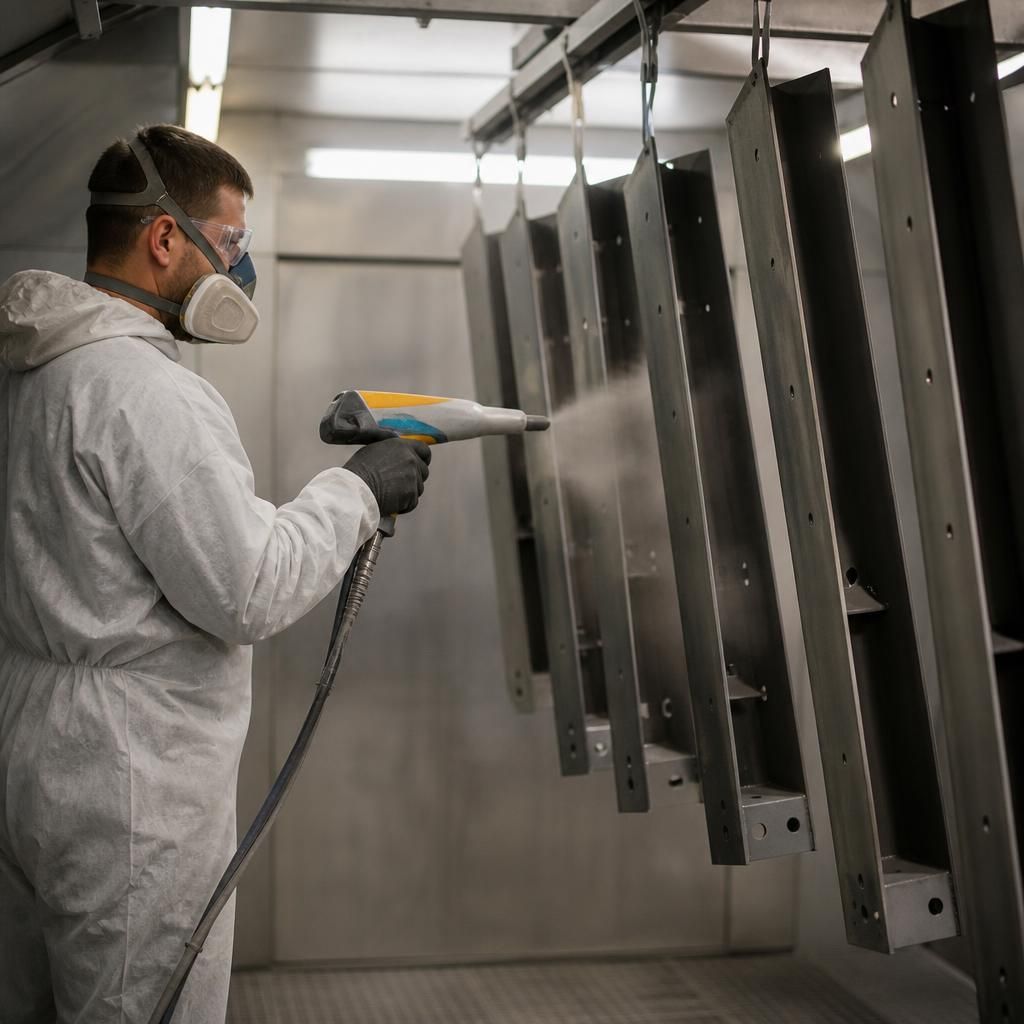
Standard epoxy powder coating is intended for electrically conductive metal substrates rather than wood, plastic, rubber or most composite materials. The component must provide a reliable electrical path so the powder can be attracted to its surface, and it must withstand the heat required to cure the coating without deforming or degrading. Non-metallic inserts, seals, bearings and insulating sections therefore usually need to be removed or masked before coating.
Some specialist processes can coat heat-resistant non-metallic materials, but they require different application methods and should not be assumed to be compatible with a conventional epoxy powder system. Identifying every material within an assembly, rather than assessing only its main frame or casing, helps establish whether the complete part is suitable for this process.
Discuss your metal substrate and epoxy powder coating requirements
Discuss your substrate grade, component design and intended service conditions with the powder-coating team to establish whether epoxy powder coating is appropriate. Provide drawings, specifications or representative parts where available so preparation, masking and curing requirements can be assessed accurately.