

What types of metal components can benefit most from polyester powder coating?
Polyester powder coating benefits metal components that need a durable, attractive finish and resistance to outdoor exposure, including architectural frames, railings, fencing, street furniture, machinery housings and fabricated panels. It is particularly suitable for steel and aluminium parts where colour retention, corrosion protection and consistent batch finishing are important.
The metal components that benefit most from polyester powder coating are those exposed to changing weather, regular handling or visual scrutiny, where a consistent decorative finish must also protect the substrate. It is particularly well suited to fabricated steel and aluminium items used in external construction, infrastructure, equipment and general manufacturing applications.
Typical examples include smaller fabricated parts that were not covered by the broader categories above, such as brackets, support arms, access covers, guards, frames for equipment, cable-management components and mounting plates. These parts often have exposed edges, drilled holes and folded sections that require careful preparation and even coverage. Polyester powder coating can provide a continuous finish across these features when the component is designed and prepared appropriately.
Components with a large visible surface area also benefit from polyester powder coating because colour and gloss can be applied consistently across repeat items. This makes it suitable for items such as metal panels, cabinet doors, signage supports, display structures and modular fabricated assemblies. The finish can help maintain a uniform appearance when parts are produced in batches, provided the same substrate preparation, powder specification and curing conditions are used throughout.
It is especially useful where the component must combine appearance with resistance to outdoor exposure. Examples include:
- External support and mounting components used around buildings
- Metal covers and access panels for plant or service equipment
- Protective guards, barriers and fabricated safety components
- Infrastructure parts exposed to rain, sunlight and temperature changes
- Aluminium profiles and fabricated sections used in external assemblies
- Repeated steel components requiring a consistent colour and finish
The component’s shape and service conditions are just as important as its material. Polyester powder coating is generally a strong choice for parts that are exposed to normal atmospheric conditions, but the specification should account for sharp edges, recesses, welds, threaded areas and joints where coating build-up or incomplete coverage can affect assembly. Holes, contact points and masking requirements should be identified before coating so that the finished part remains dimensionally suitable.
Parts that are frequently handled can also be good candidates, particularly where a clean, even finish is required across a production batch. However, the coating specification should reflect the actual duty of the component. Parts exposed to aggressive chemicals, prolonged immersion, exceptionally high temperatures or severe abrasion may require a different powder system or additional protection. Polyester should therefore be selected according to the environment rather than simply the appearance required.
Preparation has a direct influence on the result. Oil, dirt, rust, mill scale and residues from fabrication must be removed, and the substrate may need suitable pre-treatment before powder application. Weld spatter and sharp burrs should be dealt with during fabrication, since powder coating will not conceal significant surface defects. Clean contact points are also needed for effective electrical grounding during application, while masking protects threads, mating faces and other areas that must remain uncoated.
For manufacturers and fabricators, the most suitable candidates are usually components with a clearly defined operating environment, a compatible metal substrate and repeatable preparation requirements. A coating assessment should consider the component’s location, expected handling, colour and finish requirements, dimensions, batch quantity and any areas that must remain free from coating. This approach helps determine whether polyester powder coating is appropriate and whether the part needs a specific preparation or coating specification.
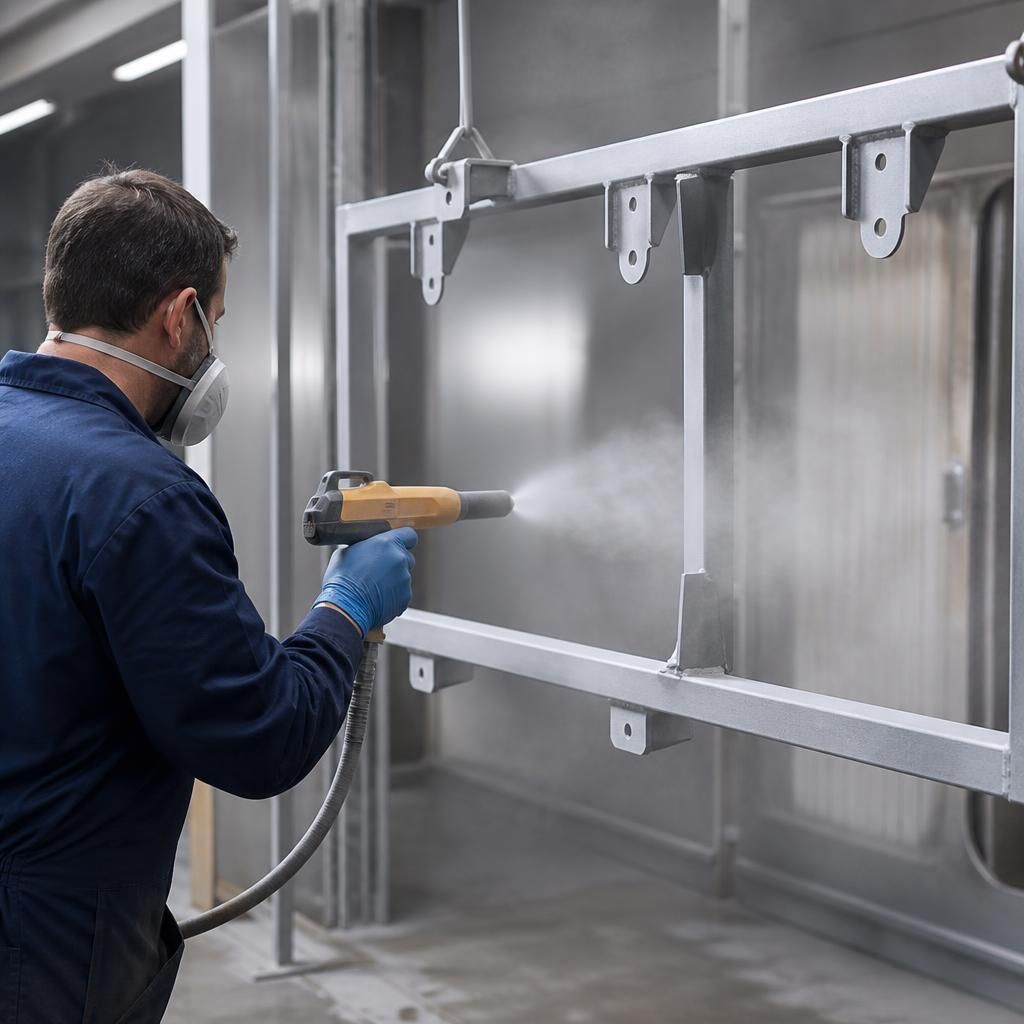
Sound metal components being refurbished can be strong candidates for polyester powder coating when the underlying steel or aluminium remains suitable for continued use. Recoating an existing component can renew its protective and decorative surface without replacing the complete fabricated item, making the process relevant to maintenance programmes and equipment upgrades.
The condition of the part must be assessed before specifying the coating. Deep corrosion, distortion, damaged welds and fatigue-related defects need to be addressed separately, because powder coating is a surface finish rather than a structural repair. Existing coatings may also need to be removed or tested for compatibility, particularly where adhesion has deteriorated. This makes the component’s remaining condition, rather than its age alone, the main factor when deciding whether polyester powder coating is appropriate.
Discuss your metal components for polyester powder coating
If you are assessing whether polyester powder coating is suitable for a particular metal component, discuss its substrate, operating environment, dimensions and finish requirements with the coating team. This can help establish an appropriate specification before production or refurbishment begins.