

What pre-treatment processes are necessary before applying nylon and speciality powder coatings?
Before applying nylon and speciality powder coatings, metal components must be cleaned and prepared to remove oil, grease, dirt, rust, mill scale and other contaminants that could weaken adhesion. The usual process includes degreasing, suitable abrasive or chemical preparation, thorough rinsing and drying, followed by inspection and masking of areas that must remain uncoated.
Pre-treatment for nylon and speciality powder coatings must be selected for the metal substrate, the coating chemistry and the service environment. The aim is not simply to make the surface look clean; it is to create a chemically and physically suitable interface that allows the coating to bond consistently and resist corrosion, moisture, wear and impact.
Start with a substrate assessment. Steel, galvanised steel, aluminium, stainless steel and cast components each require different preparation controls. The assessment should identify the existing surface condition, previous coatings, weld areas, casting porosity, sharp edges, threaded sections, joints and any areas that could retain chemicals or moisture. Galvanised surfaces may contain passivation treatments or white corrosion products, while aluminium can develop a tenacious oxide layer. These conditions affect which preparation route is appropriate.
Use a suitable conversion treatment where the specification requires it. Chemical conversion coatings, including phosphate-based systems and other substrate-specific treatments, can provide a more receptive surface and improve corrosion protection beneath the powder film. The treatment must be compatible with both the metal and the chosen nylon or speciality powder. A process suitable for mild steel should not automatically be transferred to aluminium or galvanised components. The required coating system, exposure conditions and any customer specification should determine the chemistry used.
Control the surface profile rather than treating abrasion as an end in itself. Specialist coatings need sufficient mechanical key, but excessive or uneven abrasion can affect dimensions, edges and the appearance of the finished part. Delicate sections, machined faces and close-tolerance interfaces may need protection from aggressive preparation. On fabricated parts, weld profiles and spatter should be addressed before coating because a powder layer will reproduce significant surface defects rather than conceal them.
Pay particular attention to welds, crevices and hollow sections. Weld residues, fabrication lubricants and trapped process fluids can cause local adhesion defects or later corrosion. Hollow components need an agreed method for draining and ventilating them, while crevices should be examined for areas where liquid treatment could remain. Components should be positioned and handled so that prepared surfaces are not contaminated before coating.
Prevent flash rust and recontamination after preparation. A prepared steel surface can deteriorate if it is exposed to condensation, salts, handling residues or an unsuitable storage environment. The transfer from preparation to powder application therefore forms part of the pre-treatment specification. Clean gloves, suitable supports and controlled handling help prevent fingerprints and contact contamination. Any delay between stages should be assessed rather than assumed to be harmless.
Consider outgassing and porous materials. Castings, weldments and porous components can retain air, oils or moisture in cavities. During subsequent heating, these contaminants may migrate through the powder film and create pinholes, bubbles or blistering. Appropriate preconditioning, venting or component design changes may be needed for these parts. The correct approach depends on the material, geometry and curing requirements of the selected coating, so trial work may be appropriate for complex cast or fabricated items.
Specify the required final condition before coating. A useful pre-treatment specification should define:
- the substrate and any existing surface treatment;
- the required degree and method of preparation;
- the conversion coating or primer, if one is part of the system;
- acceptable surface-profile, edge and dimensional limits;
- how welds, cavities, threads and contact faces are to be treated;
- handling and storage controls between preparation and application; and
- the inspection checks required before powder is applied.
Inspection should confirm that the prepared surface is visually uniform and free from residues, corrosion products, moisture and damage. For demanding applications, checks may also cover surface cleanliness, treatment coverage, coating weight or other agreed process controls. These checks are especially important where nylon or a speciality powder is being used for chemical exposure, abrasion, impact, outdoor service or electrical insulation, because a local weakness in the interface can limit the performance of the whole system.
There is therefore no single pre-treatment sequence that is correct for every nylon or speciality powder coating job. The process should be agreed from the substrate, component design, coating data and intended service conditions, with particular attention to conversion chemistry, welds, porosity, dimensional tolerances and contamination control. This approach gives the powder a consistent foundation without applying an unsuitable treatment to the metal.
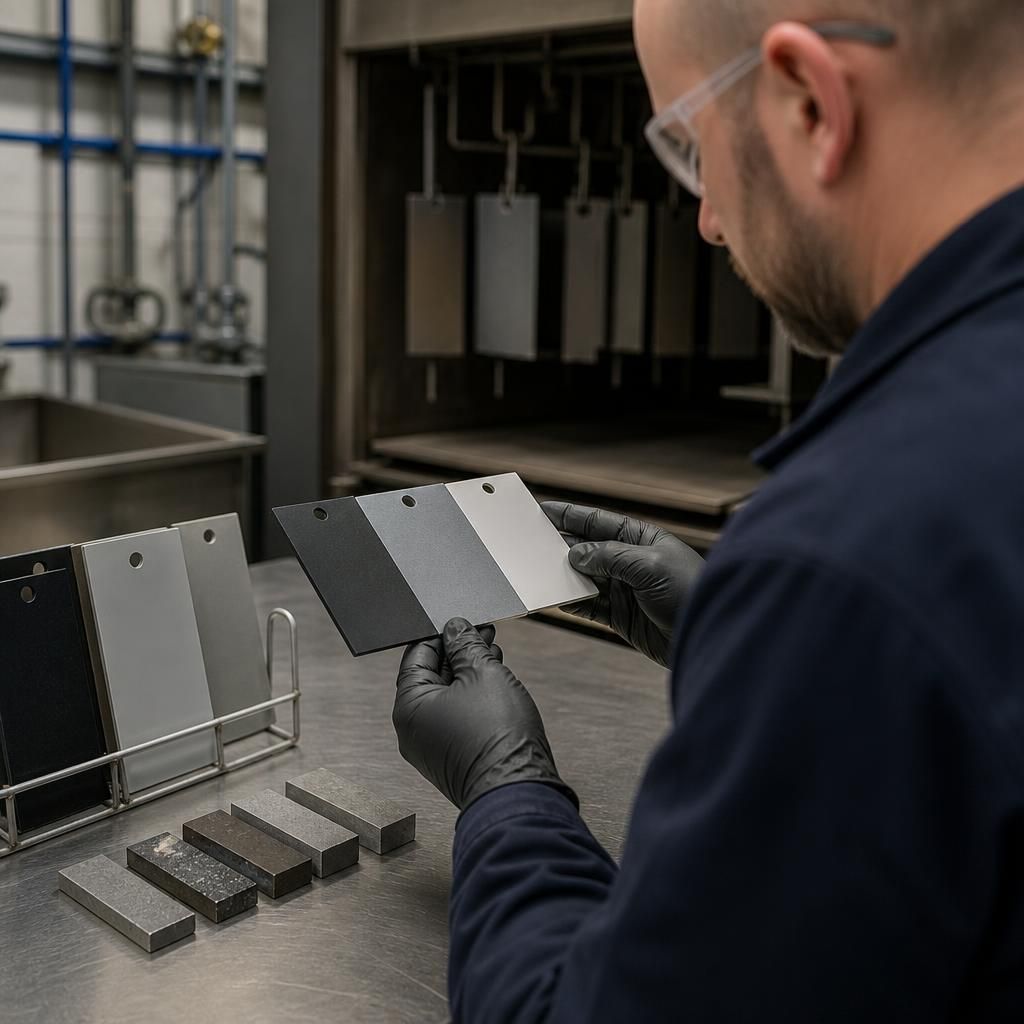
Pre-treatment should be validated as part of the complete nylon or speciality powder coating system, rather than selected solely by the metal type. A small representative sample or test panel can show whether the prepared surface accepts the coating evenly and whether the chosen treatment creates problems such as poor adhesion, staining, surface marks or inconsistent coverage.
Validation is particularly useful for unusual alloys, reclaimed or previously coated components, complex fabrications and parts with demanding dimensional or appearance requirements. The test should reproduce the intended preparation, powder application and curing conditions, followed by agreed inspection or performance checks. This gives the coating specification a defined basis before a full production batch is processed.