

Can epoxy and polyester powder coatings be used together on the same project for different components?
Yes. Epoxy and polyester powder coatings can be specified on different components within the same project, provided each coating is matched to the component’s exposure, functional requirements and appearance; they are not generally combined as layers on the same surface without confirming compatibility and the correct curing process.
The practical approach is to assign each resin system to the components whose service conditions suit it best, rather than treating the project as though every metal part requires the same coating. Epoxy is commonly selected for adhesion, chemical resistance and corrosion protection in controlled environments, while polyester is generally preferred where a component is exposed to sunlight, weather and changing outdoor conditions.
Specify each component by its operating environment. A fabricated frame located indoors, a machine guard exposed to oils or chemicals, and an external enclosure may all form part of one installation but face different demands. Epoxy may be appropriate for indoor parts where ultraviolet exposure is limited and resistance to chemicals or moisture is important. Polyester is usually more suitable for external components because it offers better resistance to ultraviolet degradation and weathering. Using the most appropriate coating for each part can be more technically sound than applying one finish universally.
The distinction is particularly important because an epoxy finish can lose colour and gloss, or develop a chalky surface, when exposed to prolonged sunlight. This does not necessarily mean that the coating has failed to protect the metal, but it can make it unsuitable where appearance and long-term exterior exposure are important. Polyester is normally the stronger choice for those visible outdoor surfaces, subject to the specific grade and exposure conditions.
Do not assume that the powders can be mixed or layered. Different components should be coated as separate items using the powder system specified for each one. Combining epoxy and polyester powders in the same application can alter melting, flow, film formation and curing behaviour. Similarly, applying one resin over another is not automatically equivalent to a compatible primer-and-topcoat system. A layered arrangement should only be used where the coating supplier has confirmed compatibility and provided an appropriate curing schedule.
Check the manufacturing and curing sequence. Powder coating depends on the metal reaching the required part temperature for the required period. Epoxy and polyester products may have different curing requirements, so components should be grouped and processed according to their individual product data rather than assumed to share one oven setting. Where both coating types are being handled for the same project, the coating schedule should account for:
- the specified cure temperature and time for each powder;
- the metal thickness, geometry and thermal mass of each component;
- the required film thickness and the effect of edges, recesses and welds;
- the risk of contamination when changing between coating systems; and
- the order in which parts will be coated, inspected and assembled.
Thorough preparation remains essential for both finishes. Oil, grease, mill scale, rust, welding residue and other contaminants can undermine adhesion regardless of whether the powder is epoxy or polyester. The pretreatment system should be suitable for the substrate and the intended environment. Components should also be designed or prepared so that the coating can reach difficult areas, including internal corners, drainage points and enclosed sections.
Consider how the finished components will look together. Two coatings may be specified with the same colour reference but still show differences in gloss, texture, colour depth or weathering. Resin chemistry, product grade, film thickness, curing and exposure can all affect the final appearance. If separately coated components will sit next to one another, a representative sample or trial panel can help assess whether the finishes are visually acceptable before the full batch is processed. This is especially relevant for panels, access covers, guards and other prominent parts.
Assembly details also affect the specification. If coated components are bolted together, the design should account for contact areas, fasteners, earthing points and any surfaces that must remain uncoated. Masking may be required where threads, bearing faces, electrical contacts or precision fits cannot accept powder. If parts are welded or modified after coating, the exposed areas will need suitable preparation and repair; a repair material should be compatible with the original coating and appropriate for the same service conditions.
A written coating schedule is useful for projects using both systems. It should identify each component, substrate, preparation method, coating type, colour and finish, required film build, curing requirements and inspection criteria. It should also state which surfaces are intended for internal or external exposure and whether chemical contact, abrasion, moisture or ultraviolet light is expected. This prevents a polyester finish being used on a part that requires a different chemical resistance profile, or an epoxy finish being specified for a highly exposed external surface simply for consistency.
Before production, confirm the specification with the powder supplier or coating specialist, particularly where components are assembled, visually matched, exposed to chemicals or required to meet a defined performance standard. A controlled trial can identify problems with adhesion, appearance, masking, cure or assembly before the complete project is coated.
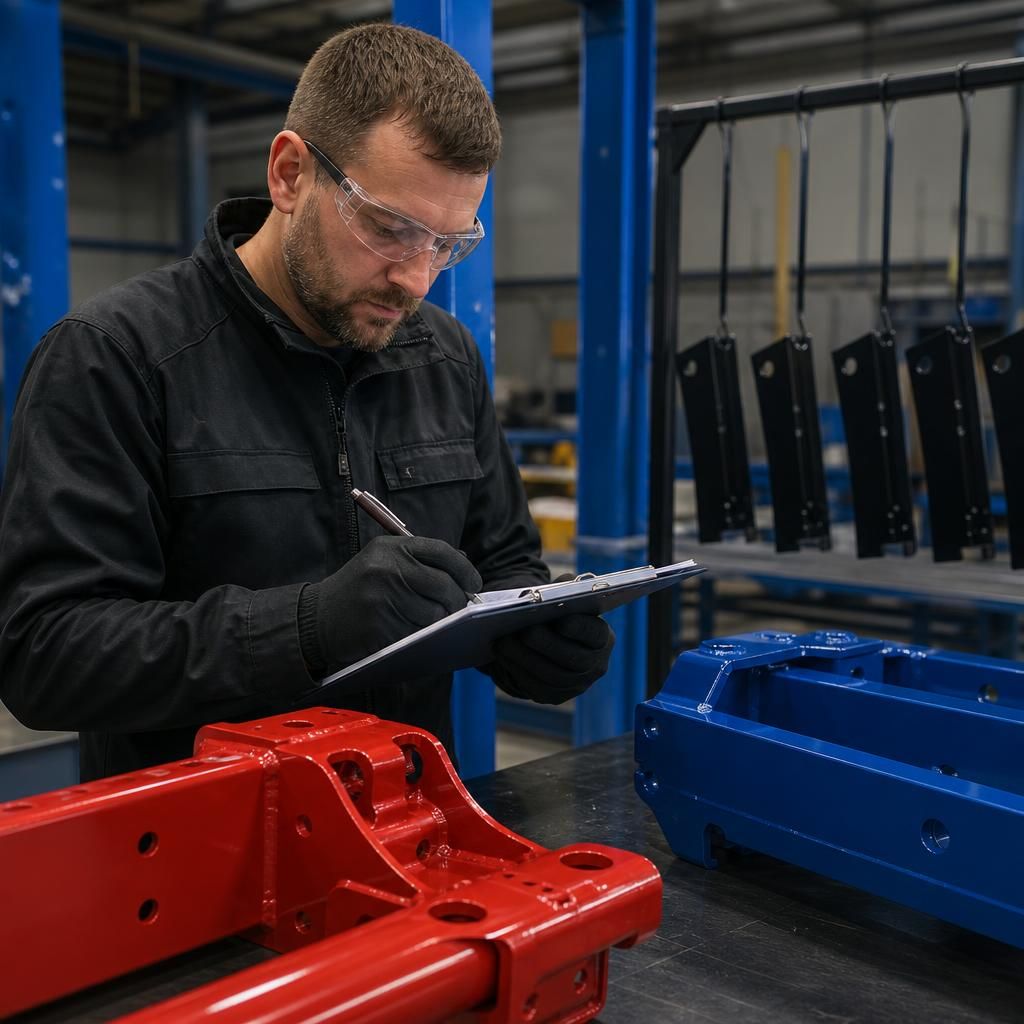
Where a project uses both epoxy and polyester, inspection should be recorded by component rather than treating the installation as one uniform coating system. Identify each part by its specified resin, colour, finish and intended exposure, then check the cured film for consistent coverage, visible defects and damage from handling. This is particularly important before assembly, when fixing points, contact faces and concealed areas may no longer be accessible. Keeping separate records also makes it easier to trace any issue to the relevant powder system, preparation method or curing cycle without confusing the performance requirements of one component with another.