

What are the benefits of using powder coating for metal parts?
Powder coating gives metal parts a tough, even finish that helps protect against wear, impact, moisture and corrosion. It also provides consistent colour and texture, supports efficient batch production and avoids the solvent emissions associated with many liquid paint systems.
Powder coating benefits metal parts by creating a cured polymer film that combines functional protection with a controlled decorative finish. The process can improve the service life, appearance and production practicality of components used in manufacturing, fabrication, construction and automotive applications, provided the metal is prepared correctly and the coating is matched to its working environment.
Improved resistance to everyday handling
Once cured, powder coating forms a continuous surface that can withstand the routine handling associated with manufacture, transport, installation and use. This helps reduce the likelihood of scuffs, chips and surface deterioration affecting the underlying metal. The result is particularly useful for brackets, frames, housings, fabricated assemblies and other parts that are handled frequently or exposed to mechanical contact.
Longer-lasting appearance
Powder coating provides a broad choice of colours, gloss levels and textures, allowing businesses to specify an appearance that suits a product, project or visual identification system. Because the finish is bonded to the component during curing, it is less dependent on the gradual evaporation associated with wet paint. Correctly specified coatings can therefore help parts retain a clean, finished appearance throughout their intended service life.
Efficient use of material
Powder is applied as a dry material, so it does not require the same solvent-based carrier as many liquid coating systems. Overspray may also be recoverable in suitably designed equipment, although the practical approach depends on the powder, application method and colour-management requirements. This can support more controlled material use and reduce unnecessary waste during suitable production runs.
Reliable repeatability for manufactured parts
For businesses coating multiple components, the process can be controlled through defined preparation, application and curing parameters. Repeating those conditions helps maintain a similar finish across batches, which is important when parts are assembled together or supplied as part of a larger product. Powder coating is also suitable for automated application, making it practical for regular production where process control matters.
Reduced finishing requirements
A correctly specified powder coating can provide the required functional and visual finish in one coating system, rather than requiring several separate wet-paint stages. This may simplify handling between operations and reduce the amount of space needed for intermediate finishing work. The exact number of coats and preparation stages still depends on the metal, the required protection and the selected powder system.
Compatibility with specialist requirements
Different powder formulations can be selected for particular service conditions. Specialist options, including nylon and protective coatings, may be appropriate where a component needs a different combination of surface feel, impact resistance, chemical resistance or additional protection. Selection should take account of the substrate, operating temperature, exposure conditions, required film build and the way the part will be used.
Potential cost benefits over the part’s service life
The financial benefit is not limited to the application stage. A finish that remains serviceable for longer can reduce the frequency of refinishing, replacement or remedial work. Businesses should assess the full lifecycle cost rather than comparing only the initial coating price, taking account of preparation, handling, maintenance and the consequences of premature coating failure.
Important conditions for achieving these benefits
- Remove oil, dirt, mill scale, rust and other contaminants before coating.
- Use a preparation method suitable for the specific metal and required level of adhesion.
- Confirm that the component can tolerate the curing temperature without distortion or damage to attached materials.
- Specify a coating designed for the intended indoor, outdoor, chemical or mechanical exposure.
- Check masking, hanging points and coverage requirements for threads, joints, recesses and close-fitting areas.
- Inspect the finished parts for coverage, adhesion, colour and cure before they enter service.
Powder coating is therefore most beneficial when it is treated as part of the component design and production process, rather than as a final cosmetic step. The right preparation, powder type, application method and curing conditions determine whether the coating delivers its expected protection and appearance.
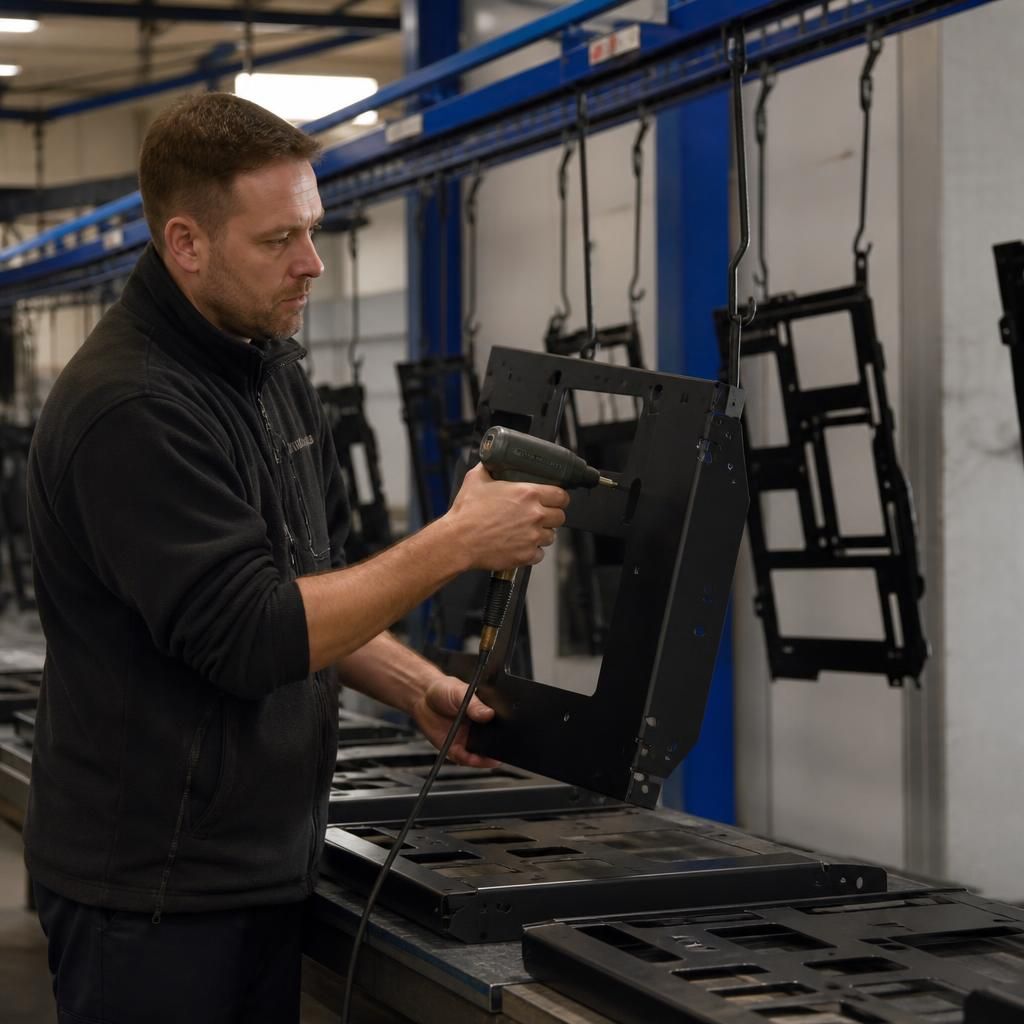
Powder coating also supports more controlled quality assurance for manufactured metal parts. Preparation, application and curing can be assessed against a defined specification, while checks on coverage, adhesion, colour and cure help identify issues before components are assembled or installed. This gives production teams clearer acceptance criteria than relying solely on visual inspection after finishing.