

What steps are involved in ensuring complete adhesion of the powder coat to metal surfaces?
Complete powder-coat adhesion depends on preparing the metal correctly: assess the substrate, remove oil, dirt, rust and scale, and apply a suitable pretreatment. The powder must then be applied evenly and cured at the specified time and temperature so it bonds properly with the prepared surface.
Complete powder-coat adhesion is achieved by controlling every stage between the bare metal and the finished film. In practice, this means confirming that the substrate is suitable, preventing contamination after preparation, maintaining a reliable electrical connection during spraying, depositing a consistent film, and verifying the result before the component is released.
1. Confirm the substrate and its condition
Different metals and metal conditions can require different treatment. Steel, galvanised steel, aluminium and previously coated components may vary in their surface chemistry, porosity and response to pretreatment. The coating specification should therefore identify the substrate, any existing finish, visible corrosion, weld areas, sharp edges and residues from fabrication.
Weld spatter, burrs, sharp corners and deep scratches can interrupt the coating film or create weak points. These defects should be removed or addressed before coating. Welds and crevices also need particular attention because trapped moisture, abrasive dust or chemical residue can remain beneath the powder and interfere with bonding.
2. Keep the prepared surface clean until spraying
Once the metal has been prepared, it must be handled in a way that does not reintroduce contamination. Fingerprints, silicone, oil from handling equipment, dirty racks and airborne dust can all create areas where the powder fails to wet the surface properly. Clean gloves, suitable lifting methods and controlled handling help preserve the condition of the substrate.
Parts should also be dry before powder is applied. Moisture left in seams, hollow sections or threaded holes can cause defects during heating and may undermine the coating locally. Components with enclosed sections should be designed or processed so that cleaning and drying are effective throughout the part.
3. Use an appropriate pretreatment system
Pretreatment does more than remove visible dirt. It modifies the metal surface to improve the interaction between the substrate and the coating, while also helping to protect against corrosion beneath the film. The selected system needs to match the metal type, the intended environment and the powder specification.
Process control is important at this stage. Chemical concentration, contact time, rinsing and drying must remain within the requirements of the selected treatment. Inadequate rinsing can leave residues; excessive treatment can affect the surface in an undesirable way. Where a conversion coating or other pretreatment is used, its coverage and condition should be checked rather than assumed from the process settings alone.
4. Ensure effective grounding during application
Powder particles are normally electrically charged as they pass through the spray equipment and are attracted to the earthed metal component. A clean, dependable earth path helps the powder transfer evenly and reduces the risk of poor deposition. Hooks, racks and contact points should make reliable metal-to-metal contact, and accumulated powder should be removed because it can act as an insulator.
Grounding is particularly important around recesses, corners and complex assemblies. A component that is not properly earthed may receive an uneven charge, allowing powder to back-ionise, repel from the surface or accumulate inconsistently. These effects can produce thin areas or visible surface defects even when the powder itself is suitable.
5. Apply the powder consistently
Gun distance, movement, voltage, powder output and spray angle all affect adhesion indirectly because they determine how evenly the film is deposited. The applicator should avoid dwelling too long in one area or relying on excessive powder to cover difficult geometry. Over-application can reduce the quality of the finish and may prevent the coating from heating uniformly.
Edges, internal corners and recessed features require a controlled technique. The Faraday cage effect can restrict powder from entering deep corners, while excessive electrostatic settings can make this problem worse. Adjusting the application method and, where appropriate, the equipment settings helps achieve coverage without creating heavy build-up on exposed faces.
6. Control film thickness
A consistent dry-film thickness supports uniform melting and bonding. Thin spots may leave the substrate insufficiently protected, whereas excessive thickness can contribute to poor appearance, cracking, sagging or incomplete flow. Thickness should be checked with a suitable gauge at representative locations, including edges and areas that are difficult to coat.
The required range depends on the powder system, substrate, component geometry and performance specification. It should be agreed from the technical data for the selected powder rather than estimated by appearance alone. Colour and gloss are not reliable indicators of whether the film has the correct thickness or adhesion.
7. Confirm that the metal reaches the specified cure condition
The component must receive the powder manufacturer’s specified combination of metal temperature and time. Oven air temperature alone does not prove that the part has reached the required cure condition, particularly where components are thick, densely loaded or have high heat capacity. Monitoring should therefore reflect the temperature of the metal where the specification requires it.
Under-cured powder may remain weak, brittle or susceptible to chemical damage, while excessive heat or time can affect colour, gloss and coating performance. Correct loading, airflow and temperature control help ensure that the whole component—not just its outer surface—receives a consistent thermal cycle.
8. Inspect and test the finished coating
Final checks should include visual inspection for bare areas, pinholes, craters, blistering, runs, contamination and uneven coverage. Depending on the specification, checks may also include dry-film thickness, cure assessment and an adhesion test. A cross-cut or pull-off test can reveal whether the coating is properly bonded, although the appropriate method depends on the coating system and the component.
Testing should be performed on representative areas and interpreted against the agreed acceptance criteria. If a defect is found, simply applying more powder over it is not a dependable correction. The affected area normally needs to be assessed, removed or prepared again as necessary, then recoated using the correct application and cure controls.
For projects requiring repeatable adhesion across batches, recording the substrate, pretreatment, application settings, film thickness and cure conditions creates a useful process trail. It also makes it easier to identify whether a problem originated with the metal, preparation, application, oven cycle or handling after coating.
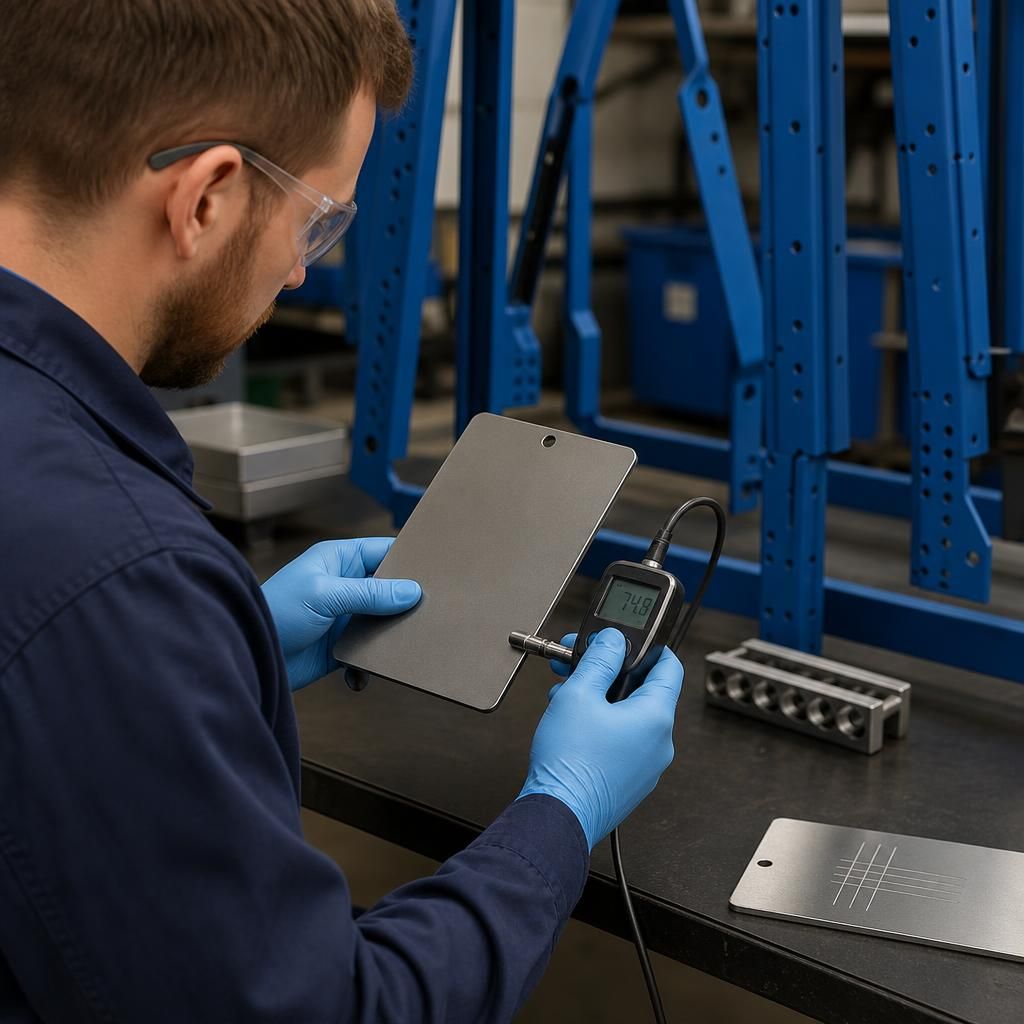
For unusual substrates, complex assemblies or demanding service conditions, adhesion should be confirmed before the full batch is processed. A representative test piece or sample panel can be prepared using the proposed cleaning, pretreatment, powder application and curing conditions, then assessed against the agreed adhesion and finish requirements.
This preliminary check helps identify incompatibility between the metal, pretreatment and powder system before production components are coated. It is particularly useful where surfaces include mixed metals, repairs or existing finishes that may respond differently from the main substrate. Any changes identified during the trial should be incorporated into the documented coating procedure before batch processing begins.
Discuss Your Powder Coating Adhesion Requirements
Share your component drawings, substrate details and intended service conditions to discuss the coating specification required for reliable adhesion. Powder-coatings.co.uk can advise on suitable preparation, application and verification requirements for your project.