

What preparation is necessary before applying industrial powder coating?
Before industrial powder coating, metal components must be thoroughly cleaned, stripped of previous coatings, and checked for rust, damage or surface defects. Suitable repairs, masking and abrasive blasting or other specified surface treatments then create a clean, suitably keyed surface for consistent powder adhesion.
Preparation before industrial powder coating is not limited to making the metal clean. The component must also be suitable for the planned coating system, correctly designed or configured for processing, and presented with clear requirements for finish, masking, racking and curing. These checks help prevent defects caused by trapped gases, inaccessible surfaces, unsuitable contact points or coating applied where it is not required.
Confirm the substrate and coating specification. Identify whether the part is mild steel, stainless steel, aluminium, galvanised steel or another compatible metal. Each substrate can require a different pre-treatment approach, and previously coated or plated components may need particular assessment before work begins. The specification should also state the required colour, gloss level, texture, film build, corrosion protection and any areas that must remain uncoated.
Review the component design. Powder needs to reach the surfaces being coated, while the part must also be safely supported during handling and curing. Deep recesses, narrow gaps, overlapping plates and enclosed sections can restrict access or create uneven coverage. Sharp edges may produce a thinner coating than broad faces, so edge condition and geometry should be considered when the component is designed or prepared for finishing.
Hollow fabrications need particular attention. Any enclosed section that will be processed should have suitable drain and vent provisions. Without them, liquid from pre-treatment can remain trapped, and expanding air or residual moisture during oven curing can cause bubbling, pinholing or other finish defects. Venting also supports safe handling of fabricated parts during the process.
Complete fabrication before coating. Welding, drilling, grinding, cutting and other metalwork should normally be finished before the component is submitted. Weld spatter, sharp burrs, excessive weld ridges and grinding marks can remain visible through the coating or interfere with a uniform finish. Welded assemblies should be checked for pinholes and crevices that could retain chemicals or moisture.
Where a fabrication includes porous castings, threaded inserts or enclosed welds, outgassing may need to be considered. Gases released from the substrate during heating can create blisters or small surface holes. Suitable component design, pre-treatment and process controls can reduce this risk, although the appropriate approach depends on the material and construction.
Define masking and contact requirements. Threads, bearing seats, earth points, mating faces, identification plates and close-tolerance locations may need to remain free from powder. Masking plugs, caps or other fixtures must be selected to withstand the process and positioned so that they do not obstruct necessary coating areas. Allowance should also be made for the thickness of the finished coating where parts must assemble closely.
The component needs reliable electrical contact during application so that powder can be attracted to the metal. Racking or hanging points should therefore be agreed in advance. Contact marks are normally confined to selected, non-critical areas, while unsuitable hanging arrangements can leave inaccessible sections or lead to inconsistent coverage.
Check dimensions, weight and handling. Large or heavy parts should be assessed for lifting points, support stability and clearance through the preparation and curing equipment. Sections that flex, distort or touch one another during handling may not receive an even finish. Assemblies may need to be separated if their construction prevents proper coating access or creates areas where powder cannot be applied consistently.
Provide accurate job information. The coating provider should receive drawings, photographs or marked-up details showing critical faces, masking zones, tolerances, assembly points and any appearance requirements. It is also useful to identify surfaces that will be exposed to chemicals, abrasion, weather or elevated temperatures, as these conditions affect the choice of powder system and the required preparation.
Before processing, components should be inspected for remaining contamination, moisture and foreign material, including labels, adhesive residue, silicone, oil, grease and handling deposits. These can interfere with electrical attraction or create defects even when the metal appears visually acceptable. Parts should be protected from fresh contamination after preparation and handled in a way that avoids fingerprints or contact with unsuitable materials.
For manufacturers and fabricators, the most effective preparation is therefore a combination of finished fabrication, suitable component design, defined coating limits and clear process information. Powder coating services can then assess the substrate and geometry, select compatible preparation stages and identify any risks before the parts enter production.
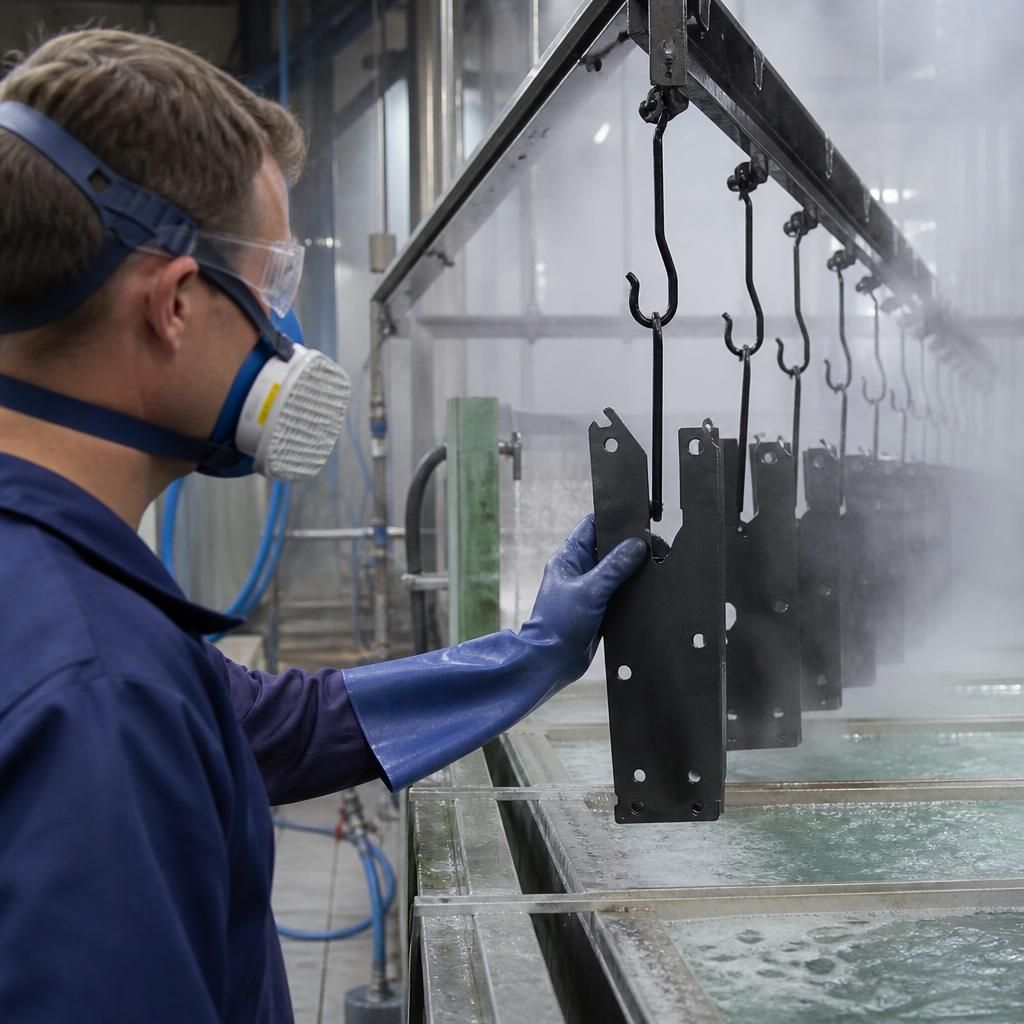
Chemical pre-treatment is selected according to the metal and the powder system, rather than applied identically to every component. After visible contamination and corrosion have been addressed, the surface may require a conversion treatment that improves coating adhesion and helps protect the substrate beneath the finish. Steel, aluminium, stainless steel and galvanised surfaces can respond differently, so the treatment must be compatible with the material and any existing plating or coating.
Thorough rinsing and drying are essential after wet pre-treatment. Residual chemicals, rinse water or salts can contribute to poor adhesion, blistering or corrosion beneath the powder. Before coating, the prepared component should therefore be checked for dry, uniform surfaces and handled in a way that prevents new contamination. This stage is particularly important where parts will face moisture, chemicals or outdoor exposure.