

What steps do I need to follow for regular maintenance of my powder coating gun feed setup?
Maintain a powder coating gun feed setup by isolating the equipment, removing residual powder, inspecting the feed hose, pump, filters and connections, and checking for wear or blockages. Reassemble the system correctly, verify air lines and seals, then test powder delivery before returning the gun to production.
Regular maintenance of a powder coating gun feed setup should combine documented checks, powder-condition control, air-quality checks, calibration and planned replacement of consumable parts. The aim is to keep powder delivery stable without allowing contamination, moisture or gradual component wear to alter the coating process.
1. Set a maintenance schedule
Use the equipment manufacturer’s instructions as the primary reference, then adapt the schedule to powder type, production volume and the amount of reclaimed powder used. Record each maintenance task, the date, the operator and any change made. A simple maintenance log can reveal recurring issues, such as powder delivery becoming unstable after a particular production run or a specific type of powder.
Divide the schedule into routine checks, periodic servicing and condition-based work. Routine checks identify changes before production starts; periodic servicing covers items that do not need attention after every use; condition-based work is triggered by symptoms such as pulsing, uneven deposition, increased overspray or a change in the required air settings.
2. Check powder condition and handling
Keep unused powder in its original, closed container and protect it from humidity and contamination. Powder that has absorbed moisture may fluidise poorly, bridge in the container or produce intermittent feed. Before loading the system, look for agglomerates, foreign material or a change in the powder’s appearance. Do not return contaminated or visibly degraded powder to the feed supply.
Where reclaimed powder is used, control how it is identified and blended with virgin powder in accordance with the coating material supplier’s guidance. Different colours, chemistries and particle sizes should not be mixed casually, as contamination can affect fluidisation, transfer efficiency and the final finish. Clean containers and tools used for powder handling before changing material.
3. Verify compressed-air quality
Powder feed depends on clean, dry and suitably regulated air. Include the air preparation equipment in the maintenance plan and check that moisture separators, regulators and drains are functioning correctly. Condensation in the air supply can change powder flow and cause deposits within the delivery path.
Check that air pressure readings remain consistent with the approved process setting rather than changing pressure to compensate for an unidentified fault. If the reading fluctuates, investigate the air supply and regulation system before altering the powder feed rate. Any maintenance on compressed-air equipment should follow the site’s safe isolation procedures.
4. Maintain gun-end components
Clean the nozzle, deflector and electrode assembly using methods that will not scratch, deform or introduce conductive contamination. Pay particular attention to compacted powder around the electrode and nozzle openings, since deposits can distort the spray pattern or interfere with charging. Replace components that are cracked, misshapen or excessively eroded rather than trying to correct their geometry by force.
After cleaning, confirm that gun-end parts are fitted in the correct order and are secure. A loose or incorrectly seated part can alter the spray pattern even when the feed settings appear unchanged. Use only cleaning tools and materials approved for the equipment, and avoid practices that create static discharge or damage insulating surfaces.
5. Check calibration and repeatability
Periodically compare the displayed settings with the actual behaviour of the system. Check powder output using a controlled collection method suitable for the equipment, then compare the result with the established process baseline. The purpose is to identify drift, not to chase a particular reading without reference to the coating specification.
Also check that the control unit retains its intended settings after cleaning, component changes or a power interruption. If the same setting produces a different output, record the change and investigate the relevant air, powder or mechanical variables before recalibrating.
6. Inspect electrical and earthing performance
Check the gun cable, plugs and earthing arrangements for damage, contamination or loose connections as part of the site’s electrical safety routine. Confirm that the workpiece and supporting fixtures provide a suitable path to earth, because poor earthing can affect transfer and encourage powder build-up. Electrical checks should be completed by a suitably competent person and in line with the equipment documentation.
7. Review the maintenance record
After servicing, note the parts cleaned or replaced, the powder used, the settings verified and any abnormal findings. A repeated fault may indicate a process or equipment issue that routine cleaning alone will not resolve. Escalate unexplained changes in output, electrical behaviour or air performance rather than continuing to adjust settings without a controlled diagnosis.
For a production coating operation, this documented approach makes the feed setup easier to compare between shifts and helps distinguish a maintenance fault from a powder, application or pretreatment issue.
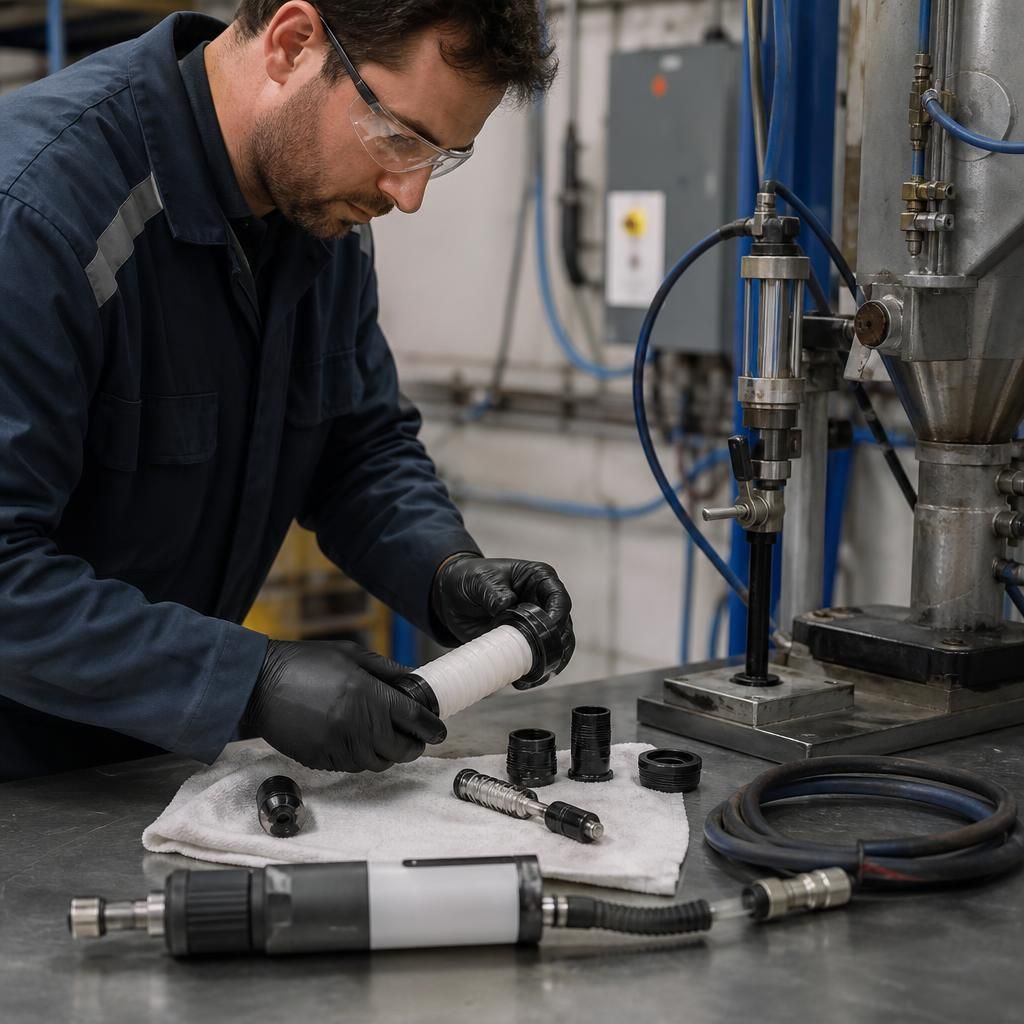
Keep lubricants, solvent residue and workshop dust out of the powder path. Do not oil the feed hose, pump passages or powder container to cure sticking, as oil can contaminate the powder and alter its transfer behaviour. If a seal, O-ring or threaded connection requires lubrication, use only the product and method specified for that component, applying it away from surfaces that contact powder.
After cleaning, allow parts to become completely dry before reassembly and check that no lint, cleaning material or loose debris remains inside the feed route. This small control prevents maintenance materials from becoming a new source of contamination and helps ensure that a test of the setup reflects the condition of the coating equipment rather than residue introduced during servicing.