

How does the curing process affect the quality of powder-coated products?
The curing process determines whether powder coating particles fully melt, flow and cross-link, directly affecting the finish, adhesion and protective performance of the product. Accurate control of curing temperature and time helps prevent defects such as poor levelling, brittleness, discoloration or inadequate durability.
The curing process affects powder-coated quality by establishing the coating’s final chemical structure and mechanical properties. A correctly cured film develops the intended hardness, flexibility, adhesion and resistance to impact, chemicals and corrosion, while an inaccurate cure schedule can leave the coating unsuitable for its service conditions even when the surface appears acceptable.
Substrate temperature is the critical reference point. The temperature shown by an oven controller describes the air surrounding the components, not necessarily the temperature reached by the metal itself. Thin sections may heat quickly, whereas heavy fabrications, enclosed sections and parts with high thermal mass take longer to reach the required curing condition. The specified dwell period should therefore be assessed from the point at which the component reaches the powder manufacturer’s required metal temperature, rather than simply from the moment it enters the oven.
This distinction is particularly important for assemblies containing different material thicknesses. If the process is set for the heaviest section, thinner areas may receive excessive heat exposure. If it is set for the thin areas, thicker sections may not receive sufficient curing. A suitable production schedule accounts for the part’s mass, geometry, loading arrangement and the formulation of the powder being used.
Insufficient curing can produce a film with reduced mechanical and chemical resistance. Possible effects include a coating that marks more easily, loses adhesion during service, or provides less effective protection at damaged or exposed areas. The surface may look smooth and evenly coloured, so visual inspection alone cannot confirm that the film has reached its required performance.
Excessive heat exposure can also reduce quality. Depending on the powder formulation and substrate, it may alter colour or gloss, reduce flexibility, embrittle the film or affect the appearance of sensitive components. Over-curing is not simply a matter of achieving a stronger finish; the coating must receive the heat exposure specified for its chemistry and intended use.
Several production factors influence whether the required cure is achieved:
- Oven calibration: temperature sensors and control systems must provide a reliable representation of the operating conditions. Independent temperature checks can identify differences between the displayed setting and the conditions experienced by the workpiece.
- Air circulation: uneven airflow can create hot and cold areas inside the oven. Parts positioned close together, shielded by other components or placed near openings may not experience the same heating conditions.
- Loading pattern: the quantity, spacing and orientation of components affect heat transfer. A schedule that works for a lightly loaded oven may not be appropriate when the load, part size or arrangement changes.
- Part design: boxed sections, folded returns, deep recesses and substantial weldments can heat differently from open, thin sections. These areas require attention during process trials and validation.
- Powder formulation: different chemistries have their own curing requirements. The powder supplier’s technical data should be used when setting the process rather than applying one schedule to every product.
Quality control should combine process monitoring with inspection of the finished coating. Production records can include the powder specification, oven settings, line speed, loading arrangement and any relevant checks on component temperature. Where the application is critical, representative parts or test panels may be assessed for film thickness, adhesion, hardness, flexibility, impact resistance, gloss and colour consistency. The appropriate tests depend on the coating specification and the conditions the product will face in service.
When a defect is found, changing the oven temperature alone is rarely a complete solution. The investigation should consider whether the metal reached the intended temperature, whether the dwell period was adequate, whether the oven was evenly heated, and whether the powder had been stored and applied correctly. A repeatable curing process is produced by controlling these variables together, not by relying on the oven display or surface appearance as the only evidence of quality.
For B2B projects involving batches of metal components, curing requirements should be agreed alongside the part design, powder specification and inspection criteria. This helps ensure that components with different sizes or thermal masses are processed appropriately and that the final coating is assessed against the performance required in manufacturing, construction, automotive or other industrial use.
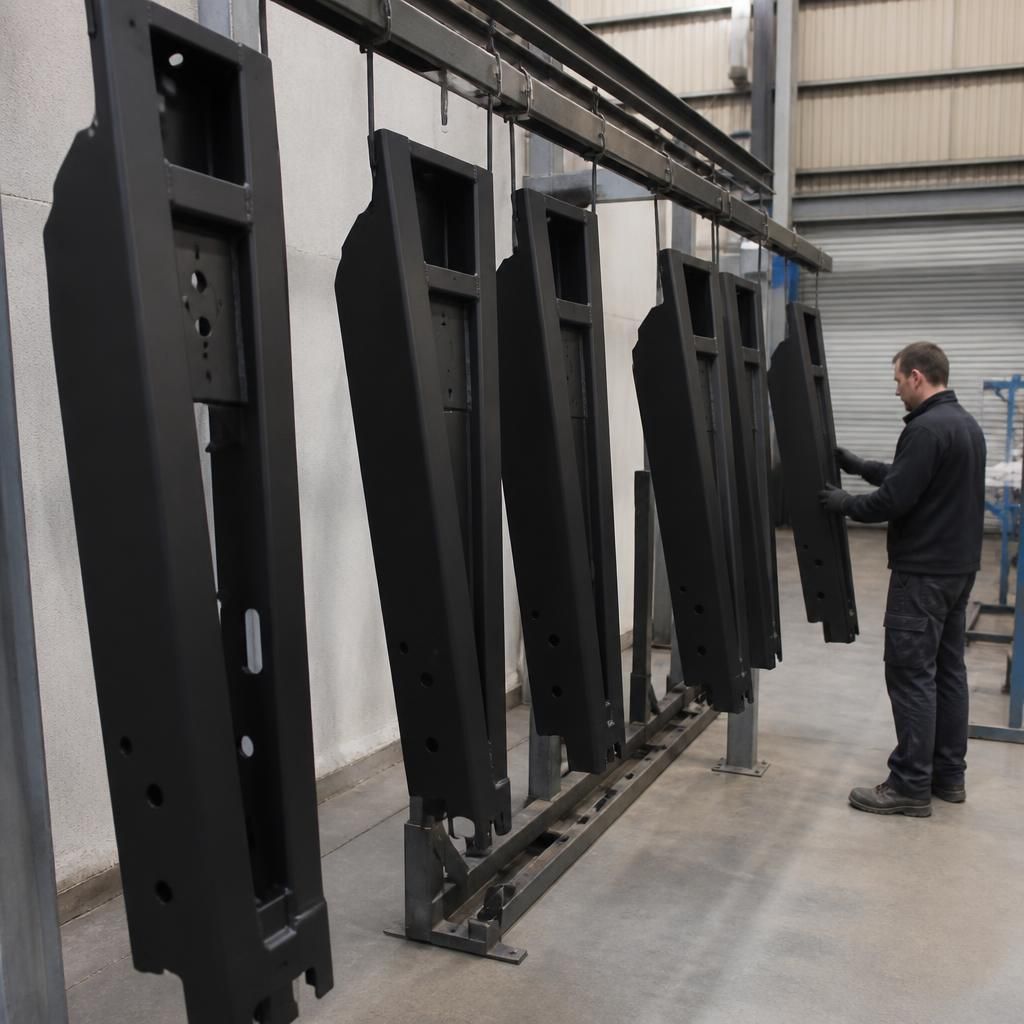
Cooling and handling after the oven also influence the final quality of a powder-coated product. A component may have completed its required heat exposure while the coating is still warm and more susceptible to marking, scuffing or impressions from supports and packaging. Allowing parts to cool before inspection, stacking or dispatch helps protect the newly formed film and prevents handling damage from being mistaken for a curing defect.
Support points should be positioned to minimise contact with visible surfaces, particularly on large or heavy components. Parts should also be protected from dust, moisture and contact with other coated items during cooling. This post-cure handling stage does not replace correct oven control, but it helps preserve the finish achieved during curing.