

What is included in a complete powder coating setup for sale?
A complete powder coating setup for sale typically includes equipment for surface preparation, powder application, curing, ventilation, process control and safe handling. Depending on the production requirement, this may comprise a preparation area, spray booth, application guns, curing oven, extraction system, control panels, loading equipment and supporting safety provisions.
A complete powder coating setup for sale is an integrated production package, rather than a collection of individual machines. Alongside the main coating equipment, it should include the utilities, handling arrangements, controls, quality checks, safety provisions and documentation needed to operate a repeatable process for the intended components and coating materials.
The exact contents vary according to part dimensions, throughput, finish requirements and the available building services. A package for small batches may use manual handling and operator-controlled application, whereas a higher-volume line may require linked handling equipment, automated controls and more extensive powder recovery. The term “complete” should therefore be checked against a detailed equipment schedule rather than assumed from a sales description.
Supporting equipment and consumables
- Loading and handling items: coated or purpose-built racks, hanging bars, hooks, trolleys and loading fixtures allow parts to move through each stage without damaging the finish. The fixtures must suit the component weight, geometry and required coating coverage.
- Masking and plugging provisions: reusable silicone plugs, caps, tapes and purpose-made masks protect threads, bores, electrical contact points and other areas that must remain free of coating.
- Powder-management accessories: sieves, feed hoppers, powder hoses, storage containers and reclaim arrangements help control powder condition and reduce contamination during changes between colours or materials.
- Compressed-air equipment: a suitable air supply, filtration, moisture separation, regulators and pipework are needed where the application equipment depends on clean, dry and stable air.
- Electrical and building connections: the package may require dedicated electrical supplies, gas or other heating connections, extraction ducting, lighting, ventilation routes and a suitable floor area. These requirements should be established before installation.
Process control and monitoring
A usable setup should provide a way to set, monitor and record the important process conditions. This can include temperature controls, timers, gauges, alarms, interlocks and control panels. For curing, the relevant consideration is the temperature reached by the component, not simply the air temperature inside the oven. Monitoring arrangements should therefore be appropriate to the part material, thickness, loading pattern and powder manufacturer’s technical requirements.
Control systems may also store operating parameters or allow repeatable settings for different product types. Where several finishes are applied, the specification should explain how colour changes, powder transfer and cleaning are handled. A package that lacks an efficient changeover method may be unsuitable for a business producing varied batches, even if its individual machines appear adequate.
Quality assurance provisions
Quality equipment is an important part of a complete setup. Depending on the required specification, this may include a dry-film thickness gauge, adhesion-testing equipment, temperature-recording tools and suitable inspection lighting. These items help operators check whether the coating has been applied evenly and cured correctly.
The package should also include a practical method for recording batch details, powder identification, process settings, inspection results and any non-conforming work. Traceability is particularly useful for manufactured components supplied into construction, automotive or other controlled production environments. The required tests should be matched to the coating specification rather than added as generic accessories.
Safety and compliance features
Safety provisions should be built into the design. Relevant features can include guarded moving parts, emergency stops, access controls, electrical isolation, suitable extraction, safe powder handling arrangements and warning labels. The risk assessment should consider combustible dust, ignition sources, heated surfaces, compressed air, manual handling and exposure to preparation chemicals.
Documentation should identify the operating limits, inspection requirements and maintenance procedures for the equipment. It should also support the site’s obligations under applicable UK workplace, fire, electrical and environmental controls. Personal protective equipment, spill-control materials and storage arrangements may be required as part of the wider installation, although they are not always included in the sale price.
Installation, commissioning and handover
A genuinely complete package should define what happens after the equipment is delivered. The scope may include layout planning, connection of services, alignment of handling equipment, control checks, commissioning and operator familiarisation. It should also identify which site-preparation tasks remain the buyer’s responsibility.
Handover information commonly includes operating instructions, electrical drawings, service schedules, parts lists, recommended spares and details of routine cleaning. For used equipment, the buyer should request its condition, service history, modifications, missing components and the availability of replacement parts. Commissioning should verify that the assembled system operates safely and achieves the intended process conditions with representative workpieces.
How to assess what is included
Before comparing a complete powder coating setup for sale, ask for an itemised specification covering:
- the maximum and minimum component dimensions and weights;
- the intended production method, batch size and product mix;
- compatible powder types, substrate materials and finish requirements;
- electrical, gas, compressed-air and extraction requirements;
- handling capacity, loading arrangements and available floor space;
- control, inspection and record-keeping provisions;
- installation boundaries, commissioning responsibilities and training;
- equipment condition, warranties or exclusions, documentation and spare parts.
This approach distinguishes a complete, workable production solution from a package that contains the principal machines but leaves essential services, handling, testing or compliance work unresolved. For a Midlands manufacturer, fabricator, construction supplier or automotive business, the most suitable setup is the one whose complete specification matches the parts being coated, the available premises and the required level of process control.
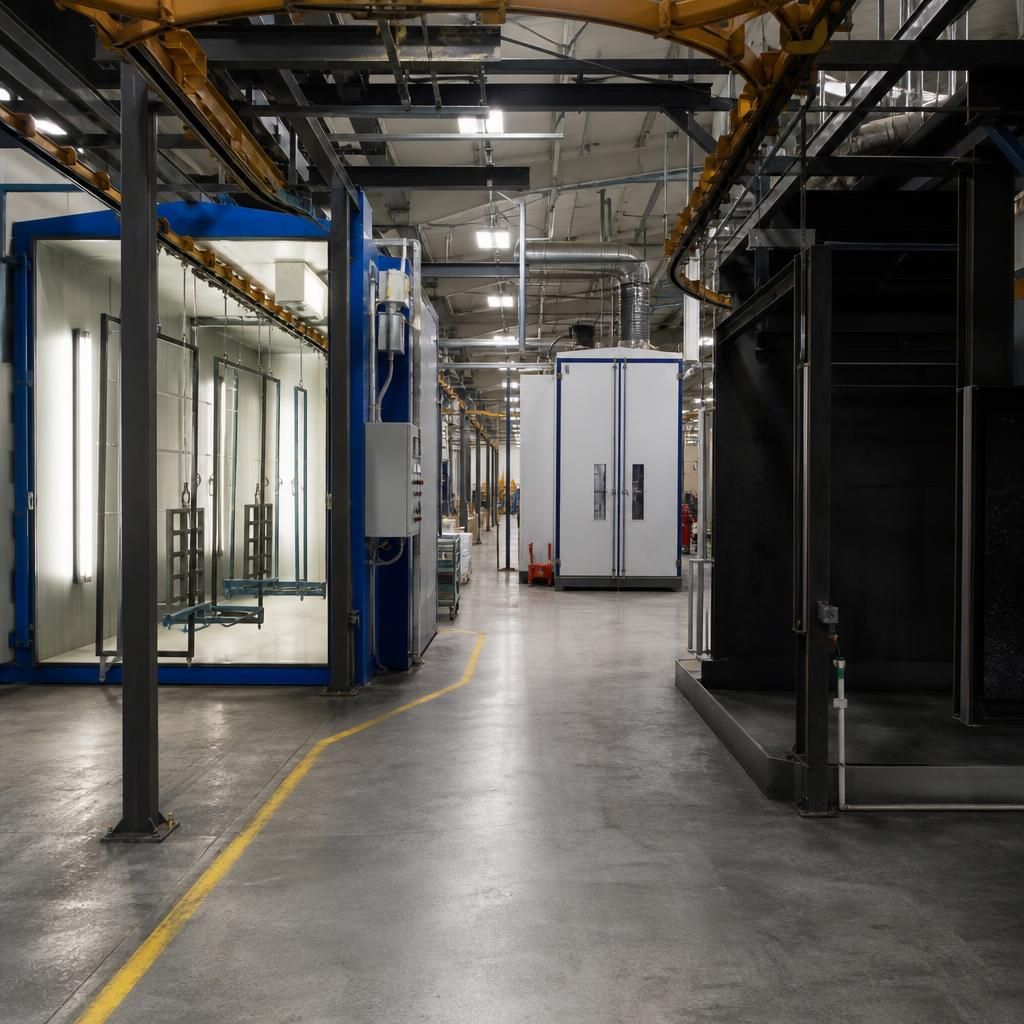
A complete powder coating setup should support a logical one-way workflow from prepared metal to finished component. The layout should separate dusty or chemically active preparation areas from powder application and curing, while providing enough room for loading, unloading, inspection and safe movement around the equipment.
Access is also part of the specification. Operators and maintenance staff need clear routes to filters, electrical panels, burners or heating elements, spray equipment and cleaning points without obstructing production. Reviewing the proposed layout against the available premises can reveal practical limitations that are not obvious from an equipment list alone.