

How does the Perfect-It Powder Coating process ensure consistent quality across different metal components?
The Perfect-It Powder Coating process supports consistent quality by applying controlled preparation, powder application and curing stages to each metal component. Process parameters and finish requirements can be managed for different component sizes, shapes and substrates, helping produce an even, durable coating across individual parts and batch work.
Consistent quality across different metal components is achieved by matching the coating specification and process controls to each component’s material, geometry, surface condition and intended use. This prevents differences in size, shape or substrate from creating avoidable variation in coverage, appearance or performance.
The process begins with a technical review of the parts and the required finish. Important considerations include the type of metal, component dimensions, edges, recesses, apertures, welded areas and any areas that must remain uncoated. Identifying these features before processing helps determine suitable hanging points, masking arrangements and application requirements for each component.
Parts with complex geometry require particular attention because corners, cavities and narrow sections can behave differently from broad, accessible surfaces. The coating approach is therefore adapted to improve access and reduce issues such as thin coverage, excessive build-up or powder collecting in enclosed areas. Consistent positioning and handling also help ensure that comparable parts are treated in the same way from one batch to the next.
Finish specifications provide a reference for assessing whether components are suitable for release. Depending on the project, this may include the selected colour, gloss level, texture, coating type and coverage requirements. Reviewing the finished parts against the agreed specification helps distinguish acceptable variation caused by component design from defects that require investigation.
- Material compatibility: the substrate and its condition are considered when selecting the appropriate coating route.
- Component design: edges, recesses, apertures and welded sections are assessed for their effect on coverage and appearance.
- Application consistency: positioning, masking and powder application are managed to suit the part rather than applying one arrangement indiscriminately.
- Finish control: colour, texture, gloss and overall coverage are checked against the agreed requirements.
- Batch repeatability: the same specification and handling principles can be carried through related production runs, supporting consistency across individual parts and larger quantities.
These controls are particularly relevant where one order contains a mixture of component sizes or designs. Rather than treating every item as identical, the process accounts for the characteristics that affect the finished coating while retaining a common quality standard. This approach enables manufacturers, fabricators, construction firms and automotive businesses to specify a consistent finish across varied metalwork.
For a coating project, providing accurate drawings, substrate details, finish requirements and information about masking or uncoated areas helps establish an appropriate process before the components are treated. Clear specifications make inspection more objective and provide a practical basis for maintaining uniform results across different metal components.
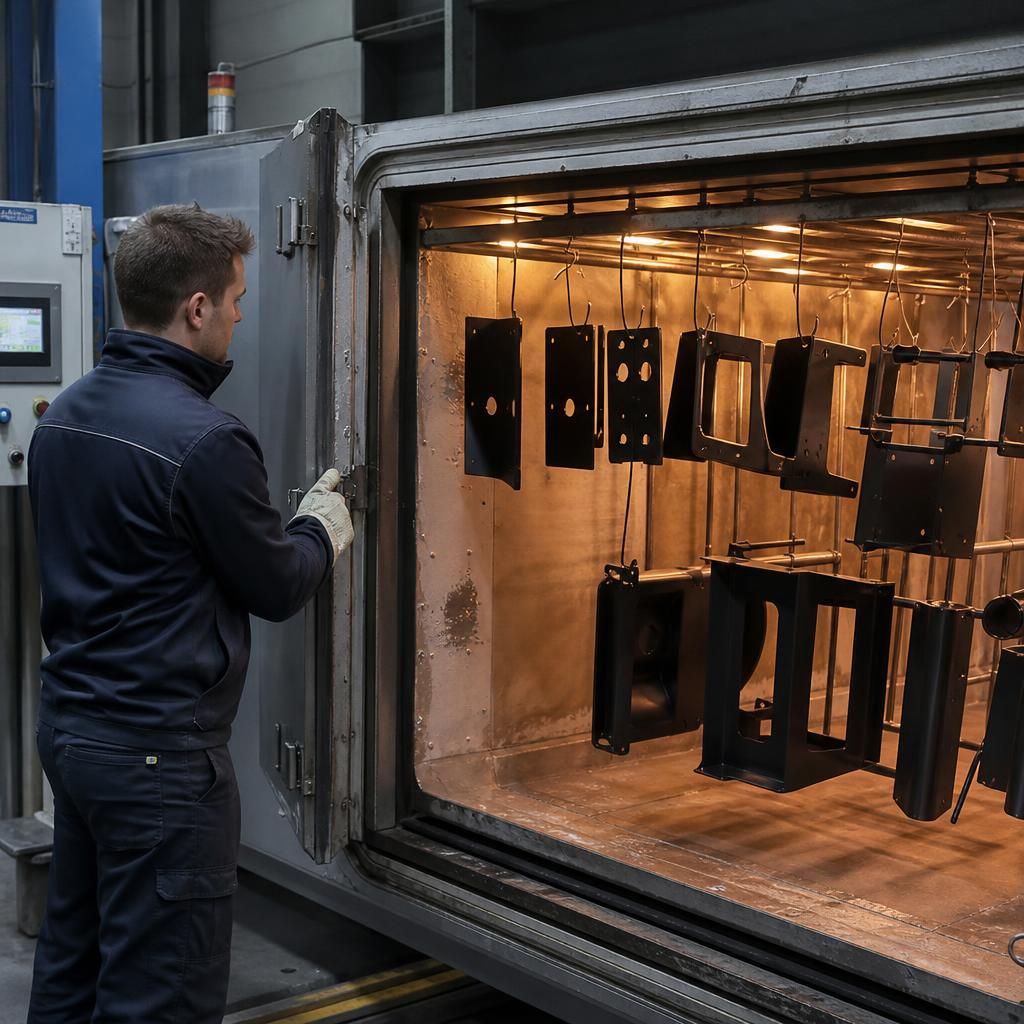
Curing converts the applied powder into a finished coating, so controlling this stage is essential when different metal components are processed together. Each part must receive suitable heat exposure for the specified coating system, taking account of its material, thickness and overall form. This helps the coating develop the required finish without variations caused by components heating at different rates.
Consistent loading and handling support repeatable curing across a batch. Components are arranged so that relevant surfaces receive appropriate exposure, while parts with greater mass or more complex construction are considered separately where necessary. The cured finish can then be assessed against the agreed specification, helping identify whether any variation relates to the component itself or requires further investigation.
Discuss consistent quality for your metal components
If you are assessing a mixed-component coating project, contact Powder-coatings.co.uk to discuss your requirements and the appropriate process considerations. Sharing your component details at this stage can help establish a clear basis for consistent quality.