

How soon after degreasing should the powder coating process begin for optimal results?
Powder coating should begin as soon as the degreased metal has been thoroughly rinsed where required and dried, provided the surface remains clean and free from handling or airborne contamination. There is no universal fixed time limit, but unnecessary delay can allow flash rust, moisture or new contaminants to compromise adhesion, particularly on steel.
The correct handover point is when the metal has completed the required rinse, is fully dry, and has passed a cleanliness check. At that stage, it should move into powder application without avoidable storage, transport or handling. Timing is controlled by the condition of the prepared surface rather than by a universal number of hours.
After degreasing, the preparation sequence should normally be managed as one continuous process:
- Rinse where required. Remove detergent, alkaline cleaner, solvent residue and loosened contamination. Residual chemistry can interfere with adhesion or create surface defects when the part is heated.
- Dry completely. Check recesses, folded edges, drilled holes, joints and other areas where water can remain trapped. Visible dryness on the main faces is not sufficient if moisture remains in concealed areas.
- Inspect the surface. Look for oil smears, water marks, cleaner residue, discolouration, corrosion or areas that were not reached by the degreasing method.
- Control handling. Use clean gloves or suitable handling methods and avoid placing prepared parts on dirty benches, pallets or racks. Fingerprints can introduce oils that are difficult to detect but may affect the coating.
- Apply the powder coating. Once the surface has been accepted, coating should follow as part of the same controlled workflow.
The interval becomes more critical where the metal is vulnerable to oxidation. Bare steel can develop flash rust if moisture remains on the surface or if it is exposed to humid conditions after cleaning. This may begin in weld areas, edges, crevices and roughened sections before it is obvious across the whole component. Aluminium and galvanised materials may present different surface changes, but they still need protection from dust, moisture and renewed contamination.
Drying equipment and conditions should be suitable for the component. Compressed air used to remove water must itself be clean and free from oil or excess moisture. Heated drying can help with complex parts, but excessive heat or poor air movement may leave residues concentrated in recesses. Parts should be allowed to reach a stable, dry condition before coating rather than being transferred while condensation is still possible.
Storage between preparation and coating should be avoided where practicable. If staging is unavoidable, keep the parts in a clean, dry and protected area, separated from grinding, welding, machining and other activities that generate dust or airborne debris. Do not cover wet components, as this can trap moisture against the metal. Keep prepared surfaces away from direct contact with dirty separators and use clean racks or supports that do not damage the surface.
If inspection identifies contamination or moisture after degreasing, the part should not proceed simply because it has already been cleaned. The appropriate response may be additional cleaning, rinsing, drying or further surface preparation, depending on the contaminant and the metal type. Coating over a questionable surface can conceal the problem until adhesion loss, blistering, corrosion or other defects appear later.
For batch work, the same checks should be applied consistently across the load. Components processed at different times, or parts with different geometries, may not have the same exposure to moisture and contamination. Recording the preparation stage, checking representative difficult areas and keeping the transfer from cleaning to coating controlled helps maintain a consistent substrate condition throughout the batch.
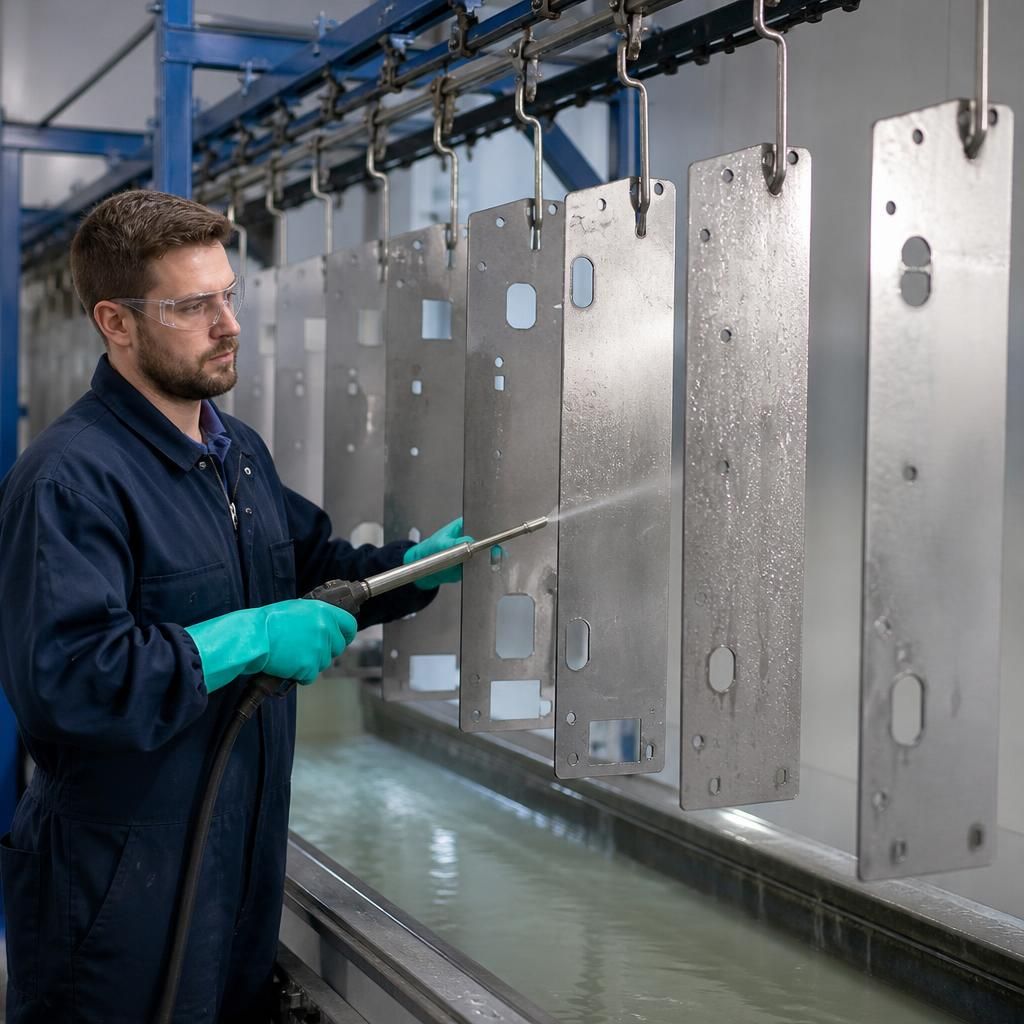
The correct interval is measured from the final degreasing step, not from the moment the cleaning agent is first applied. Different methods create different handover requirements: solvent-cleaned parts must allow the solvent to evaporate fully, while aqueous or alkaline-cleaned parts generally require the specified rinse before drying and transfer to coating.
This distinction matters because a part may look clean while still carrying a thin film of cleaner or solvent. The coating schedule should therefore be linked to the cleaning system’s required evaporation, rinsing and drying stages. Once those stages are complete, avoid introducing an unplanned holding period between preparation and powder application.