

What are the maintenance requirements for powder coated steel tubes in industrial settings?
Maintenance of powder coated steel tubes in industrial settings mainly involves routine inspection, gentle cleaning and prompt repair of chips, scratches or exposed steel before corrosion develops. Use a mild detergent and soft cloth or brush, avoid abrasive tools and unsuitable solvents, and check joints, cut ends, contact points and areas exposed to moisture or chemicals more frequently.
Maintaining powder coated steel tubes in an industrial setting requires a risk-based programme covering condition assessment, site conditions, handling, drainage, records and planned repair. The coating itself is not normally removed and replaced simply because it has been in service for a period; maintenance decisions should be based on evidence of wear, loss of adhesion, corrosion or a change in operating conditions.
Set the inspection frequency according to exposure. Tubes used indoors in a clean, dry environment generally need less frequent review than those exposed to outdoor weather, condensation, wash-down water, salt, industrial fumes or abrasive dust. Areas with high humidity, chemical contamination, frequent handling or repeated impact should receive priority in the maintenance plan. A risk assessment should consider the tube’s location, its function, the consequences of corrosion and any requirements imposed by the relevant industry or site operator.
Check the coating as part of planned asset maintenance. In addition to looking for visible damage, assess whether the finish is blistering, lifting, flaking, chalking, fading unusually quickly or showing a change in texture. These symptoms can indicate UV exposure, trapped contamination, poor drainage, chemical attack, insufficient surface preparation or damage beneath the visible finish. A coating that appears intact but is repeatedly exposed to aggressive conditions may also require closer monitoring than one in a stable indoor environment.
- Record the tube location, coating system, date of installation and relevant exposure conditions.
- Photograph recurring defects so that their development can be compared over time.
- Note whether damage is isolated or repeated across a batch, assembly or production area.
- Escalate widespread defects for technical assessment rather than treating each mark as a separate repair.
Control mechanical damage after installation. Powder coating can be damaged by impact, dragging, sharp edges, dropped tools, poorly protected clamps and contact with abrasive materials. Tubes should be moved using suitable lifting and handling methods, with protection against contact with uncoated metal, grit or contaminated surfaces. Where tubes form part of equipment or a structure, maintenance teams should avoid using them as steps, supports or attachment points unless they were designed for that purpose.
Where repeated impact is unavoidable, consider whether the design should include guards, sacrificial protection, revised access arrangements or a different coating specification. Preventing recurring damage is more effective than repeatedly touching up the same location.
Manage water and contamination around the installation. The maintenance plan should address how water, process residue and dirt are able to reach or remain against the coated steel. Poorly drained arrangements, enclosed voids and horizontal ledges can prolong exposure and increase the risk of corrosion if the coating is breached. During planned maintenance, remove deposits that retain moisture or chemicals and correct the underlying drainage or design problem where practicable.
Do not assume that a coating defect is the whole cause of corrosion. Rust may originate from an unprotected internal surface, a cut or drilled area, a trapped contaminant or an adjacent material. If corrosion continues after a surface repair, the source should be identified before further coating is applied.
Use compatible repair materials. Small areas of damage may be repairable with a suitable liquid-applied touch-up system, but the repair will not necessarily have the same appearance, durability or application properties as the original factory-applied powder coating. The repair product should be selected for the service environment and confirmed as compatible with the existing coating. Follow the product supplier’s instructions for preparation, application, curing and permitted film thickness.
For larger areas, repeated failure, loss of adhesion or established corrosion, local touching-up may be inadequate. The tube may need controlled preparation and recoating, or removal and replacement where the steel section has lost structural integrity. A coating specialist can assess the existing system and advise whether local repair, complete refurbishment or a revised specification is appropriate.
Protect the coating from unsuitable chemicals and heat. Industrial cleaning agents, solvents, oils, disinfectants and process chemicals should be assessed for compatibility before use. The same applies to temporary substances used during maintenance work, including labels, adhesives and penetrants. If the tubes are near a heat source or subject to repeated temperature changes, the coating specification should be checked against the actual service conditions; excessive heat can alter appearance and performance even where there is no obvious impact damage.
Include interfaces and modifications in the maintenance plan. Brackets, fasteners, clamps, welds, drilled openings and later alterations can create areas that require separate protection. Any modification should be prepared and protected using a method suitable for the existing system, rather than leaving newly exposed steel untreated. Avoid trapping debris or moisture when replacing fittings, and confirm that protective treatments do not obstruct drainage or create new abrasion points.
Review the coating system when operating conditions change. A tube originally installed in a dry manufacturing area may require a different maintenance approach if the process changes, the building becomes more humid, wash-down is introduced or chemical exposure increases. Reassess the coating specification and inspection plan after such changes. For critical assets, retain coating and repair records so future maintenance teams know which materials were used and can avoid incompatible repairs.
A practical maintenance programme therefore combines condition records, exposure-based inspections, controlled handling, suitable cleaning and repair materials, and correction of the conditions causing damage. When specifying replacement tubes or refurbishment, provide the coating applicator with the actual environment, expected handling and chemical exposure so the maintenance requirements are considered before the next coating is applied.
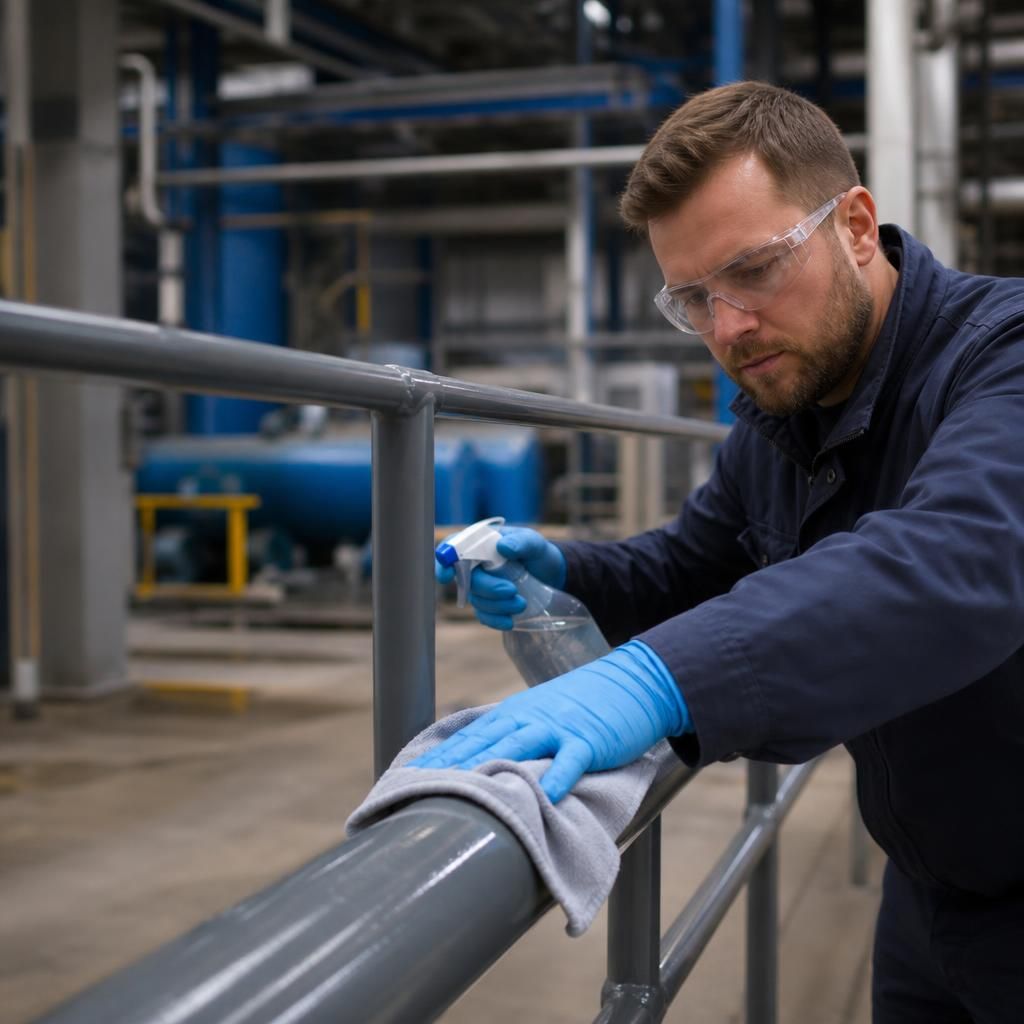
Routine cleaning is a key maintenance measure for powder coated steel tubes because accumulated dust, oil and process residue can hold moisture against the finish or introduce chemical exposure. Use a staged method: remove loose debris with clean water or a soft brush, wash with a diluted mild detergent and a non-abrasive cloth, then rinse thoroughly so detergent residue is not left on the coating.
- Test any cleaning solution on a small, inconspicuous area before wider use.
- Do not use scouring pads, wire brushes, abrasive powders or unapproved solvent cleaners.
- Avoid directing high-pressure water at joints, cut edges, fasteners or damaged areas, where water may reach exposed steel.
- Dry the tubes after washing, particularly around fittings, enclosed sections and locations where water can collect.
- Record any change in colour, gloss or surface texture noticed after cleaning, as this may indicate chemical incompatibility or coating deterioration.