

How does stainless steel shot blasting media contribute to achieving a high-quality powder-coated finish?
Stainless steel shot blasting media prepares metal by removing contaminants and creating a consistent surface profile for powder to bond to. This controlled preparation helps produce a more uniform, durable, high-quality powder-coated finish.
Stainless steel shot blasting media contributes to a high-quality powder-coated finish by providing a controlled, low-contamination preparation stage before coating. Its main value is not simply the removal of visible scale or residue; it helps establish a clean, stable and suitably textured substrate that allows the powder coating process to perform consistently.
The condition of the blasted surface affects several later stages of finishing. Any oil, dirt, corrosion product, mill scale or loosely attached material left on the component can interfere with powder coverage and curing. These residues may contribute to defects such as pinholing, blistering, flaking, uneven gloss or premature corrosion beneath the coating. Blasting with stainless steel media helps expose sound metal and gives the subsequent cleaning and coating stages a more reliable starting point.
A key benefit is the reduced risk of unwanted ferrous contamination. Conventional steel abrasive can leave iron particles embedded in or transferred onto stainless steel and other non-ferrous surfaces. Those particles may later oxidise, producing discolouration or localised corrosion beneath or around the powder coating. Stainless steel shot is better suited where maintaining the substrate’s corrosion-resistant characteristics and appearance is important, provided the blasting equipment and media are managed to prevent contamination from other materials.
The blasting process also affects how evenly the powder layer forms. A surface with consistent preparation is less likely to contain isolated smooth patches, heavily abraded areas or remaining residues that alter powder deposition. More uniform preparation supports even electrostatic attraction and coverage, helping the coating form a consistent film across faces, edges and recesses. This is particularly relevant for fabricated assemblies and batch work, where variation between parts can otherwise lead to visible differences in texture, colour or gloss.
Media selection and process control must be matched to the component. Stainless steel shot is available in different sizes and hardnesses, and the choice influences the impact energy, surface texture and ability to reach particular profiles or recessed areas. Larger or harder shot can be useful for demanding contamination or scale, while smaller media may provide more controlled treatment on thinner or more detailed components. Excessive impact can distort delicate parts, round sharp features or create a surface profile that is unsuitable for the specified coating system, so blasting parameters should be established for the metal type, thickness, geometry and required finish.
Consistent results depend on more than the abrasive itself. Important controls include:
- checking the media condition and removing broken-down or contaminated particles;
- maintaining suitable blasting pressure, distance, angle and exposure time;
- keeping the equipment clean and segregating stainless steel media from carbon-steel abrasive where cross-contamination could occur;
- confirming that the blasted surface is free from dust and loose material before powder application; and
- protecting prepared components from handling contamination, moisture and other residues before coating.
Post-blasting handling is especially important. A correctly prepared surface can deteriorate if it is touched with contaminated gloves, stored in damp conditions or exposed to workshop dust for an extended period. Components should therefore be inspected after blasting and handled in a way that preserves the prepared condition until the powder is applied. Where the specification requires it, checks may include visual assessment, cleanliness verification and measurement of the surface profile using an appropriate method.
Stainless steel shot is particularly useful when the finished component must combine an even appearance with dependable resistance to wear, weathering or corrosion. It can support powder coating preparation for manufactured parts, fabricated metalwork and components with demanding appearance requirements, but it does not replace correct pretreatment, powder selection or curing. The final result depends on the complete process: suitable media, controlled blasting, effective removal of dust and contaminants, correct powder application and a cure cycle appropriate to the coating system and substrate.
For industrial batches, repeatability is another important contribution. Once the media, equipment settings and inspection criteria have been matched to a component, the same preparation approach can be applied across successive parts. This reduces variation between items and makes it easier to identify whether a defect originates in blasting, handling, powder application or curing. Stainless steel shot therefore supports high-quality powder coating by making the preparation stage more controlled, clean and repeatable rather than by acting as a substitute for the rest of the finishing process.
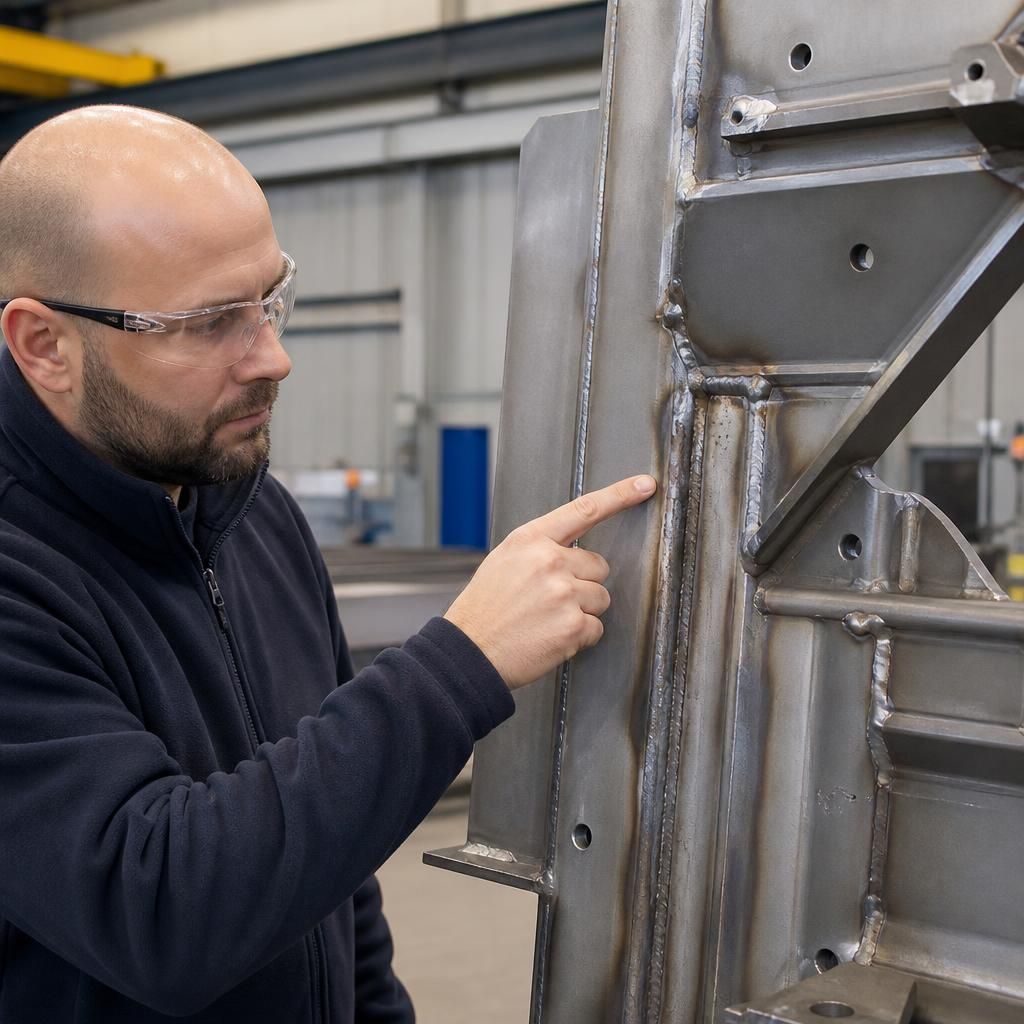
A high-quality powder-coated finish depends on the condition of the metal before blasting, because stainless steel shot prepares the surface but does not correct fabrication defects. Weld spatter, sharp burrs, deep pits, dents and porous welds can remain visible after coating, and powder may follow or emphasise these features rather than conceal them.
For this reason, components should be checked before blasting so that grinding, deburring or weld correction can be completed where required. Stainless steel shot then provides a clean, consistent surface on which the final finish can be assessed more accurately. This combination of sound fabrication and controlled preparation helps prevent surface imperfections from being mistaken for powder-coating defects and supports a smoother, more uniform appearance.