

How does the black powder coating process ensure metal sheets are corrosion-resistant?
Black powder coating helps metal sheets resist corrosion by thoroughly preparing the surface before applying an electrostatically charged powder, which is then heat-cured into a continuous protective film. This sealed layer limits the access of moisture, oxygen and corrosive contaminants to the metal substrate, while effective pretreatment improves adhesion and reduces the risk of under-film corrosion.
Black powder coating ensures corrosion resistance by combining a suitable coating formulation with controlled application, complete curing and careful treatment of vulnerable areas such as edges, holes and joints. The black colour itself does not prevent corrosion; protection comes from the performance and integrity of the cured powder coating system applied to the metal sheet.
The coating system must suit the substrate and environment. Steel, galvanised steel and aluminium behave differently when exposed to moisture, salts, chemicals and temperature changes. The selected powder and pretreatment should therefore be compatible with the substrate and the intended service conditions. A coating suitable for an indoor fabricated panel may not provide the same level of protection in a coastal, industrial or constantly damp setting.
For steel sheets, corrosion protection can be improved by using a system that provides both a physical barrier and additional protection at areas where the coating may eventually be damaged. In some specifications, this can involve a suitable primer beneath the black topcoat. The primer and topcoat must be compatible, properly bonded and cured as a system; applying an additional layer without checking compatibility can create adhesion or curing problems rather than improving performance.
Edges and discontinuities require particular attention. Sheet edges, folded corners, punched holes, cut-outs, welds and fixing points are more vulnerable than broad flat faces. Coating can be thinner at sharp edges, while fabrication residues or weld spatter can create weak points. Good preparation includes removing burrs, cleaning weld areas and designing or finishing sharp features so the powder can form a consistent layer. Water-trapping joints should also be considered, because retained moisture can attack the metal through a damaged or poorly coated area.
Application control is important because corrosion can begin where the film is thin, uneven or contaminated. The parts should be positioned so that powder reaches the required faces, recesses and edges, while avoiding excessive build-up in corners. Contact points used during application should be managed so they do not leave unprotected marks on critical surfaces. Where a sheet includes folded sections or complex geometry, the coating specification should identify which surfaces are functional and which areas need particular inspection.
Curing converts the deposited powder into the protective finish. The coating must reach the required metal temperature for the required time, taking the thickness and construction of the sheet into account. The oven setting alone does not confirm that the coating has cured correctly, because lighter and heavier components can heat at different rates. Under-cured powder may have reduced adhesion, chemical resistance and mechanical durability. Excessive heat can also affect the coating appearance or performance. Controlled production records and appropriate checks help confirm that the specified cure has been achieved.
Corrosion resistance also depends on the absence of defects. Typical defects that may expose the substrate include:
- pinholes, voids or missed areas;
- scratches, chips and impact damage;
- poorly coated edges or recesses;
- contamination trapped beneath the film;
- blistering, lifting or loss of adhesion; and
- damage caused during transport, fabrication or installation.
Visual inspection can identify many surface problems, but it may be supported by checks appropriate to the specification, such as coating-thickness measurement, adhesion assessment and examination of cut edges or representative test pieces. These checks do not make a coating immune to corrosion; they help identify whether the applied system is consistent with the required standard before the sheet enters service.
The surrounding design can determine how well the coating performs. Water run-off, drainage, ventilation and the choice of fixings all affect exposure. Crevices between dissimilar metals may hold moisture or create galvanic corrosion, particularly where the coating has been damaged. Compatible fasteners, sealed or drained joints and careful handling can reduce these risks. If a black-coated sheet is cut or drilled after coating, the newly exposed metal needs suitable protection; the original factory-applied film cannot protect an area that was not coated.
Black powder coating is therefore a corrosion-control system rather than simply a decorative finish. Its effectiveness depends on the substrate, the specified coating materials, preparation, coverage, cure, fabrication details and subsequent handling. For an industrial application, the coating requirement should be assessed against the actual exposure, including humidity, salt, chemicals, abrasion, impact and temperature variation. Where the consequences of corrosion are significant, the specification should define the complete coating system and inspection requirements rather than referring only to a black finish.
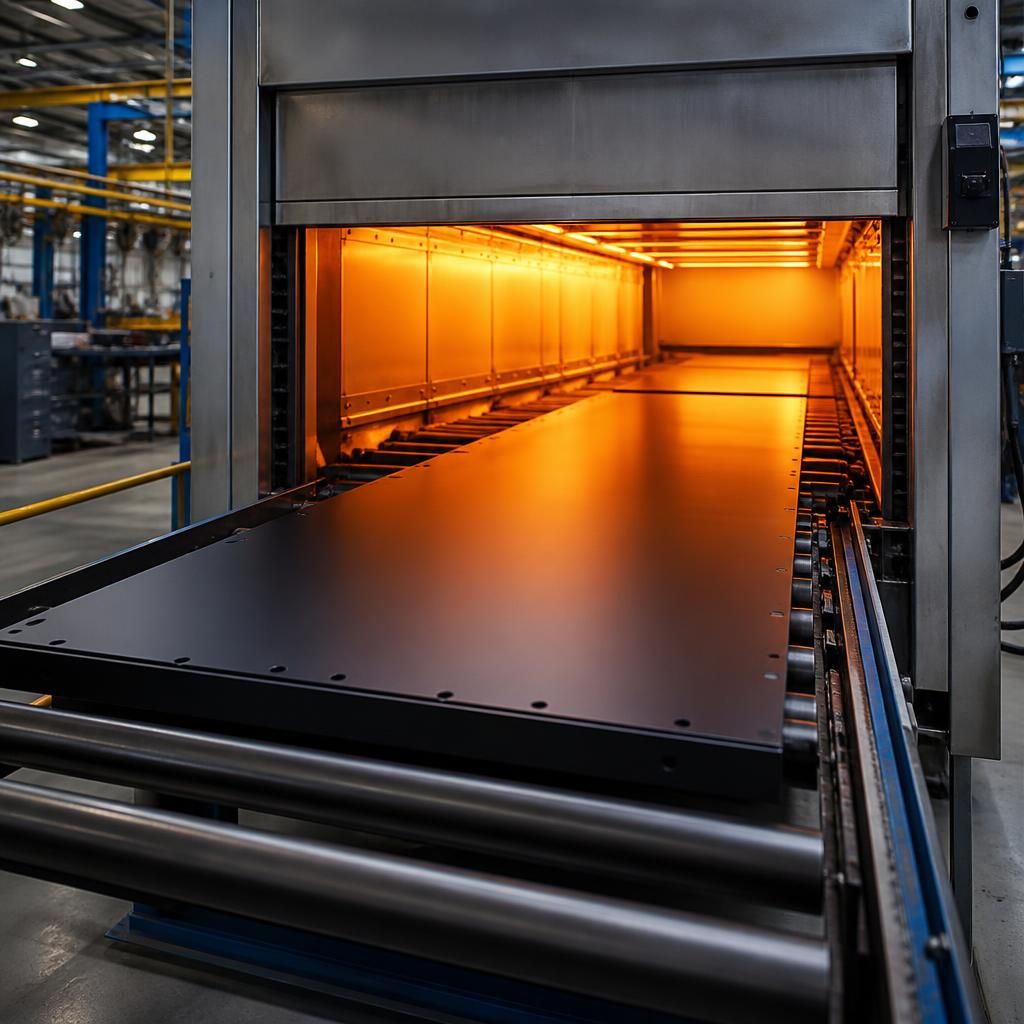
During oven curing, the powder particles fuse and cross-link to form a continuous thermoset film. This change is important for corrosion resistance: the finished coating is no longer a layer of loose particles, but a bonded polymer barrier with limited permeability to water and corrosive substances.
The cross-linked structure also helps the coating retain its protective properties when exposed to normal handling, cleaning and environmental contact. Its performance depends on achieving the specified cure throughout the sheet, because an incompletely cured film may remain more vulnerable to chemical attack and loss of adhesion.