

How does the curing process enhance the durability of electrostatic powder coatings?
Curing enhances the durability of electrostatic powder coatings by heating the applied powder until it melts, flows and chemically cross-links into a continuous film. This creates a strong bond with the metal substrate and improves resistance to impact, abrasion, corrosion, chemicals and weathering.
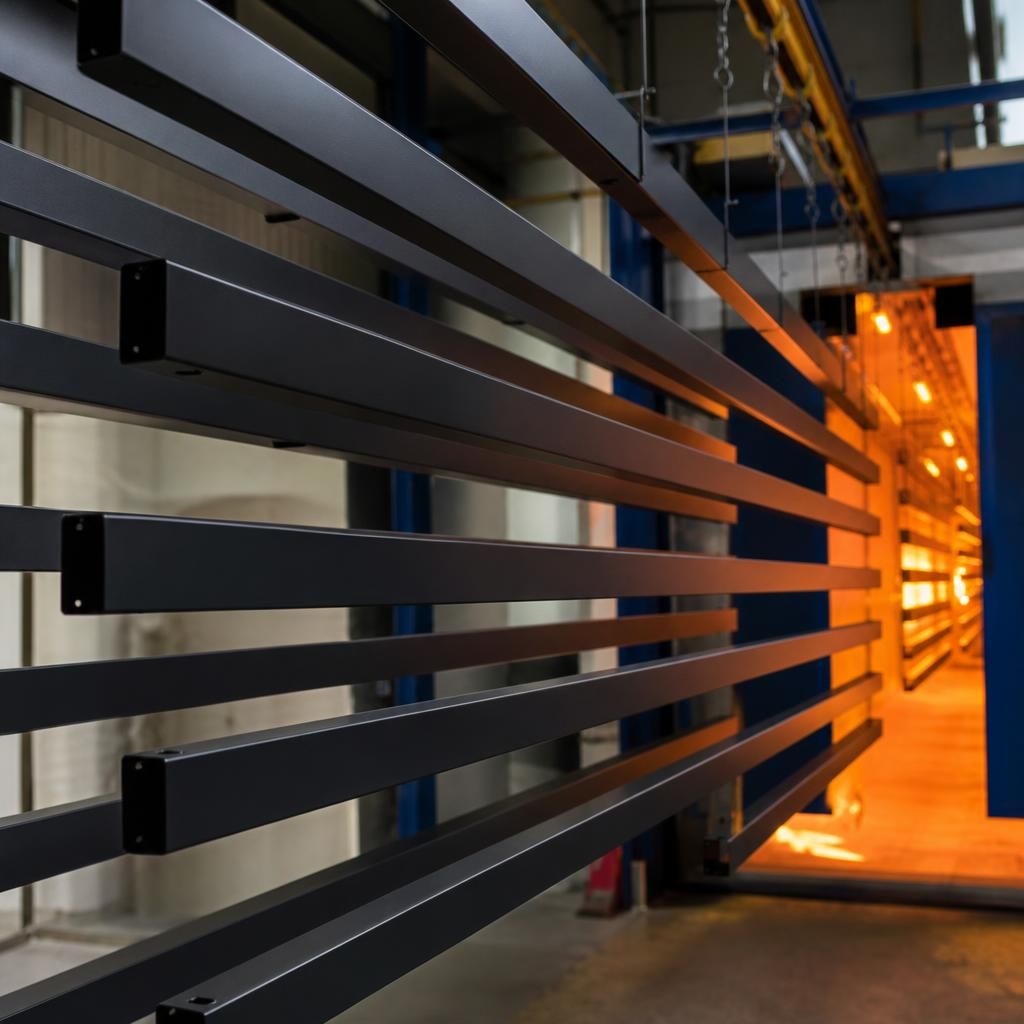
Curing is the controlled heating stage that converts deposited powder into its final coating film. After application, the component enters a curing oven where the powder reaches the temperature and dwell time specified for its formulation. The coating first softens and flows across the surface, then its resin and curing agent react to form a stable three-dimensional structure. This controlled transformation is what gives the finish its usable mechanical and environmental performance.
The curing schedule must be matched to the powder specification and the component being coated. Oven temperature alone does not determine whether a part is fully cured; the metal itself must reach the required temperature for the necessary period. A thick steel assembly, for example, takes longer to heat through than a thin pressed panel. The coating process therefore needs to account for:
- the powder chemistry and manufacturer’s specified cure window;
- the mass, shape and thermal properties of the component;
- the number and arrangement of parts in the oven;
- air circulation and temperature uniformity within the oven; and
- the required film thickness and the coating’s intended service conditions.
When these factors are controlled, the powder levels out to produce a continuous, even film rather than a loose or partially fused layer. Correct flow is important because it reduces surface irregularities that could otherwise become weak points, while complete cross-linking gives the film the cohesion needed to withstand handling and use.
Under-curing occurs when the coating does not receive sufficient heat or time. The film may look acceptable while still having inadequate chemical conversion. Typical consequences can include reduced hardness, poor resistance to solvents or chemicals, weaker adhesion, marking during handling and premature loss of performance in service. Under-cured areas may result from cold spots in the oven, heavy components that have not reached the target temperature, excessive loading or an unsuitable line speed.
Over-curing can also be detrimental. Excessive heat exposure may affect colour, gloss or surface appearance and can reduce the coating’s intended performance, depending on the formulation. It may also create differences between parts processed in the same batch. For this reason, a suitable process is not simply the hottest or longest cure available; it is a controlled schedule within the powder’s specified limits.
Preparation before curing remains important to the final result. The metal must be clean and suitably prepared so that the melted coating can make consistent contact with the substrate. Contamination, residues, flash rust, inadequate pretreatment or trapped moisture can interfere with adhesion and create defects such as pinholes, bubbling or localised lifting. Curing cannot compensate for a surface that was not properly prepared before powder application.
Part design and loading can influence how evenly a coating cures. Recesses, enclosed sections, sharp edges and closely spaced components may receive different heat exposure or present difficulties during application. Fabricated assemblies should therefore be reviewed for drainage, masking, hanging and oven access before production. Correct positioning helps expose coated surfaces consistently and reduces the risk of contact marks or uneven heating.
Quality control commonly involves checking the oven profile and verifying the finished coating against the requirements of the application. Relevant checks may include visual inspection, film-thickness measurement, adhesion testing, hardness or solvent-resistance checks, and examination for runs, craters, pinholes and incomplete flow. The appropriate tests depend on the coating specification and the risks associated with the finished component. For repeat batch work, recording process conditions helps maintain consistency between production runs.
The result is a finish whose performance is established not only by the powder selected, but also by the discipline of the curing process. Powder formulation, pretreatment, application, film thickness and thermal control must work together. For manufacturers and fabricators, discussing component size, material, geometry, expected exposure and inspection requirements with a specialist helps identify a suitable curing approach before coating begins. Powder-coating.co.uk provides industrial coating services for businesses across the Midlands and surrounding areas, with collection and delivery options for suitable projects.
A fully cured coating also acts as a continuous barrier between the metal and its surroundings. By closing gaps between powder particles and reducing pathways for moisture, salts and chemicals, the cured film helps limit the conditions that promote corrosion beneath the finish. This barrier function depends on complete fusion and cross-linking across the whole coated surface, including less visible areas and edges.
For components used outdoors, in washdown areas or around industrial contaminants, curing therefore supports durability in two ways: it gives the film internal strength and helps maintain separation between the substrate and the environment. The powder formulation and required cure schedule still need to be matched to the component’s service conditions.