

How does the electrostatic method enhance the quality of large-scale powder coating?
The electrostatic method charges powder particles so they are attracted to and wrap around suitably prepared metal components, helping produce more even coverage across large production batches. This controlled deposition improves consistency, reduces overspray and supports efficient use of coating material before the applied powder is cured into a durable finish.
The electrostatic method enhances large-scale powder coating by giving the applicator greater control over how powder is deposited on each grounded metal component. A high-voltage charge is applied to the powder as it leaves the spray equipment, while the workpiece is connected to earth. The electrical attraction helps the particles move towards the component and remain on its surface, creating a controllable layer that can then be cured in an oven.
For high-volume production, this control is important because finish quality depends on repeating the same application conditions across many parts. Operators can adjust factors such as gun-to-part distance, powder output, air pressure, voltage and the speed of the spray equipment. Keeping these variables consistent helps limit differences in film build, gloss and colour between components processed in the same run.
The method also improves access to edges, corners and recessed areas when the application settings and gun position are suitable. However, electrostatic forces do not eliminate the need for correct technique. Deep recesses and enclosed sections can create a Faraday cage effect, where the electric field is weaker and powder is less likely to enter. Lowering the voltage, changing the spray angle or applying powder to difficult areas before surrounding surfaces can help improve coverage.
Grounding is another essential part of the process. The component, hanging fixtures and conveyor system must provide a reliable electrical path. Poor contact caused by coating build-up, contamination or unsuitable hooks can reduce the attraction between powder and metal. This may contribute to uneven deposition, excessive powder on some areas or insufficient coverage on others. Regular inspection and cleaning of contact points therefore support repeatable results during extended production runs.
Electrostatic application can also help separate the coating process from the final appearance of the part. When the powder layer is deposited in a controlled manner, the curing stage has a more uniform coating thickness to develop. Correct oven temperature, air circulation and dwell time remain necessary, because electrostatic application alone cannot correct under-curing, over-curing or inconsistent metal temperatures.
Quality control for large-scale work commonly includes checks at several stages:
- Confirming that parts are clean, dry and properly prepared before they enter the spray area.
- Checking grounding and ensuring hooks or contact points remain effective.
- Monitoring application settings so that comparable components receive the same treatment.
- Inspecting coverage at edges, recesses, holes and other difficult features.
- Verifying the cured finish for appearance, adhesion and other project-specific requirements.
The electrostatic method is therefore most effective as part of a controlled production system rather than as a standalone solution. Suitable powder selection, consistent preparation, correctly maintained equipment and a properly controlled cure all influence the finished result. For large metal batches, the method provides a practical way to make application more repeatable while retaining the flexibility to adjust the process for different component shapes and coating specifications.
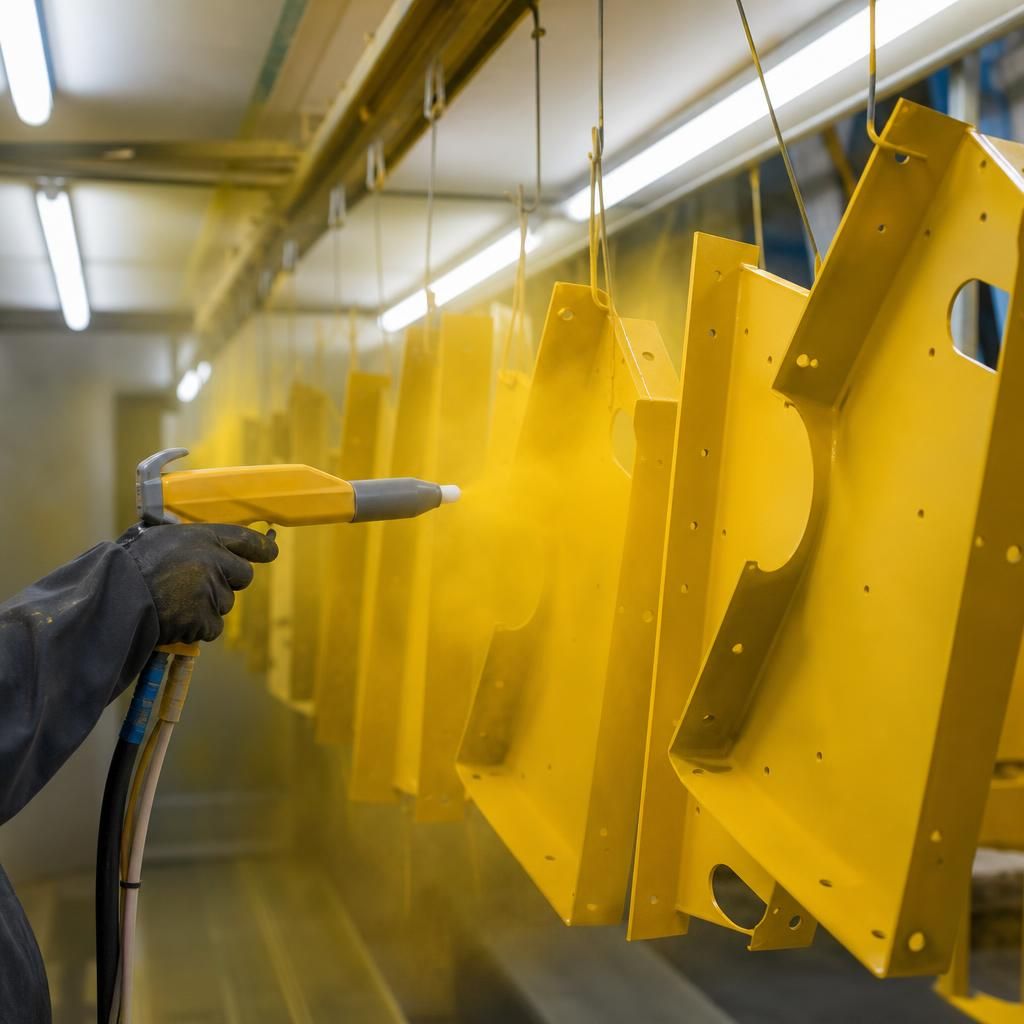
Electrostatic powder application avoids several wet-film problems because the coating is deposited as a dry powder rather than a liquid layer. There is no solvent evaporation during spraying, so correctly applied powder is not subject to liquid runs, sags or solvent entrapment while it is being deposited on large batches of metal components.
This supports a more stable finish across repeated production cycles, provided the powder is applied at the specified film build and cured correctly. It does not remove the need for suitable preparation: contamination, moisture, incorrect curing or excessive powder can still affect the final appearance and performance.