

What is the best method for ensuring even coverage in electrostatic powder coating?
The best method for ensuring even coverage in electrostatic powder coating is to combine thorough surface preparation and reliable grounding with consistent gun settings, spray distance and movement. Apply the powder in controlled, overlapping passes, paying particular attention to edges, recesses and difficult-to-reach areas, then cure the coated component according to the powder manufacturer’s requirements.
The most reliable way to ensure even coverage is to use a controlled, repeatable process that is validated on the actual component, rather than relying on visual judgement during spraying. This means assessing the part’s geometry, selecting a suitable powder and application method, controlling the equipment and booth conditions, and checking the finished film for both coverage and thickness.
Part design has a direct influence on how powder deposits. Large flat faces, sharp changes in direction, deep cavities and closely spaced sections attract powder differently because the electrostatic field is not uniform around the component. Before production, the coater should identify areas likely to receive too much or too little powder and decide whether the component needs a different orientation, additional access, temporary masking or a revised spray sequence.
Racking is particularly important. Components should be supported securely while leaving as much of the surface exposed as possible. Contact points need to be clean and positioned where any small uncoated mark can be accepted, concealed or treated during finishing. Poorly positioned hooks can shadow parts of the component, restrict access for the spray gun or interrupt the electrical path needed for effective powder transfer. For batch work, using a consistent rack arrangement helps maintain the same exposure and application conditions from one load to the next.
The powder and equipment must also be matched to the job. Powder particle characteristics, colour, resin type and intended film thickness can affect transfer efficiency and the way the coating builds on the surface. The powder feed should remain stable, with no signs of moisture, clumping or contamination. Spray guns, hoses, pumps and nozzles require suitable settings and regular checks so that the powder cloud remains consistent rather than pulsing or becoming excessively concentrated in one area.
Electrostatic attraction is not the only factor controlling deposition. If excessive charge accumulates on the surface, incoming particles may be repelled, producing an uneven texture or thin areas sometimes associated with back-ionisation. This risk is influenced by the powder, electrical settings, substrate shape and existing film build. Adjusting the application parameters to suit the component is more effective than simply increasing output. A stable, moderate powder flow generally gives the operator better control than an unnecessarily heavy application.
Environmental control supports consistency. Booth cleanliness prevents stray powder from altering the finish or contaminating a different colour, while suitable handling of air supply and powder storage helps maintain predictable flow. Humidity and temperature can affect powder behaviour, although the relevant limits depend on the coating system and equipment. For repeat production, recording these conditions alongside the batch details makes it easier to identify the cause of variations.
A uniform finish also depends on a defined inspection method. Visual checks should be made under consistent lighting and from several angles, since thin areas, dry spray and texture changes may not be apparent from one position. Where the specification requires it, film thickness should be measured at representative points using an appropriate gauge. Measurements should include broad faces and areas around corners or transitions, rather than only the easiest surfaces to access.
Trial panels or first-off components are useful when a part is new, unusually shaped or being coated with a different powder. They allow the coater to confirm the spray sequence, racking arrangement, powder build and final appearance before the full batch is processed. Any adjustments should then be documented as part of the job instructions, including the powder reference, equipment configuration, component orientation and inspection requirements.
For industrial components, the practical standard is not simply an attractive appearance. Even coverage means that the coating is continuous, within the specified thickness range, free from visible defects and properly fused after curing. A disciplined application and inspection record provides greater assurance of consistency than applying extra powder to compensate for uncertain settings.
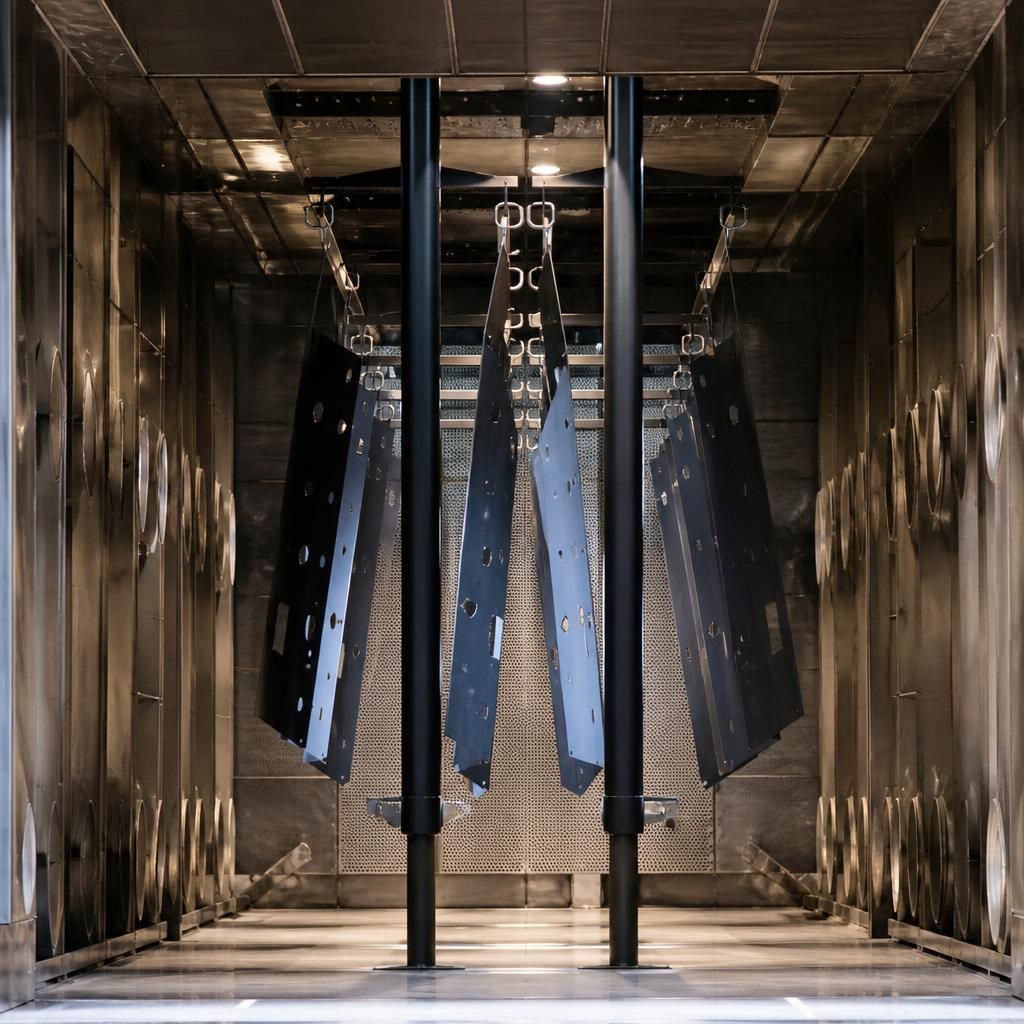
Even powder coverage must be supported by consistent curing throughout the component. The oven should bring the metal itself—not just the surrounding air—to the powder manufacturer’s specified curing conditions. Heavy sections, corners and densely loaded areas can heat at a different rate from thin, exposed surfaces, so an apparently uniform coating may not develop the same final properties across the part.
For new components or unfamiliar load arrangements, temperature profiling can confirm that representative areas reach the required conditions. Avoiding excessive loading and maintaining unobstructed airflow also helps reduce temperature variation. This check is particularly useful for large or complex fabrications, where oven exposure and metal thickness can affect whether the coating cures evenly from one area to another.