

How does metal shot blasting improve the durability of my metal components?
Metal shot blasting improves component durability by removing rust, scale, old coatings and other contaminants from the surface while creating a consistent profile for treatment. This gives protective coatings a stronger mechanical key, helping them resist flaking, corrosion and premature wear.
Metal shot blasting improves the service durability of components mainly by preparing a stable, uniform surface for protection rather than by increasing the inherent strength of the metal. When the blasting process, coating system and process controls are correctly matched, the finished component is better able to withstand moisture, handling, abrasion and environmental exposure without early coating failure.
It reduces the risk of underfilm corrosion. Corrosion can continue beneath a coating if contaminants, loose scale or poorly bonded material remain at the interface. These weak areas may allow moisture to travel under the coating, causing blistering, lifting and further corrosion. Thorough preparation gives the coating a more reliable foundation and reduces the likelihood of isolated defects developing into larger areas of damage.
It supports consistent coating thickness and coverage. An uneven or contaminated surface can cause variations in how a coating wets and covers the component. Areas with residue may repel the coating, while loose material can detach after treatment. A consistently prepared surface allows the applicator to achieve more even coverage across edges, faces, recesses and other accessible areas. This is particularly important where components will be exposed to water, salts, industrial contaminants or repeated handling.
It helps coatings withstand mechanical use. Components may experience impact, vibration, rubbing, loading or contact with other parts during service. A coating that is poorly bonded can chip or peel when subjected to these forces. By providing a sound interface between the metal and the coating, shot blasting helps the finish remain attached when the component is handled, assembled or used in demanding equipment.
The process can also improve the consistency of batch production. Blasting parameters such as abrasive type, air pressure, impact angle, traverse speed and dwell time affect the resulting surface. These need to be controlled according to the metal, component geometry and required finish. Excessive treatment may alter edges, thin vulnerable features or affect dimensional tolerances, while insufficient treatment may leave unsuitable areas behind. The aim is controlled preparation, not simply maximum abrasion.
Durability depends on more than blasting alone. The following factors are important:
- Component condition: heavy corrosion, weld residues, mill scale, oil and previous coatings may require different preparation approaches.
- Material and geometry: thin sections, sharp edges, deep recesses and intricate fabrications need appropriate settings and handling.
- Surface profile: the texture must be compatible with the selected coating so that the finish can key to the surface without creating unnecessary roughness.
- Clean handling after blasting: prepared metal should be protected from new contamination before coating is applied.
- Coating suitability: powder coating or another protective system must be selected for the component’s expected exposure and use.
Shot blasting does not repair weakened metal or increase the load-bearing capacity of a component. It improves durability by helping the protective finish perform as intended and by removing conditions that could undermine it. For this reason, the preparation specification should consider the component’s material, dimensions, operating environment and coating requirements together.
For industrial parts, a reliable process normally combines controlled blasting with inspection of the prepared surface and the completed coating. Checking for remaining contamination, unsuitable areas, coating coverage and visible defects helps identify problems before the component enters service. This approach is relevant to manufacturers, fabricators, construction firms and automotive businesses where premature coating failure can lead to corrosion, rework or component replacement.
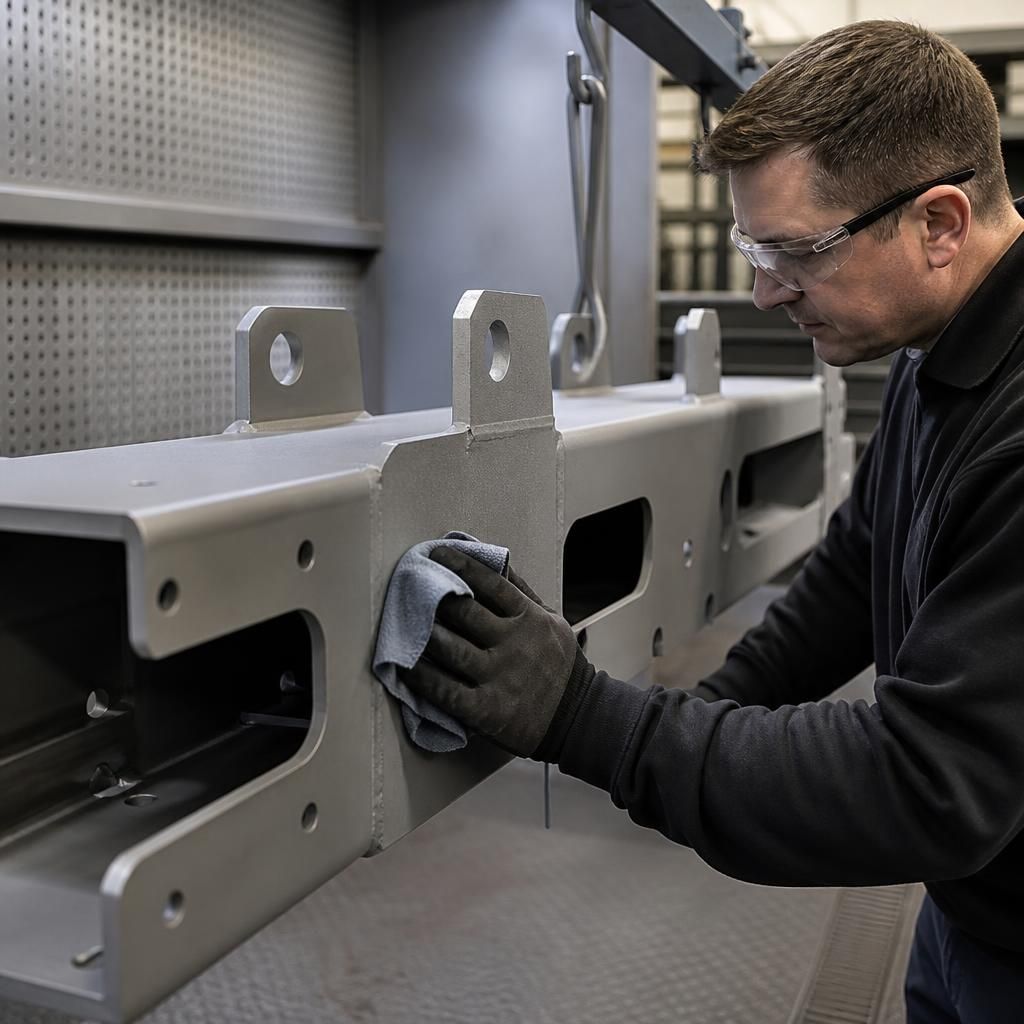
A further durability benefit comes from removing blasting residue before the protective coating is applied. Dust, loose abrasive and detached scale left on the component can become weak inclusions between the metal and the coating. As the part is handled or exposed to moisture, these particles may loosen and create small voids where coating defects can begin.
Prepared components should therefore be checked for visible dust, loose material and areas that have not been adequately cleaned. The method used to remove residue must suit the component and the coating specification, because recontaminating the surface can undermine the preparation work. This final cleanliness check helps ensure that the coating bonds to the metal rather than to debris, supporting more reliable durability in service.
Discuss metal shot blasting for more durable components
Discuss your component material, geometry and intended coating with the powder-coating specialists to establish whether metal shot blasting is suitable preparation. Contact Powder-coatings.co.uk to discuss your requirements and the next steps for your parts.