

What preparation is required before powder coating steel railings?
Before powder coating, steel railings must be thoroughly cleaned and degreased, with rust, mill scale and any existing coating removed to provide a sound surface. Repairs should be completed, sharp edges addressed, and areas that must remain uncoated masked before the metal is fully dried and inspected.
Preparation for powder coating steel railings involves making the components suitable for the complete coating system, not simply making them look clean. Before processing, the railings should be assessed for their steel type, construction, condition, previous treatment and intended exposure. This determines the appropriate pre-treatment, curing requirements, masking arrangements and handling method.
Confirm the substrate and existing finish
Steel, galvanised steel and previously treated components require different preparation routes. Galvanised or zinc-coated steel can contain surface residues and may need a preparation system designed to promote adhesion without unnecessarily reducing the protective zinc layer. Previously painted or powder-coated railings require particular care because the remaining finish may be difficult to identify visually and can affect the bond of the new coating. If the substrate or old finish is uncertain, a coating specialist should establish the safest process before the full batch is treated.
Any unusual material should also be identified in advance. Mixed-metal assemblies, zinc-rich weld areas, filler, sealant and temporary corrosion inhibitors can behave differently during pre-treatment or oven curing. Supplying details of the steel specification and any previous treatment helps the coater select a compatible process rather than relying only on visual inspection.
Check the design before coating
Railings should be reviewed as fabricated items, because the geometry can affect both pre-treatment and the final finish. Hollow sections need suitable drainage and ventilation so that liquid from the preparation stages cannot remain trapped and so that heated air can circulate during curing. Enclosed sections without adequate openings may retain moisture, release contaminants during curing or create a safety and quality issue.
Welds should be continuous where the design requires them, with spatter and fabrication residue removed. Porous welds, pinholes and crevices can retain preparation chemicals or release gas when heated, which may produce surface defects. Where a railing is being fabricated specifically for coating, the design should minimise dirt traps and make all faces accessible to the preparation equipment.
Complete fabrication before processing
Drilling, welding, cutting and other fabrication should normally be finished before the railings enter the coating process. Later fabrication can damage the cured film and expose bare steel at the altered area. Components should therefore be supplied in their final form, with associated brackets, posts, infill panels and fixings clearly identified according to how they will be assembled.
Where parts must be separated for processing, the required assembly orientation should be recorded. This helps ensure that visible faces receive the intended finish and that contact points used for suspension are positioned in suitable, less conspicuous locations. The contact points themselves may require local finishing after coating, depending on the specification and how the components are installed.
Agree the coating specification in advance
Preparation cannot be separated from the coating specification. The required colour, gloss level, texture and performance category should be agreed before the work starts, together with whether the railings will be used indoors, outdoors or in a particularly aggressive environment. The specification may determine whether a single powder coat or a multi-layer protective system is appropriate.
The specification should also identify:
- the faces and components that require coating;
- surfaces that must remain free from powder for assembly or earthing;
- acceptable locations for suspension or handling marks;
- the required appearance across separate batches; and
- any inspection or testing requirements for the finished work.
These details are especially important for railings containing multiple sections, because a difference in substrate, orientation or batch handling can influence the appearance even when the same powder is used.
Control contamination before delivery
After preparation, components should be protected from recontamination during storage and transport to the coating facility. They should not be handled with dirty gloves or placed directly on oily floors, and they should be kept away from activities that generate dust, grinding debris or overspray. Packaging should prevent rubbing and impact without trapping dampness against the steel.
Any cutting fluids, adhesive labels, waxes or protective films used during fabrication should be disclosed, as residues can interfere with the pre-treatment stages. Components should also arrive dry and clearly marked so that the coater can match them to the agreed specification and identify any areas requiring special treatment.
Allow for inspection and process approval
A professional preparation plan includes an inspection before coating begins. The condition of welds, joints, edges, access holes, substrate type and masking requirements should be checked against the job specification. If the railings are heavily contaminated, unusually constructed or have an uncertain previous finish, a trial piece or representative sample can help confirm that the selected preparation route and powder system are suitable.
For larger projects, it is sensible to approve the intended appearance and finish on a sample before the complete order is processed. This establishes a reference for colour and texture and helps identify design or preparation issues while they can still be corrected. Powder coating specialists serving manufacturers, fabricators and construction businesses across the Midlands can advise on these requirements and arrange collection and delivery where needed.
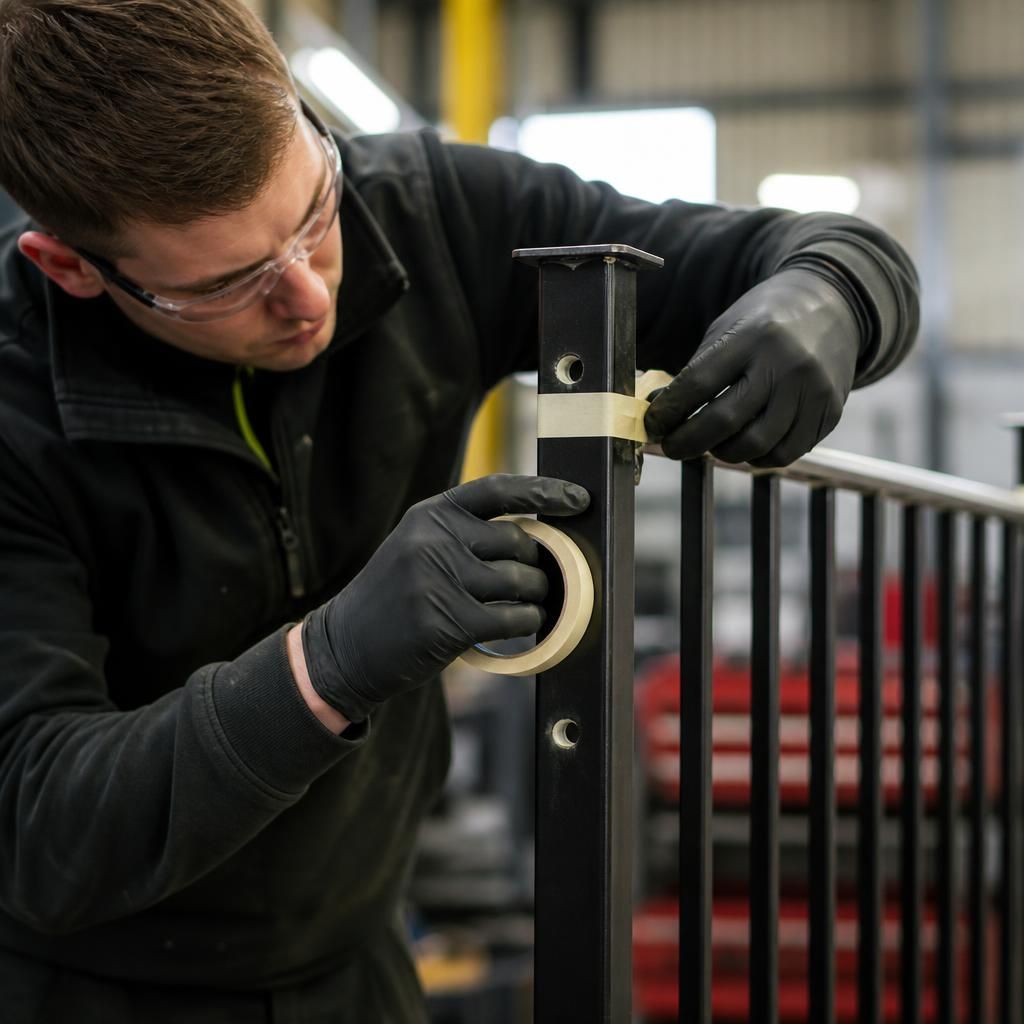
Preparation should also account for how the railings will be assembled after coating. Threads, close-fitting joints, earth points and mating faces may need suitable masking so that the cured powder does not interfere with bolts, brackets or accurate fit-up. These areas should be identified before processing rather than altered afterwards, which could damage the surrounding finish and expose the steel.
Assembly drawings or clear instructions should show which surfaces are functional and which can carry minor handling marks. Checking these details in advance helps the coater position masking and suspension points appropriately while preserving the surfaces needed for installation.