

How does powder coating enhance the anti-corrosion protection of steel components?
Powder coating enhances steel’s anti-corrosion protection by creating a continuous, durable barrier that separates the metal from moisture, oxygen and corrosive contaminants. When applied to properly prepared steel, the bonded coating helps reduce corrosion initiation and provides resistance to wear, impact and environmental exposure.
The protection provided by a powder-coated steel component depends on controlling the steel surface, the coating formulation and the application process as one system. Corrosion is an electrochemical reaction requiring steel, moisture, oxygen and a suitable conductive path. A correctly applied powder coating helps disrupt these conditions, slowing the reaction and limiting the spread of corrosion beneath the finish.
Once the powder has been cured, it forms a continuous polymer film with adhesion to the prepared steel. This film limits the movement of water, dissolved salts, pollutants and other contaminants towards the substrate. It also separates areas of the steel from one another, reducing the opportunity for localised anodic and cathodic reactions that drive rust formation.
- Reduced moisture ingress: the cured film restricts water reaching the steel, particularly across broad exposed faces.
- Resistance to contamination: the surface helps shield the substrate from road salts, industrial deposits and other corrosive residues.
- Protection against mechanical wear: a suitably selected coating can withstand handling, abrasion and impact better than an uncoated surface, helping preserve the protective layer.
- Improved surface stability: strong adhesion reduces the risk of lifting, flaking or separation that could expose the steel.
Surface preparation is central to this performance. Oil, grease, mill scale, rust, moisture and soluble salts can prevent proper adhesion or remain beneath the coating as a source of under-film corrosion. Cleaning and suitable treatment create a sound surface for the powder to bond to. The component must also be fully dry before application, because trapped moisture can cause defects and weaken the coating system.
Coating coverage is equally important. Sharp edges, welds, joints, recesses and drilled holes can be more vulnerable than flat areas because the coating may be thinner, disturbed or difficult to apply evenly in those locations. Component design, racking, grounding and spray technique therefore affect the final level of corrosion resistance. Drainage and ventilation should be considered where components may retain water or collect contaminants during service.
The powder type should match the exposure conditions and the component’s use. Indoor steelwork may require a different level of chemical, weather or abrasion resistance from steel exposed to rain, condensation, de-icing salts or industrial atmospheres. Where corrosion risk is high, the specification may involve a suitable primer or multi-layer coating system rather than a single decorative coat. The correct choice depends on the steel, the environment, the expected handling and the required service performance.
Powder coating does not make steel immune to corrosion. Scratches, drilled areas, cut edges, trapped moisture and prolonged exposure can eventually provide routes to the substrate. Inspection should focus on damaged areas, coating breakdown, rust staining and locations where water or debris accumulates. Prompt repair of local damage helps prevent a small exposed area developing into wider corrosion beneath the surrounding finish.
For manufacturers, fabricators, construction firms and automotive businesses, the practical value is that powder coating combines corrosion control with a hard, consistent finish suitable for many metal components. Achieving that result requires the coating specification, steel preparation, application and curing conditions to be considered together rather than treating the powder as the only factor.
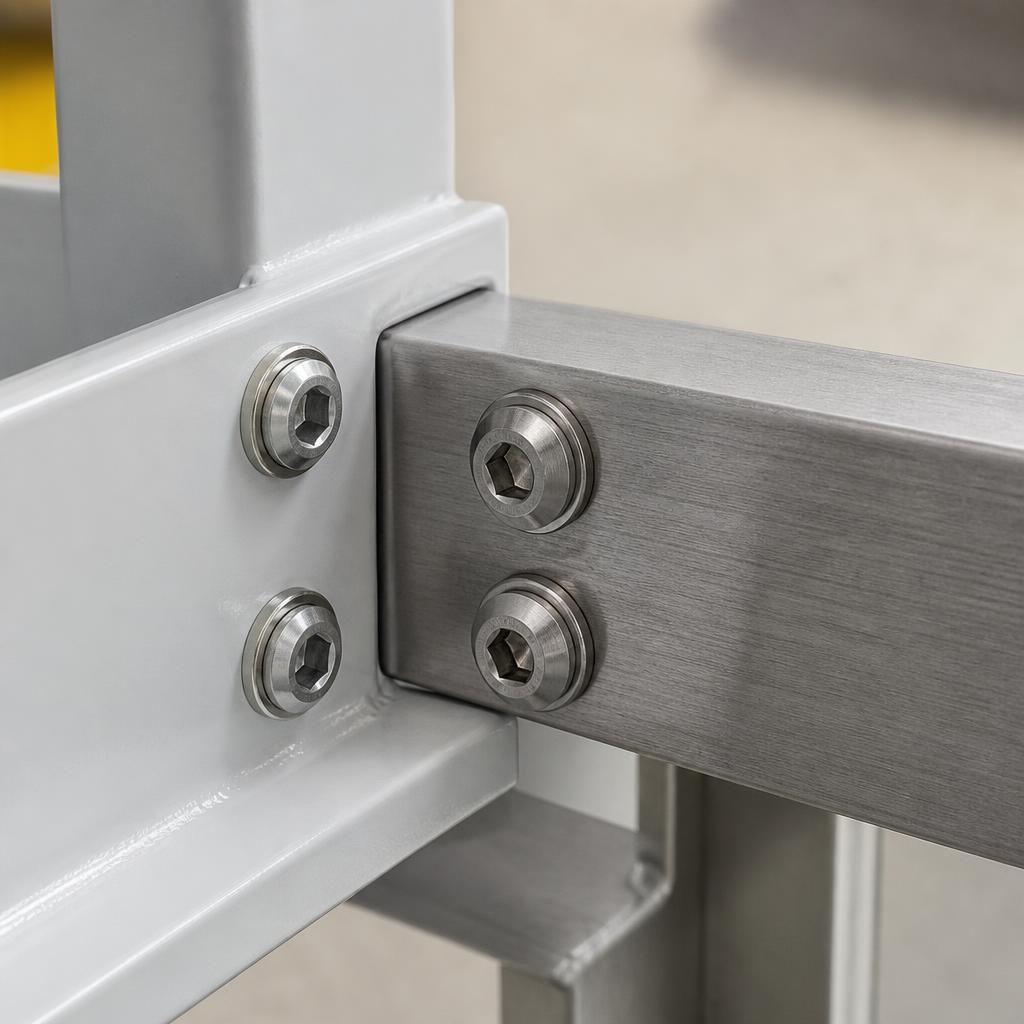
Powder coating can also help reduce galvanic corrosion where a steel component is connected to a dissimilar metal, such as aluminium or stainless steel. The cured polymer layer acts as an electrically insulating separation between the metals, reducing the contact needed for galvanic corrosion to occur.
This benefit depends on maintaining coating continuity at interfaces, fixings, drilled holes and cut edges. Where metal-to-metal contact is unavoidable, the coating specification should be considered alongside suitable isolation measures and joint design. A powder coating therefore supports, rather than replaces, correct detailing of connections between dissimilar metals.