

How do I choose between Interpon D2015 and D2525 finishes for my aluminium project?
Choose between Interpon D2015 and D2525 by matching the finish’s durability and warranty requirements to the aluminium project’s exposure, design life and specification. Consider the intended appearance, environmental conditions and coating system requirements, then confirm the appropriate option with a powder-coating specialist before specifying it.
Choose Interpon D2015 when the project specification calls for a standard architectural powder-coating grade, and choose Interpon D2525 when the aluminium requires a higher level of long-term coating performance or a more demanding warranty specification. The correct decision depends on the project’s written requirements, the intended service conditions, the design life of the installation and the consequences of coating failure.
Start with the project specification
Check whether the architect, main contractor, façade consultant or client has named a particular Interpon grade. A specified system should not be substituted simply because the colour or texture is available in both ranges. The specification may also identify required pretreatment, gloss level, colour tolerance, film performance, warranty conditions and application controls.
Where no grade has been stated, establish what the finished aluminium will be expected to withstand and how long the coating is expected to remain suitable. D2015 may be appropriate for projects with conventional architectural requirements, while D2525 is generally considered where the specification places greater emphasis on extended performance and a higher durability category.
Compare the level of risk, not just the initial coating choice
The more demanding option is not automatically the best choice for every aluminium component. Consider the importance of the coated item, how difficult it would be to access for remedial work, and the disruption that replacement or recoating could cause. A higher-grade system can be easier to justify where the aluminium forms part of a prominent building element, a difficult-to-reach installation or a project with strict long-term maintenance expectations.
Conversely, selecting D2525 without a relevant specification may add cost without providing a practical benefit. The decision should be based on the performance requirement and the project’s whole-life priorities rather than on the product name alone.
Review the warranty conditions carefully
Warranty periods apply subject to conditions. These may include the approved use of the product, preparation and pretreatment of the aluminium, minimum and maximum coating thickness, colour and gloss limitations, manufacturing controls, installation details and cleaning requirements. The warranty may also distinguish between colour retention, gloss retention, film integrity and corrosion protection.
Ask for the current written warranty documentation for the proposed colour, finish and application. Confirm who is responsible for each stage, from aluminium preparation through to final installation, because a higher-grade powder does not remove the need for correct processing. If the project requires a named warranty, the selected applicator and coating system should be checked against its terms before production begins.
Check colour, gloss and texture availability
Both product ranges may offer architectural colours and finishes, but availability can vary according to the specific shade, gloss level, texture and batch requirement. A colour match alone does not prove that the same coating system is being used. Confirm the exact product reference and finish description, particularly where the aluminium will be installed alongside previously coated or differently manufactured components.
Sample panels are useful where appearance is important. They allow the project team to assess the finish on the actual aluminium profile or sheet, rather than relying only on a small colour card. Texture, gloss and surrounding light can affect the perceived result, and adjacent components should be reviewed together where a consistent appearance is required.
Consider the aluminium design and processing route
The selected grade must be compatible with the component’s form and the intended application process. Profiles, folded sheet, castings and fabricated assemblies can behave differently during preparation, coating and curing. Welds, sharp edges, recesses, drilled areas, threaded sections and joints may require particular attention because they can affect coverage, masking and final appearance.
Discuss the component drawings and production sequence with the powder coater before committing to a grade. This can identify areas that need masking, racking, drainage, additional preparation or separate processing. It also helps establish whether the proposed colour and finish can be applied consistently across the full batch.
Use a practical decision process
- Obtain the project specification and identify any mandatory Interpon grade, warranty or approval requirement.
- Define the required performance for the aluminium component and the implications of future access, repair or replacement.
- Check that the chosen colour, gloss and texture are available in the required system.
- Review pretreatment, application, curing, inspection and warranty conditions.
- Confirm that the coating applicator can process the component’s size, shape, quantity and surface condition correctly.
- Record the selected product reference and finish in the purchase and quality documentation.
For a Midlands manufacturing, fabrication, construction or automotive project, a powder-coating specialist can assess the component drawings, finish requirements and batch details before recommending the appropriate route. The final selection should be recorded as a complete coating system, including the product grade, colour, finish, pretreatment and warranty requirements, rather than as D2015 or D2525 in isolation.
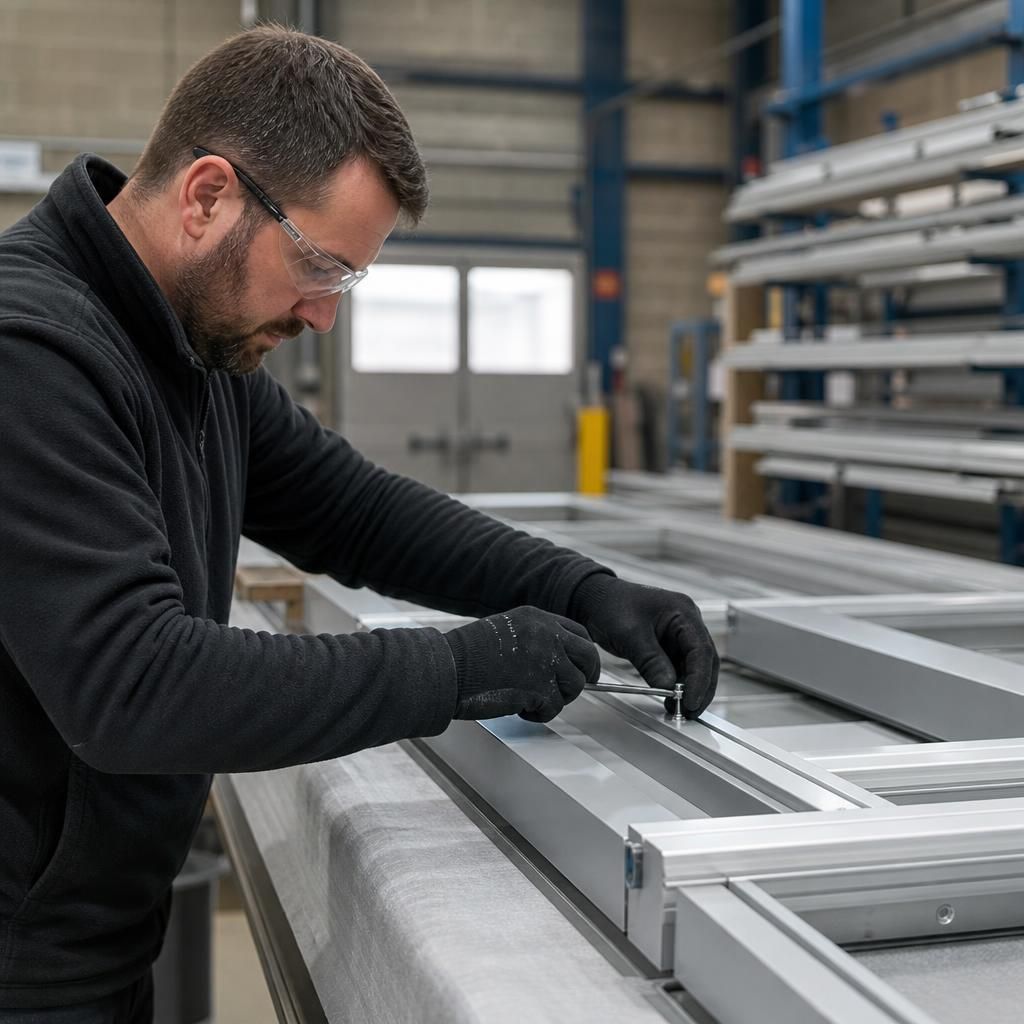
Choosing between Interpon D2015 and D2525 also requires checking how the aluminium will be assembled and modified after coating. A higher-performance finish cannot prevent damage caused by cutting, drilling, abrasion or unsuitable contact during installation, so the project’s fabrication and fitting details should form part of the decision.
Where practicable, complete fabrication before powder coating to minimise exposed edges and drilled areas. If site adjustments are unavoidable, identify which surfaces may be affected and agree an approved repair or touch-up method before work begins. Check fixing materials, joint details, sealants and contact with other metals as well, since poor interfaces can create localised corrosion or visible defects regardless of the selected grade.
This review is particularly important for aluminium assemblies that combine coated profiles with brackets, fasteners or panels. Include the post-coating handling and installation requirements in the coating brief, rather than selecting D2015 or D2525 solely from the product label.