

How does the RAL 2000 powder coating enhance the durability and appearance of aluminium components?
RAL 2000 powder coating gives aluminium components a uniform yellow-orange finish while forming a cured protective layer over the metal. This layer improves resistance to everyday wear, surface damage and corrosion, helping the components retain both their appearance and functional surface protection.
RAL 2000 powder coating enhances aluminium by combining a consistent decorative finish with a mechanically bonded coating system designed to withstand normal service conditions. Unlike a liquid paint film that dries through solvent evaporation, powder coating is applied as dry powder and then heated so the particles flow, level and cure into a continuous finish. When the aluminium has been correctly prepared and the coating is properly cured, this creates a hard, closely bonded surface that helps the component withstand handling, abrasion, impacts and exposure to moisture and atmospheric pollutants.
The durability of the finished component depends on more than the colour selected. Aluminium must be free from oil, dirt, oxide contamination and other residues before coating. A suitable pre-treatment improves the bond between the metal and the powder, while controlled application and curing help the coating achieve its intended hardness and flexibility. These stages are particularly important on edges, corners, recesses and joints, where uneven coverage or insufficient curing can reduce performance.
For aluminium used outdoors or in demanding industrial settings, the coating specification should reflect the environment. Factors such as exposure to sunlight, humidity, chemicals, abrasion and temperature changes affect the required powder grade, pre-treatment and finish thickness. A standard decorative specification may be suitable for general indoor use, whereas components exposed to weather or aggressive conditions may require a system selected specifically for that service environment. The coating improves surface performance, but it does not compensate for unsuitable aluminium grades, poor component design or contamination introduced after preparation.
Its appearance is enhanced through even powder distribution and controlled curing. This produces a consistent RAL 2000 shade across the coated faces, provided the parts are processed under compatible conditions. The RAL reference identifies the colour; it does not, by itself, define whether the surface is smooth, textured, matt or gloss. Sheen, texture and film thickness can therefore be specified separately to achieve the required visual effect and to suit the component’s use.
- Colour consistency: repeatable application and curing help maintain a coherent appearance across batches and matching components.
- Surface uniformity: a properly applied coating reduces visible variation caused by the underlying aluminium, although it will not hide deep scratches, dents or poor fabrication.
- Edge and profile coverage: application settings must account for the geometry of the part so exposed edges, channels and recessed areas receive suitable coverage.
- Long-term presentation: the selected powder system and environment determine how well the colour and surface retain their intended appearance over time.
For manufacturers and fabricators, the practical benefit is that the coating can provide both a defined visual identity and a functional finish without adding a separate decorative paint stage. The best result comes from agreeing the colour, sheen, texture, performance requirements and service environment before production. Inspection should then consider colour uniformity, visible defects, coverage and cure, rather than relying on colour alone as evidence that the aluminium has been adequately protected.
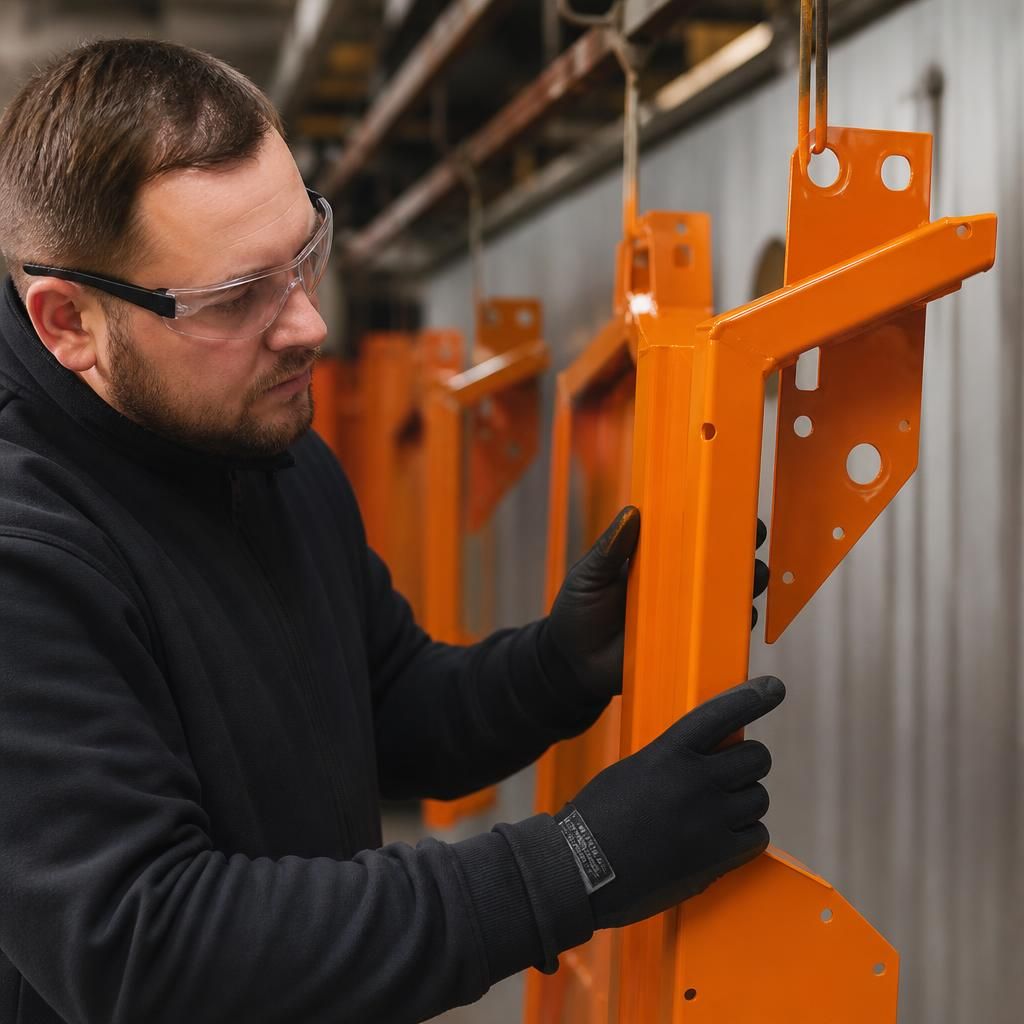
RAL 2000 powder coating protects the visible aluminium surface without replacing the component’s structural role. The cured layer helps limit cosmetic damage from handling and contact, while the aluminium beneath continues to provide the required strength and form. It is not a substitute for sound fabrication, so dents, cracks and poorly finished welds should be corrected before coating.
Component design also affects the finished result. Threads, sliding faces, electrical contact points and close-fitting joints may need suitable masking or allowances because the coating adds a thin surface layer. Addressing these details helps preserve accurate fit and function while maintaining a continuous, attractive finish on the exposed aluminium.