

What industries most benefit from using RAL 7035 powder coated aluminium?
RAL 7035 powder coated aluminium is particularly beneficial for construction, manufacturing and fabrication, and automotive businesses that need durable, consistent finishes for aluminium components. Its light grey finish suits practical industrial and architectural applications, while powder coating helps protect parts used in demanding environments.
RAL 7035 powder coated aluminium is most useful in industries that need a light, neutral finish combined with aluminium’s low weight and powder coating’s resistance to everyday wear and environmental exposure. The colour, known as Light Grey, is widely suited to technical, architectural and equipment-based applications where a restrained appearance is preferable to a strong decorative colour.
Electrical and control equipment benefits from RAL 7035 powder coated aluminium for enclosures, control cabinets, housings and mounting components. The pale grey finish gives equipment a clean, consistent appearance and can make surface dirt, damage or uneven coverage easier to identify during inspection. The coating must be specified alongside the required electrical enclosure performance, substrate preparation and exposure conditions; colour alone does not determine suitability.
Heating, ventilation and air-conditioning manufacturers commonly require coated aluminium panels, grilles, covers and equipment housings. These components may be installed indoors, externally or in plant areas where they encounter handling, moisture and changes in temperature. RAL 7035 is appropriate where the equipment needs to blend with walls, ceilings or other building services rather than draw attention. The chosen powder system should reflect the expected humidity, chemical contact and ultraviolet exposure.
Architectural aluminium businesses can use the finish for window and door components, façade details, framing, balustrades and associated fittings. Its neutral appearance works across commercial, public and industrial buildings, while powder coating provides a uniform surface over properly prepared aluminium. For external architectural work, the specification should cover weathering performance, gloss level, colour consistency between batches and the treatment of cut edges or assembled sections.
Commercial interiors and fit-out manufacturers may select RAL 7035 for partitions, shelving, display structures, ceiling components, furniture frames and protective trims. These products often need a finish that looks professional without dominating the surrounding interior. The main considerations are resistance to scuffing and cleaning products, the required texture, and whether visible faces and concealed faces need to match.
Industrial equipment and fabrication are also well suited to this finish where aluminium parts form guards, covers, access panels, machine surrounds or supporting structures. Powder coating can provide a consistent finish across batch-produced components, but the design should allow for racking marks, drainage, masking and adequate coverage of corners. Parts exposed to abrasion, oils, solvents or high temperatures may require a coating system selected specifically for those conditions rather than a general-purpose specification.
Transport and specialist vehicle equipment can benefit where lightweight aluminium panels or housings need a durable, understated finish. Examples include storage modules, equipment covers, interior fittings and non-structural fabricated parts. The coating specification should take account of vibration, impact, road contaminants, cleaning methods and any requirements for repair or colour matching during future maintenance.
Renewable-energy and electrical infrastructure suppliers may use RAL 7035 on aluminium housings, cabinets, frames and service components. In these settings, the important issue is not simply the colour but the complete protection system: suitable pre-treatment, correct powder selection, controlled curing and compatibility with the installation environment. Outdoor exposure, condensation and contact with dissimilar metals should be assessed before production.
The industries that gain the most from RAL 7035 therefore tend to share three requirements: a dependable light-grey appearance, a finish suitable for repeated handling or cleaning, and protection for aluminium components used in service environments. It is less appropriate to choose the colour in isolation. The final specification should consider the aluminium grade, component geometry, pre-treatment, coating thickness, gloss or texture, expected exposure and the applicable quality requirements for the project.
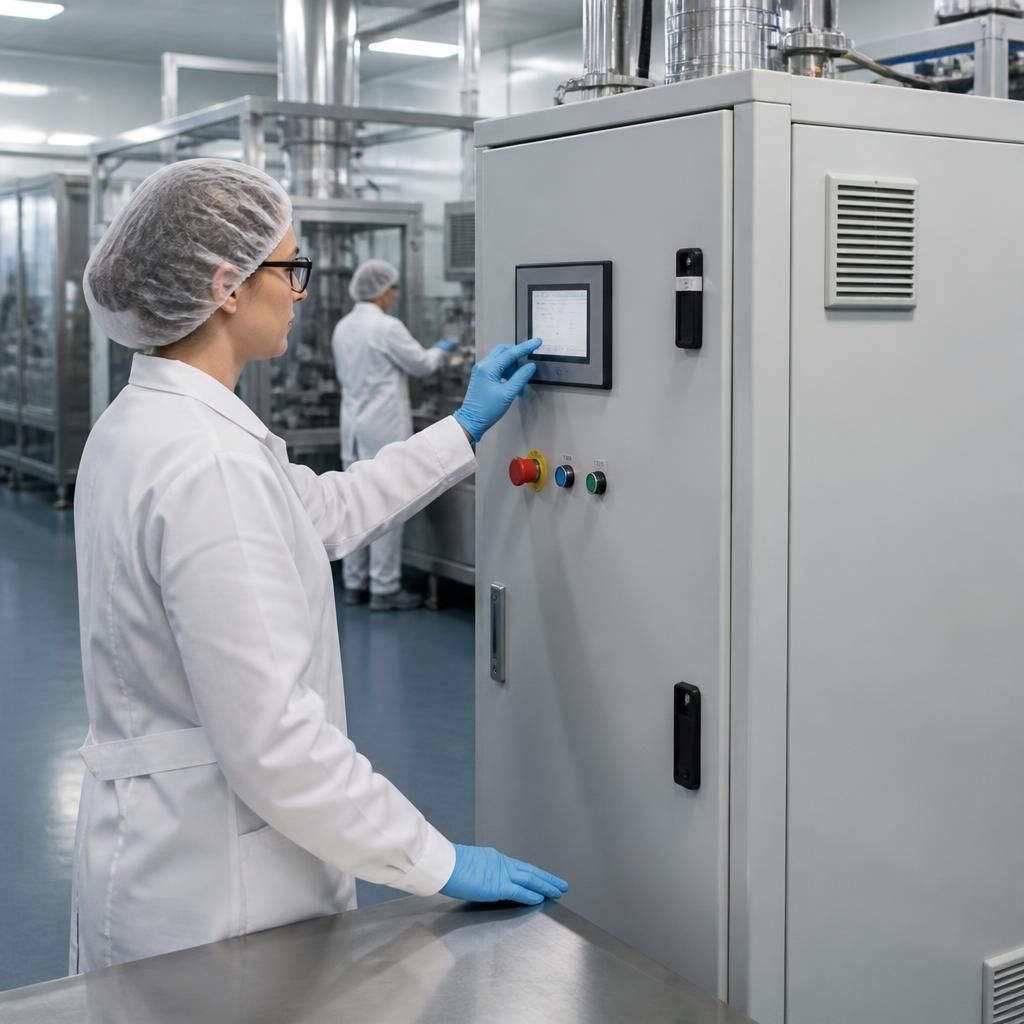
Food-processing, pharmaceutical and laboratory equipment manufacturers may benefit from RAL 7035 powder coated aluminium where components need a smooth, clearly inspectable finish and a restrained appearance. Typical applications can include equipment panels, access covers, frames, guards and enclosures, provided the coating system is compatible with the required cleaning agents and operating conditions.
These sectors should not specify the colour alone. The powder type, surface preparation, coating texture and resistance to chemicals, moisture and repeated washing need to be assessed together. A smooth finish may support easier visual inspection, but it does not automatically make a component hygienic or suitable for direct food contact. The complete specification should therefore reflect the equipment’s cleaning regime, temperature range and regulatory requirements.