

How do high gloss finishes compare to traditional paint in terms of durability and maintenance?
High gloss powder coating generally provides a harder, more abrasion-resistant and consistent finish than traditional liquid paint, with better resistance to chipping and routine wear when the metal is correctly pre-treated and the coating is properly cured. Maintenance is usually limited to gentle cleaning, whereas painted surfaces may require more frequent touch-ups as the film weathers, although powder-coated damage can be more difficult to repair invisibly.
For metal components, a high gloss powder-coated finish will usually deliver a longer-lasting appearance with less routine intervention than conventional liquid paint, but the comparison depends on the complete coating system rather than gloss level alone. Durability is influenced by the substrate, pre-treatment, powder chemistry, film build, curing and the environment in which the component is used.
What makes the two systems different? Powder coating is applied as a dry powder and then cured to form a continuous film. The process can produce an even, factory-finished surface without the runs, brush marks or variable application thickness associated with some liquid-paint methods. Traditional paint is applied as a liquid, often in one or more coats, and relies on evaporation or chemical curing to form its protective film.
That difference affects long-term performance. A correctly specified powder coating can provide a stable surface for fabricated metalwork, components and enclosures, while liquid paint remains useful where on-site application, colour matching, phased work or future recoating is important. Neither system is automatically suitable for every exposure condition. A coating selected for indoor use may not provide the same resistance outdoors, in a coastal atmosphere, or where it is exposed to chemicals, heat or repeated handling.
Durability depends on more than the visible finish
- Substrate preparation: Oil, dirt, mill scale, oxidation and other contaminants can undermine adhesion. Appropriate cleaning and pre-treatment help the coating bond to the metal and support corrosion protection.
- Powder or paint specification: Different formulations offer different levels of resistance to sunlight, moisture, chemicals and temperature. A high gloss appearance does not, by itself, identify the performance class of the coating.
- Application and curing: Powder must reach the required curing conditions throughout the component. Liquid paint also depends on correct preparation, coating thickness, drying and recoat intervals. Poor control in either process can shorten service life.
- Component design: Sharp edges, recesses, welds, fixings and areas that retain water can be more vulnerable than broad, well-drained faces. Design and handling should therefore be considered alongside the coating choice.
High gloss surfaces can retain their visual uniformity well when the coating system is suitable for the exposure. However, gloss can make surface contamination, fine marks and underlying preparation defects more noticeable. This is an appearance consideration rather than proof of a reduction in protective performance, but it may affect how often a component needs cleaning to meet a particular visual standard.
Maintenance requirements
Routine care for a powder-coated surface normally involves removing dust, grime, salt deposits and other contaminants with clean water and a mild, non-abrasive detergent. A soft cloth or sponge is preferable to abrasive pads, aggressive solvents and harsh tools, which can mark the surface or affect its gloss. Deposits should not be allowed to remain where they can hold moisture against the coating or contain corrosive particles.
Painted metal may need similar cleaning, but maintenance can become more involved as the film weathers. Loss of colour or gloss, flaking, rust staining and localised damage may require preparation followed by primer, matching paint and one or more finishing coats. Because liquid paint can often be applied on site, it may offer a practical way to refresh a limited area, although achieving an exact visual match depends on the age and condition of the surrounding coating.
Powder-coated items should also be inspected periodically, particularly at edges, joints, fasteners and impact-prone areas. If the coating has been breached, the exposed metal should be assessed and treated rather than simply covered over. The appropriate repair may involve cleaning, removing loose material, applying a compatible repair system or recoating the component, depending on the extent of damage and the required appearance.
Which option is more suitable?
High gloss powder coating is generally well suited to repeatable production work and metal components that can be transported for controlled preparation and curing. It is often the stronger choice where a uniform finish, resistance to everyday handling and reduced routine upkeep are priorities. Traditional paint may be preferable where the item is too large or fixed for standard powder-coating processes, where site application is unavoidable, or where regular colour changes and local refurbishment are expected.
The most reliable comparison is therefore based on the intended service conditions, not on whether one finish is labelled “powder” or “paint”. Specify the expected exposure, required appearance, substrate, cleaning regime and repair approach before choosing the system. For high gloss powder coating, these decisions should be supported by suitable pre-treatment and a coating formulation matched to the component’s actual use.
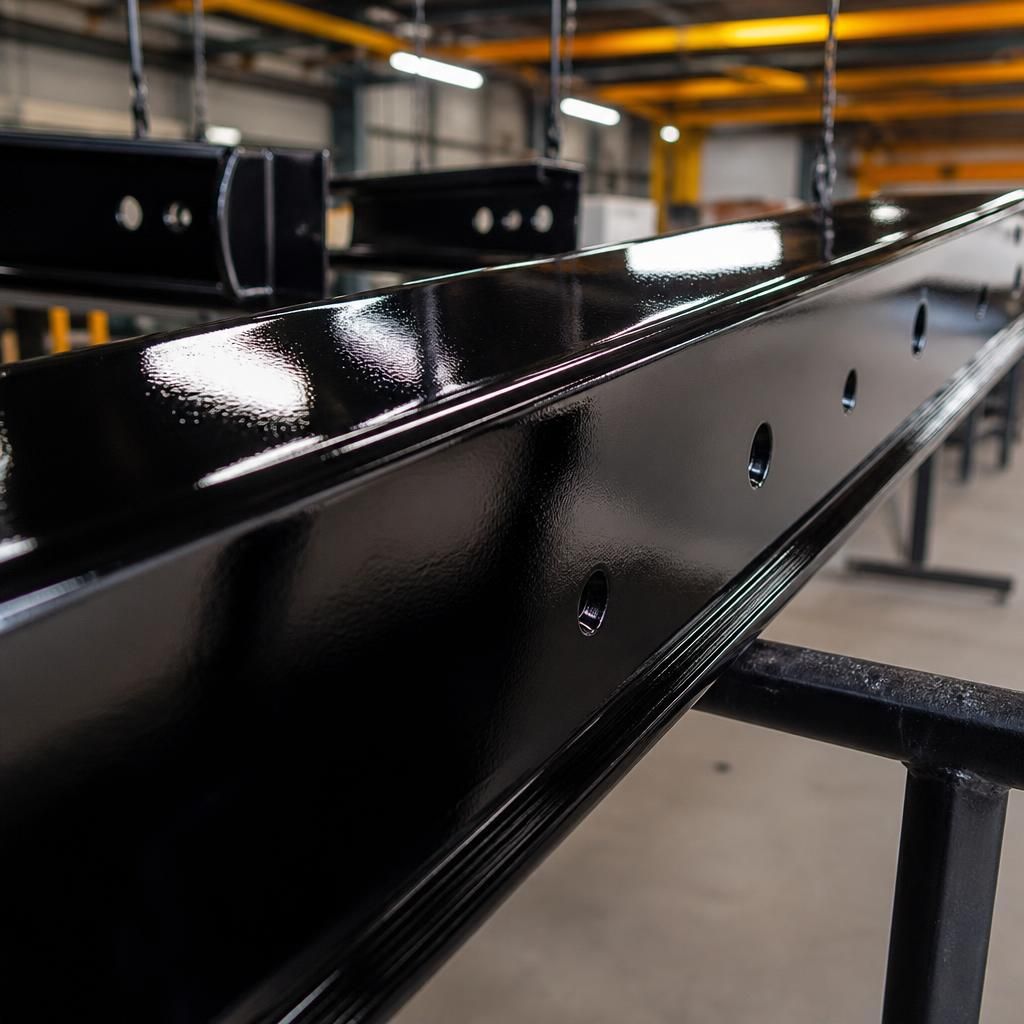
High gloss is an appearance characteristic, not a standalone measure of durability. When comparing powder coating with traditional paint, assess separate performance criteria such as adhesion, abrasion resistance, corrosion protection, chemical resistance, ultraviolet stability and gloss retention. A surface may remain structurally protective while losing some of its original gloss, so visual change and coating failure should not be treated as the same outcome.
For a meaningful comparison, specify the expected service conditions and decide which changes are acceptable over the component’s life. A visible metal part may require strong colour and gloss retention, while an enclosed industrial component may place greater importance on adhesion and resistance to handling or chemicals. Reviewing these requirements against the coating system’s technical information gives a more reliable result than selecting either finish solely because it is described as high gloss.
Discuss High Gloss Finishes for Your Metal Components
If you are deciding between a high gloss powder-coated finish and traditional paint, discuss your component’s substrate, dimensions, exposure conditions and expected maintenance approach with our team. We can help identify the coating considerations that should inform your specification.