

How do UV resistant powder coatings help in reducing maintenance costs for outdoor applications?
UV resistant powder coatings help reduce maintenance costs by slowing fading, chalking and surface degradation caused by prolonged sunlight. By helping the finish retain its protective properties and appearance for longer, they can reduce the need for frequent cleaning, recoating and remedial work on outdoor metal components.
UV resistant powder coatings reduce maintenance costs by extending the period between major finish interventions and helping outdoor metal components retain their protective performance. They are formulated to withstand prolonged ultraviolet exposure, which can otherwise weaken the coating system and accelerate deterioration. This can lower the cost of ownership through fewer repairs, less disruption and a reduced need for premature recoating.
The main saving is a longer maintenance interval. Outdoor metalwork is often difficult or costly to access once installed. Components may be positioned at height, incorporated into structures or distributed across a site. A coating that remains stable for longer can reduce the frequency of access equipment, removal, transport and reinstallation. These indirect costs can be significant even where the coating material itself represents only a small part of the overall maintenance budget.
UV-resistant formulations can also help preserve the integrity of the coating film. When a finish becomes brittle or loses cohesion, moisture and contaminants may reach weaknesses in the surface and contribute to corrosion of the metal beneath. UV resistance does not replace suitable pretreatment or corrosion protection, but it supports the performance of a correctly specified coating system. Preventing damage from progressing can reduce the need for local repairs or replacement of affected components.
There can be operational savings as well as material savings. Recoating outdoor parts may require production areas to be cleared, equipment to be isolated or access to be restricted. For manufacturers, construction firms and other commercial operators, this can create labour costs and interrupt normal use of the asset. A more durable finish helps limit the number of occasions on which these activities are necessary, although the actual result depends on the environment and the quality of the original application.
Cost reduction depends on selecting a coating system that matches the exposure conditions. Important considerations include:
- UV intensity and duration: Constant direct sunlight places greater demands on colour and binder stability than sheltered outdoor use.
- Moisture and corrosion risk: Rain, condensation and coastal or industrial atmospheres may require suitable pretreatment and a compatible protective system.
- Mechanical exposure: Abrasion, impact and handling damage can create maintenance requirements that UV resistance alone cannot prevent.
- Chemical contact: Cleaning products, pollutants and process chemicals can affect the coating and should be considered during specification.
- Colour and gloss requirements: Dark or highly visible finishes may make changes in appearance more noticeable, so the required level of colour and gloss retention should be agreed in advance.
Correct preparation and application are central to achieving the expected maintenance benefit. The metal should be suitably cleaned and pretreated, the powder should be compatible with the substrate and service conditions, and the coating must be applied and cured according to the system requirements. Inadequate preparation, insufficient film build or incorrect curing can lead to early failure regardless of the formulation’s UV resistance. Quality control records and checks on finished components can help identify these issues before parts are installed.
A practical cost assessment should therefore compare the whole service life rather than only the initial coating price. Consider the expected maintenance interval, access requirements, labour, downtime, replacement risk and the consequences of finish failure. A higher-performance UV-resistant system may have a higher initial specification cost, but it can be more economical where outdoor components are prominent, difficult to access or expensive to take out of service.
UV-resistant powder coating is not maintenance-free. Installed metalwork should still be inspected for impact damage, corrosion, contamination and changes caused by the wider environment. Early attention to isolated damage is generally less disruptive than allowing a defect to spread. With appropriate design, preparation, application and inspection, UV resistance helps make outdoor coating maintenance more predictable and can reduce the frequency and scale of costly interventions.
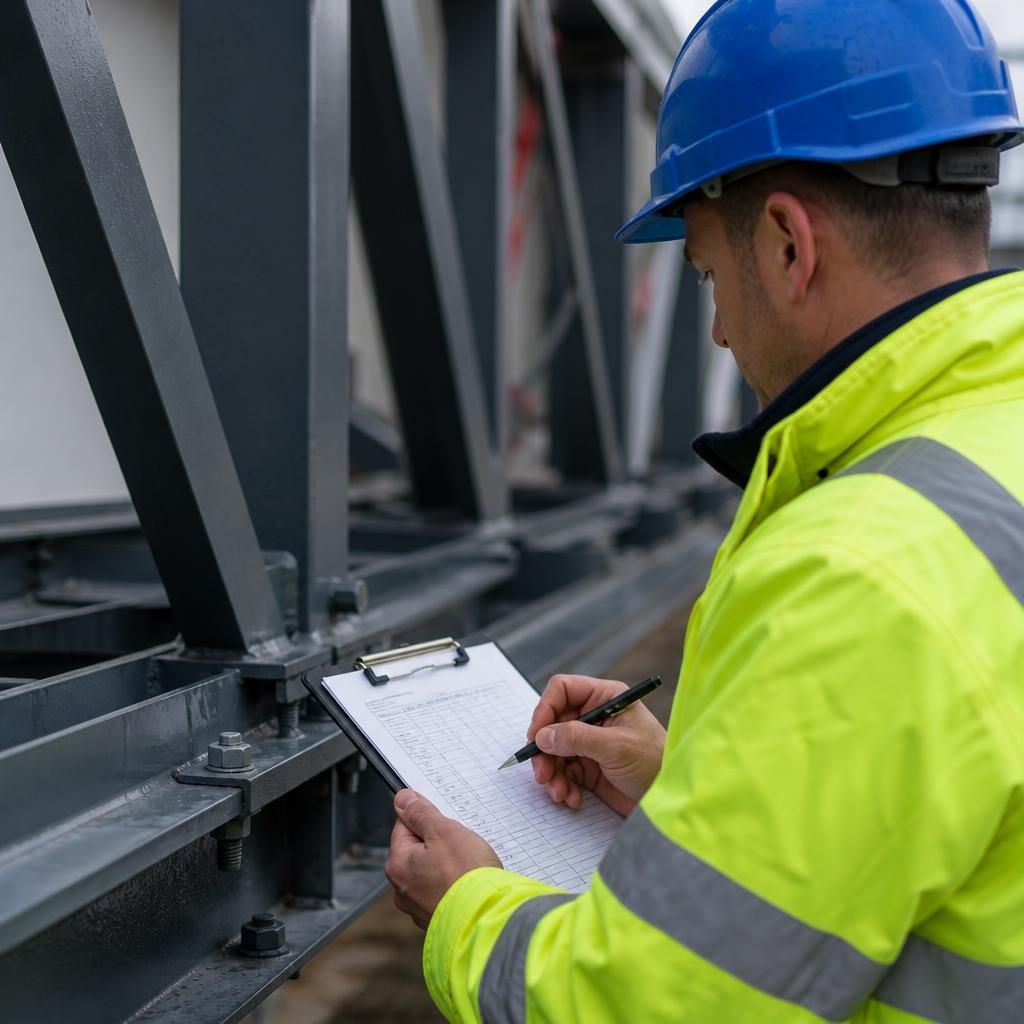
Accurate coating records can reduce the cost of maintaining outdoor metalwork by making future repairs more targeted. Recording the substrate, pretreatment, powder type, colour, gloss level and curing requirements helps maintenance teams identify the correct repair approach instead of relying on trial applications or replacing sound components.
This is particularly useful when a small area has been damaged by impact, abrasion or local corrosion. The defect can be assessed against the original coating specification, allowing remedial work to focus on the affected section where the surrounding finish remains serviceable. Keeping these details with the asset also helps preserve a consistent appearance when individual components require attention at different times.
Discuss UV Resistant Powder Coating for Your Outdoor Metalwork
Discuss your outdoor metal components with our powder-coating team to assess the UV-resistant system, preparation and finish requirements for the intended environment. Provide details of the substrate, exposure conditions and maintenance priorities so the specification can be considered accurately.