

What are the key benefits of using nylon coatings on metal components?
Nylon coatings give metal components a tough, resilient surface that helps resist wear, impact and corrosion. Their low-friction finish can also reduce sliding resistance and noise, making them suitable for components exposed to repeated movement or demanding industrial conditions.
Nylon coatings provide metal components with a functional polymer surface that can add electrical insulation, chemical resistance, easier cleaning and a consistent finish. The benefit is not simply the presence of nylon; performance depends on the nylon formulation, coating thickness, substrate preparation and the conditions in which the component will operate.
Electrical insulation: Nylon is a non-conductive material, so a correctly applied coating can separate a metal component from adjacent conductive parts. This can help reduce the risk of unintended electrical contact and make nylon-coated components suitable for selected electrical, control-system and manufacturing applications. The required dielectric performance should be confirmed for the specific coating and operating voltage rather than assumed from the material name alone.
Resistance to oils and chemicals: Nylon can tolerate contact with many oils, greases, fuels and industrial chemicals, although resistance varies between nylon grades and chemical concentrations. This makes it useful where a bare metal surface could be affected by process fluids or regular handling. Compatibility should be checked against the exact substances, temperature and exposure time, particularly where solvents, acids or aggressive cleaning agents are involved.
A protective separation layer: The coating creates a barrier between the metal and surrounding equipment, packaging or handled materials. This can prevent direct metal-to-metal contact and help avoid surface marking, contamination from the substrate or damage to mating parts. It is particularly useful for components that must retain a clean, uniform surface during assembly, handling or transport.
Consistent appearance and identification: Nylon coatings can provide an even coloured finish across suitably prepared components. Colour selection may support visual identification of parts, production stages or equipment groups, while the polymer surface can conceal minor visual variation in the underlying metal. Appearance requirements still depend on the component geometry, coating method and inspection standard.
Ease of cleaning: A continuous, properly cured coating gives the component a sealed surface with no exposed metal across the coated area. This can simplify removal of some oils, residues and general contamination during routine cleaning. The cleaning method must remain compatible with the selected nylon, as excessive heat, unsuitable solvents or abrasive treatment may affect the finish.
Design flexibility: Nylon coatings are available in formulations suited to different combinations of surface protection, insulation, chemical exposure and operating conditions. They can therefore be considered for brackets, guards, handling equipment, fixtures, rollers and other fabricated or machined metal parts where a polymer surface is preferable to bare metal. Coating thickness and coverage should be specified around threads, edges, bores and mating faces so that the finished component still fits and functions correctly.
There are also limitations to consider. Nylon can absorb moisture, which may affect dimensions and electrical properties in humid or immersed environments. Excessive temperature, prolonged ultraviolet exposure or an incompatible chemical may reduce performance, and sharp edges or poorly prepared steel can compromise adhesion. A sound specification should therefore assess operating temperature, humidity, chemical contact, electrical requirements, loading, tolerances and cleaning procedures before the coating is selected.
For industrial components, the key benefit is the combination of properties rather than one isolated feature: nylon can provide a non-conductive, chemically tolerant and cleanable surface while allowing the underlying metal to retain its structural role. The most suitable solution is established by matching the nylon grade and application method to the component’s environment and functional requirements.
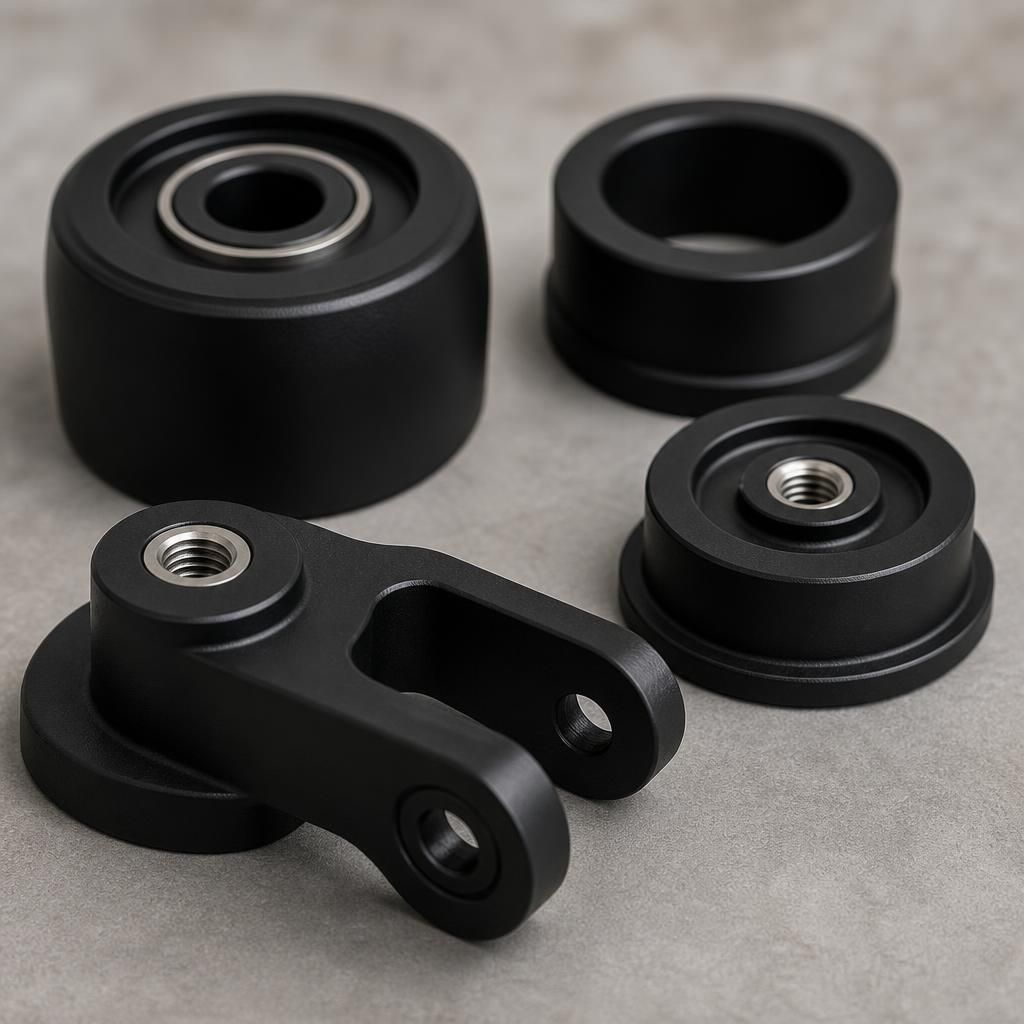
One important benefit of nylon coating is that it can add a functional polymer surface without requiring the entire component to be manufactured from solid plastic. The metal substrate continues to provide the component’s structural support, while the nylon supplies the selected surface characteristics, such as a non-metallic contact layer or resistance to routine handling and process exposure.
This approach can be useful where a solid polymer part would not provide the required rigidity, dimensional stability or load-bearing performance. It also allows the coating specification to be focused on the areas that need surface protection, insulation or controlled contact. The design must still account for coating thickness at threads, bores, edges and mating faces so that the finished component remains compatible with adjoining parts.
Discuss Nylon Coating Requirements for Your Metal Components
Share your component drawings, substrate, dimensions and operating conditions with Powder-coatings.co.uk to discuss whether a nylon coating is appropriate. The team can help identify the relevant coating specification and application requirements for your industrial parts.